Home & Garden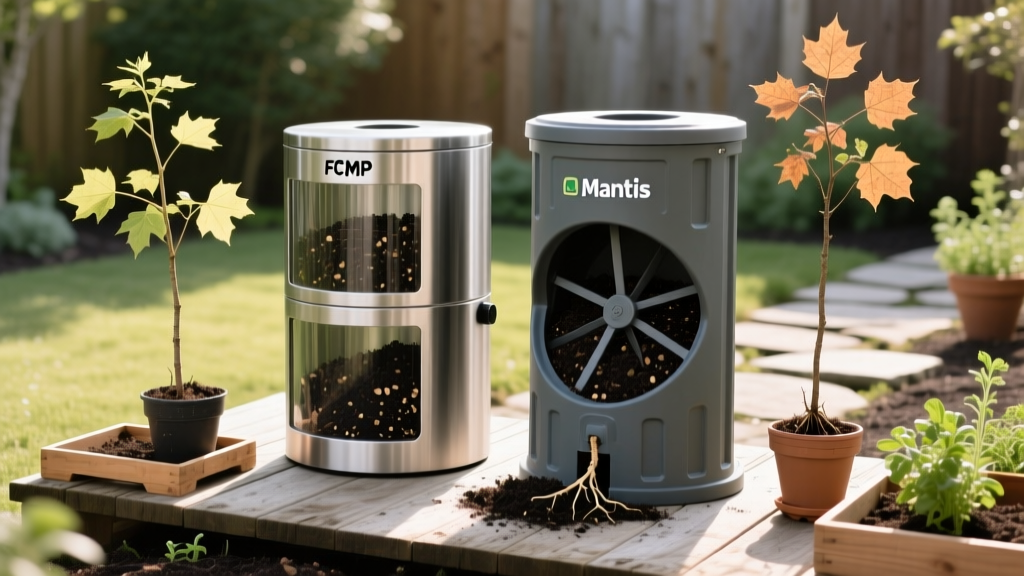
FCMP vs Mantis Compost Tumblers: 2026 Tree Planting Guide
Lisa ThompsonPublished
The Intersection of Composting and Tree Selection in 2026
When planning a home orchard, adding shade trees, or establishing a new privacy hedge, most gardeners spend hours researching the perfect tree species. However, the secret to a thriving, drought-resistant, and disease-free tree lies beneath the surface. In 2026, the integration of high-quality, homegrown compost into tree planting routines has become a cornerstone of successful landscape design. For homeowners looking to bridge the gap between organic waste recycling and robust tree establishment, dual-chamber compost tumblers are the ultimate tool. They provide a continuous, manageable supply of rich humus exactly when you need to amend planting holes or top-dress saplings.
Two of the most prominent names in the continuous-composting space are the FCMP Outdoor IM4000 and the Mantis Dual-Chamber Compost Tumbler. Both promise to turn kitchen scraps and yard waste into black gold in a matter of weeks, but they achieve this through vastly different mechanical designs. In this comprehensive guide, we will compare these two 2026 market leaders specifically through the lens of tree selection and planting, helping you decide which composter will best support your landscaping goals.
Why Compost is Critical for Tree Planting and Establishment
Before diving into the hardware, it is essential to understand why tumbling compost is superior for tree planting compared to traditional open-pile methods. According to the United States Environmental Protection Agency (EPA), properly managed compost enriches soil, helps retain moisture, and reduces the need for chemical fertilizers. For newly planted trees, these benefits are magnified.
The Microbiome Advantage
Tumbler compost reaches higher, more consistent temperatures than cold compost piles, effectively killing weed seeds and harmful pathogens while fostering beneficial mycorrhizal fungi. When you introduce this biologically active compost to the root zone of a newly planted Japanese Maple or a bare-root Apple tree, you are inoculating the soil with microbes that help roots absorb phosphorus and water more efficiently.
Preventing the Bathtub Effect
A common mistake in tree planting is over-amending the backfill soil, creating a 'bathtub effect' where water pools in the loose compost and drowns the roots. Tumbler compost, which is typically finer and more fully decomposed than open-pile compost, integrates more seamlessly with native soil. This ensures proper drainage while still providing the organic matter necessary for young feeder roots to establish.
FCMP Outdoor IM4000 Tumbler Review (2026 Edition)
The FCMP Outdoor IM4000 has long been a favorite among home gardeners, and its 2026 iterations continue to offer exceptional value. Featuring a 37-gallon total capacity split between two chambers, the IM4000 utilizes a tumbling design that relies on the user physically rotating the barrel along its central axis.
Design and Aeration
The interior of the FCMP features deep, angled fins that act as paddles. As you turn the barrel, these fins break up clumps of compacted leaves and grass clippings, forcing oxygen into the core of the pile. This aggressive aeration is fantastic for breaking down the high-carbon fall leaves that often accumulate around deciduous shade trees like Oaks and Maples.
Pros for Tree Planters
- High Volume: The 37-gallon capacity allows you to process enough material to amend multiple tree planting holes in a single season.
- Durability: The BPA-free, UV-resistant polypropylene barrel and galvanized steel frame withstand harsh weather, ensuring it lasts through years of seasonal tree planting.
- Cost-Effective: It remains one of the most budget-friendly dual-chamber options on the market, leaving more room in your landscaping budget for high-quality tree stock.
Cons for Tree Planters
The primary drawback of the FCMP IM4000 is the physical effort required to turn it. When the chamber is full of heavy, wet spring grass clippings and kitchen scraps, the barrel becomes incredibly heavy. For gardeners with mobility issues or those planting large orchards who need to turn the compost daily, the manual spinning can become a chore.
Mantis Dual-Chamber Compost Tumbler Review (2026 Edition)
The Mantis Dual-Chamber Tumbler takes a radically different approach to aeration and rotation. Instead of spinning the barrel directly, the Mantis utilizes a patented geared crank system. You turn a small handle, and the internal gears rotate the drum smoothly, regardless of how heavy or wet the contents are.
Design and Aeration
Inside the Mantis, you will find a series of aerating spikes rather than the deep paddles of the FCMP. These spikes slice through the composting material, creating air pockets without requiring the heavy tumbling action. The dual chambers hold slightly less volume than the FCMP, but the ease of use means gardeners are more likely to turn the compost consistently, resulting in a faster cure time.
Pros for Tree Planters
- Effortless Turning: The geared crank makes turning a full bin as easy as turning a bicycle pedal. This is ideal for older gardeners or those managing extensive tree care routines who cannot afford physical strain.
- Superior Moisture Control: The aeration spikes and ventilation caps allow for excellent airflow, preventing the anaerobic, soggy conditions that can produce acidic compost harmful to sensitive tree roots.
- Compact Footprint: Its slightly smaller profile fits neatly into urban courtyards where space is at a premium but the desire to grow dwarf fruit trees in amended soil remains high.
Cons for Tree Planters
The Mantis tumbler is generally more expensive than the FCMP. Additionally, the internal spikes can sometimes get tangled with long, stringy organic materials like pine needles or unchopped vines, requiring occasional manual clearing with a pitchfork.
Head-to-Head Comparison Chart
To help you visualize how these two composters stack up for your 2026 tree planting projects, review the comparison table below:
| Feature | FCMP Outdoor IM4000 | Mantis Dual-Chamber |
|---|---|---|
| Total Capacity | 37 Gallons | Approx. 30 Gallons |
| Turning Mechanism | Manual Barrel Rotation | Geared Crank Handle |
| Internal Aeration | Deep Paddles / Fins | Aerating Spikes |
| Frame Material | Galvanized Steel | Powder-Coated Steel |
| Effort Required | Moderate to High | Very Low |
| Best Tree Use Case | Large Shade Trees / Bulk Soil Prep | Urban Orchards / Sensitive Saplings |
How to Use Tumbler Compost for Planting Trees
Whether you choose the FCMP or the Mantis, the finished compost must be applied correctly to ensure your newly selected trees thrive. The University of Minnesota Extension emphasizes that proper soil preparation and planting depth are critical for long-term tree survival. Here is how to integrate your tumbler compost into the planting process.
Step 1: Harvest and Screen the Compost
Tumbler compost is generally well-finished, but it may contain small twigs or unbroken corn cobs. Before using it for tree planting, run the compost through a simple 1/2-inch mesh screen. The fine, crumbly material that passes through is perfect for root zones, while the larger pieces can be tossed back into the active chamber as a carbon-rich starter for your next batch.
Step 2: Amend the Backfill Soil (The 20% Rule)
When digging the hole for your new tree, ensure it is twice as wide as the root ball but no deeper. As you backfill the hole, mix your screened tumbler compost with the native soil at a ratio of no more than 20% compost to 80% native soil. The Arbor Day Foundation advises against completely replacing native soil with rich compost, as this discourages roots from expanding into the surrounding earth and can lead to girdling roots.
Step 3: Top-Dressing and Mulching
Once the tree is planted and watered deeply, use any unfinished or slightly coarse compost from the tumbler as a top-dressing mulch. Apply a 2-to-3-inch layer of compost in a wide ring around the tree's drip line, keeping it at least three inches away from the actual trunk to prevent rot and rodent damage. This slow-release fertilizer will feed the tree throughout the 2026 growing season.
Matching the Tumbler to Your Tree Selection Strategy
Your choice between the FCMP and Mantis should ultimately align with the types of trees you are planting and the scale of your landscape.
For the Homestead and Large Shade Tree Planter
If you are planting large, balled-and-burlapped shade trees like Red Maples, Bur Oaks, or Liberty Elms, you will be moving a massive amount of soil. The FCMP IM4000 is the superior choice here. Its larger 37-gallon capacity allows you to process the sheer volume of yard waste generated by clearing land for new tree beds, and the physical effort of turning the barrel is offset by the heavy labor you are already performing digging large planting holes.
For the Urban Orchard and Delicate Specimen Gardener
If your 2026 goals involve planting delicate, high-value specimen trees like Weeping Cherries, dwarf citrus in patio containers, or disease-resistant Apple cultivars in a small suburban yard, the Mantis Tumbler is the clear winner. The geared crank ensures you can maintain a steady, aerobic compost cycle without physical strain, yielding a consistently fine, pathogen-free humus that is gentle enough for the sensitive feeder roots of grafted fruit trees and ornamental shrubs.
Final Verdict
Both the FCMP Outdoor IM4000 and the Mantis Dual-Chamber Tumbler are exceptional tools for the 2026 gardening season. By transforming household and yard waste into nutrient-dense soil amendments, they bridge the gap between sustainable living and vigorous tree growth. Evaluate your physical capabilities, your available space, and the specific tree species you intend to plant. With the right composter humming in your backyard, your newly planted trees will establish faster, resist drought better, and provide beauty and shade for decades to come.
