Home & Garden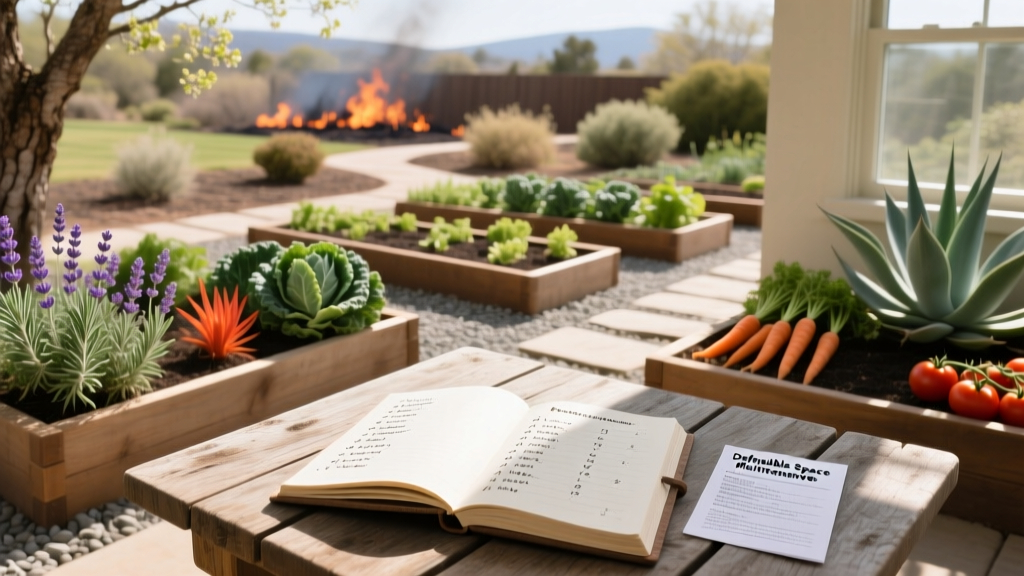
2026 Fire-Resistant Garden Journal & Harvest Log Guide
Sarah ChenPublished
Bridging Garden-to-Table Living and Defensible Space
As we navigate the 2026 growing season, the intersection of garden-to-table living and fire-resistant landscaping has never been more critical. With climate models predicting longer, more unpredictable dry spells across many regions, homeowners are rethinking their outdoor spaces. You no longer have to choose between a lush, edible garden and a fire-safe property. By utilizing a dedicated garden journal with a specialized planting calendar and harvest log, you can successfully cultivate high-moisture, fire-retardant edibles while rigorously managing your landscape's fuel loads. A well-maintained journal is not just a diary of your horticultural successes; it is a vital strategic tool for maintaining defensible space and ensuring your garden remains a vibrant, safe extension of your home.
Why Fire-Resistant Landscaping Demands a Dedicated Journal
Traditional garden journals focus primarily on yield, soil amendments, and pest control. However, a fire-resistant garden journal must also track biomass accumulation, plant moisture levels, and seasonal clearance deadlines. According to the Ready.gov wildfire preparedness guidelines, creating and maintaining a defensible space is your first line of defense against wildfires. In the context of an edible garden, this means carefully monitoring the lifecycle of your plants. An unharvested, drying tomato vine or a bolted lettuce crop in late August can quickly transform from a food source into hazardous, dry kindling just as peak fire season begins.
By documenting your garden's weekly status, you create an actionable maintenance schedule that forces you to clear dead vegetation before it becomes a liability. Furthermore, tracking your smart irrigation system's performance in your journal ensures that your fire-retardant plants maintain the high internal water content necessary to resist ignition. The National Fire Protection Association (NFPA) emphasizes that the arrangement and maintenance of vegetation immediately surrounding your home are critical factors in wildfire survival. Your journal is the blueprint for that maintenance.
Designing Your 2026 Planting Calendar for Fire-Safe Edibles
When planning your 2026 planting calendar, the goal is to select crops that naturally retain high water content and lack volatile oils or resins. Succulents like aloe vera and agave are excellent fire-resistant borders, but for the edible garden, you want to focus on broad-leafed, high-moisture vegetables and fruit trees with minimal waxy coatings. Avoid planting highly flammable herbs like rosemary, sage, or lavender within the critical 30-foot defensible space zone around your home.
Below is a structured 2026 planting and clearance calendar designed specifically for fire-safe edible gardening in temperate to warm-summer climates. The 'Clearance Deadline' is the most crucial column for your journal, dictating when spent plants must be removed to eliminate fuel loads.
| Plant Type | Moisture Level | 2026 Planting Window | Harvest Period | Clearance Deadline |
|---|---|---|---|---|
| Zucchini & Squash | Very High | April - May | June - August | September 1 |
| Cucumbers | Very High | May - June | July - September | September 15 |
| Watermelon | Extremely High | May - June | August - September | October 1 |
| Leafy Greens (Chard) | High | March - April | May - July | August 1 (Before peak heat) |
| Citrus Trees | High (Irrigated) | Spring/Fall | Winter/Spring | Prune deadwood by May 1 |
The Harvest Log: Your Secret Weapon Against Fuel Loads
The harvest log in a fire-resistant garden journal serves a dual purpose: it tracks your culinary yield and monitors the end-of-life cycle for your plants. In a traditional garden, a gardener might leave a drying bean stalk in the ground until late autumn to cure. In a fire-resistant landscape, leaving dry, brittle biomass near your home is a severe hazard.
Use your harvest log to note the exact date a plant stops producing viable yields. Once a plant's productivity drops below 20%, your journal should trigger a 'Removal Task.' For example, if your cucumber vines stop flowering and begin to brown in early September, the harvest log will remind you to pull the vines, chop them, and move them to a safe composting area immediately. This proactive removal prevents the accumulation of fine, dry fuels that can easily catch wind-blown embers.
Safe Composting and Biomass Disposal Tracking
Your journal must also include a section for biomass disposal. Never place dry garden waste or active compost bins within the 30-foot defensible space zone. Compost piles can retain heat and, in extremely dry conditions, pose a spontaneous combustion risk or easily catch fire from stray embers. Log the location and moisture level of your compost bins weekly, ensuring they are situated at least 50 feet away from any structures and are kept adequately damp.
Tracking Smart Irrigation and Microclimate Shifts
A fire-retardant plant is only fire-retardant if it is properly hydrated. In 2026, smart irrigation controllers like the Rachio 4 or Hunter Hydrawise are essential for maintaining soil moisture without wasting water. Your garden journal should include a weekly 'Irrigation Audit' section.
Use this section to log the output of your soil moisture sensors and verify that your drip lines are delivering water directly to the root zones of your high-moisture edibles. If a heatwave is forecasted, note in your journal the manual overrides you applied to your smart controller to increase watering frequency. Keeping a written record of these microclimate adjustments helps you understand how your soil retains moisture during extreme weather events, allowing you to refine your watering schedules for future seasons.
Pro Tip for 2026: Integrate a digital soil moisture probe with your garden journal app. Logging the exact volumetric water content (VWC) of your soil helps you prove to local fire marshals or insurance inspectors that your defensible space vegetation is actively maintained and highly hydrated.
The Ultimate Weekly Fire-Resistant Garden Journal Template
To put this strategy into action, dedicate a specific spread in your physical journal or a dedicated template in your digital gardening app for your weekly fire-safety audit. Here is the exact structure you should use every Sunday evening during the growing season:
- Date & Weather Forecast: Note upcoming high-wind or low-humidity events (e.g., Santa Ana or Diablo winds).
- Defensible Space Walkthrough: Check the 0-5 foot ember-resistant zone. Log any dry leaves or deadheaded flowers that need sweeping.
- Plant Moisture Check: Visually inspect broad-leaf edibles for wilting. Log any drip irrigation leaks or clogged emitters.
- Harvest & Biomass Log: Record what was harvested. More importantly, record what plants have 'bolted' or finished producing and schedule their immediate removal.
- Tool & Equipment Safety: Log the storage location of gas-powered trimmers or mowers, ensuring they are kept in a fire-proof shed away from dry vegetation.
Conclusion
Embracing fire-resistant landscaping does not mean sacrificing the joy of a productive, edible garden. By shifting your perspective and utilizing a specialized garden journal, you can enjoy the fruits of your labor while rigorously protecting your home. The 2026 planting calendar and harvest log are your best defenses against the hidden fuel loads that plague neglected gardens. Stay organized, stay hydrated, and let your garden journal be the roadmap to a beautiful, resilient, and fire-safe outdoor living space.
