Home & Garden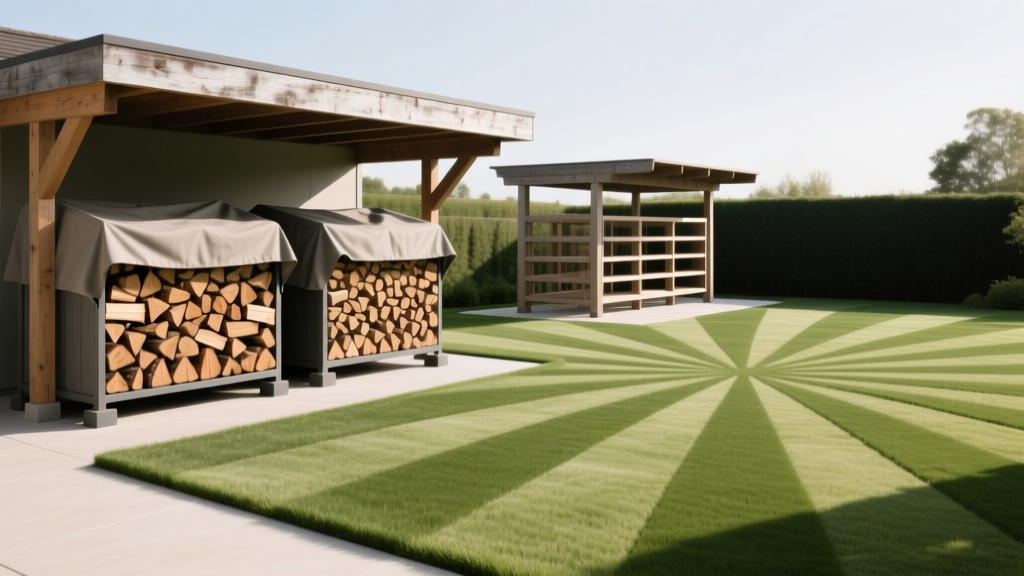
Firewood Racks & Mowing Patterns: Covered vs Open-Air 2026
Lisa ThompsonPublished
The Intersection of Firewood Seasoning and Lawn Care
As outdoor living spaces continue to evolve in 2026, homeowners are increasingly blending utility with high-end landscape aesthetics. One of the most common challenges in yard management is integrating large, heavy utility structures—specifically firewood storage racks—into a pristine, well-manicured lawn. While the debate over the best firewood seasoning method (covered vs. open-air) is usually confined to woodworking and heating forums, it has a profound impact on your turfgrass health and your weekly mowing patterns.
A firewood rack is not just a static object; it is a massive obstacle that dictates mower turning radiuses, disrupts striping patterns, and creates microclimates that can either nurture or destroy the grass beneath it. Whether you are using a commercial zero-turn mower or a standard 21-inch push deck, understanding how to site, season, and mow around your firewood storage is essential for maintaining a championship-caliber lawn in 2026.
Covered vs. Open-Air Firewood Racks: The 2026 Seasoning Debate
Before you can establish a mowing pattern, you must decide how to season your firewood. Properly seasoned wood should have a moisture content of 20% or less to burn efficiently and minimize creosote buildup. According to the University of Minnesota Extension, achieving this moisture level requires strategic stacking, adequate airflow, and the right exposure to the elements. The method you choose directly impacts the footprint and maintenance requirements of your yard.
The Open-Air Seasoning Method
Open-air seasoning relies entirely on natural wind and solar radiation to draw moisture out of the wood. In this method, the firewood rack is left completely exposed to the sky. While this maximizes UV exposure and allows rain to wash away surface debris, it also means the wood takes significantly longer to cure—often 12 to 18 months depending on your climate. From a lawn care perspective, an open-air rack casts a dense, unbroken shadow over the turf beneath it. Because the rack is typically placed in a sunny area to aid seasoning, the surrounding grass thrives, but the grass directly underneath will inevitably thin out due to extreme shade and soil compaction from the immense weight of the wood.
Covered Firewood Storage Racks
Covered racks utilize a roof structure, heavy-duty tarp, or integrated metal canopy to shield the top layers of wood from rain and snow while leaving the sides open for cross-ventilation. This method accelerates the seasoning process, often bringing moisture levels down to the ideal 20% mark in just 6 to 9 months. The EPA BurnWise program strongly advocates for properly seasoned, dry wood to reduce particulate emissions, making covered racks an environmentally superior choice. For the lawn enthusiast, a covered rack offers a distinct advantage: you can position it in a partially shaded area of the yard (such as near a tree line or fence) to protect shade-tolerant grasses like Fine Fescue, without worrying about rain re-wetting the wood.
Comparison: Covered vs. Open-Air Rack Impact on Landscaping
| Feature | Covered Rack | Open-Air Rack |
|---|---|---|
| Seasoning Time | 6 - 9 Months | 12 - 18 Months |
| Rain Protection | Excellent | None |
| Turf Shade Impact | Moderate (can be placed in partial shade) | Severe (must be placed in full sun) |
| Mowing Buffer Needed | 24 inches | 36 inches (to avoid water splashback) |
| Weed Pressure | Low (dry base) | High (damp base promotes weeds) |
Siting Your Rack: Protecting the Turfgrass
The most critical mowing technique actually begins before you even start the mower. Placing a heavy firewood rack directly on your lawn will compact the soil, suffocating the root zone and killing the turf. Current 2026 turfgrass guidelines from NC State TurfFiles emphasize that soil compaction is a primary driver of turf decline. To protect your lawn, always place your firewood rack on a base of crushed gravel, permeable paver grids, or a raised wooden deck. This not only preserves the soil structure but also creates a clean, hard boundary line that makes edging and mowing significantly easier.
Mowing Techniques & Patterns Around Wood Racks
Once your rack is properly sited, you must adapt your mowing patterns to accommodate the obstacle. A firewood rack disrupts the long, continuous passes required for classic lawn striping. Here is how to maintain pristine patterns in 2026.
The Perimeter Halo Striping Technique
The most effective way to mow around a central or edge-placed firewood rack is the Perimeter Halo method. Start by mowing a continuous 3-foot-wide boundary around the entire rack and its gravel base. Make two passes in a clockwise direction. This creates a 'halo' that serves as a turning zone for the rest of your mowing session. Once the halo is established, switch to your primary striping pattern (straight lines or checkerboard) for the open expanse of the lawn. When you approach the rack, use the halo zone to execute smooth, sweeping U-turns rather than harsh 180-degree pivots that can tear the turf.
Checkerboard Pattern Integration
If you prefer a checkerboard pattern, the firewood rack can act as a natural anchor point for your grid. Treat the rack as the 'zero' coordinate on your X and Y axes. Mow your first set of parallel lines perpendicular to the front face of the rack, overlapping each pass by 10%. Then, mow the second set of lines parallel to the rack. Because the rack blocks a continuous path, you will need to lift your mower deck when crossing the 'shadow' of the rack's footprint to avoid leaving uncut strips of grass where the rack interrupts your line of sight.
Managing the Turning Radius and Y-Turns
If you are using a modern 2026 zero-turn mower, you might be tempted to use the rack as a pivot point. Avoid this. The casters on zero-turn mowers can easily scrape the gravel base or dent the metal legs of the rack. Instead, utilize the 'Y-turn' technique. As you approach the end of a stripe near the wood rack, pull back slightly, turn the mower 45 degrees to the left, reverse slightly, and then turn 90 degrees to the right to align with your next stripe. This multi-point turn distributes the mower's weight over a wider area of turf, preventing the ugly circular dead spots that occur when pivoting on a single rear wheel.
Edge Trimming, Smart Irrigation, and Rack Maintenance
Mowing is only half the battle; edging and irrigation complete the 2026 landscape picture. When using a string trimmer near an open-air or covered firewood rack, always position yourself so the trimmer head spins away from the wood pile. Trimming toward the rack will launch grass clippings, dirt, and weeds directly into your seasoned firewood, introducing moisture and pests. Furthermore, ensure your smart irrigation system's sprinkler heads are adjusted to avoid spraying the rack. Modern rotary nozzles can be dialed back to create a precise arc that waters the grass up to the gravel line without soaking your firewood supply.
By thoughtfully selecting between covered and open-air seasoning methods and adapting your mowing patterns to respect the rack's footprint, you can maintain a lush, heavily striped lawn without sacrificing your winter heating supply. Proper integration of utility and aesthetics is the hallmark of a truly professional home landscape.
