Home & Garden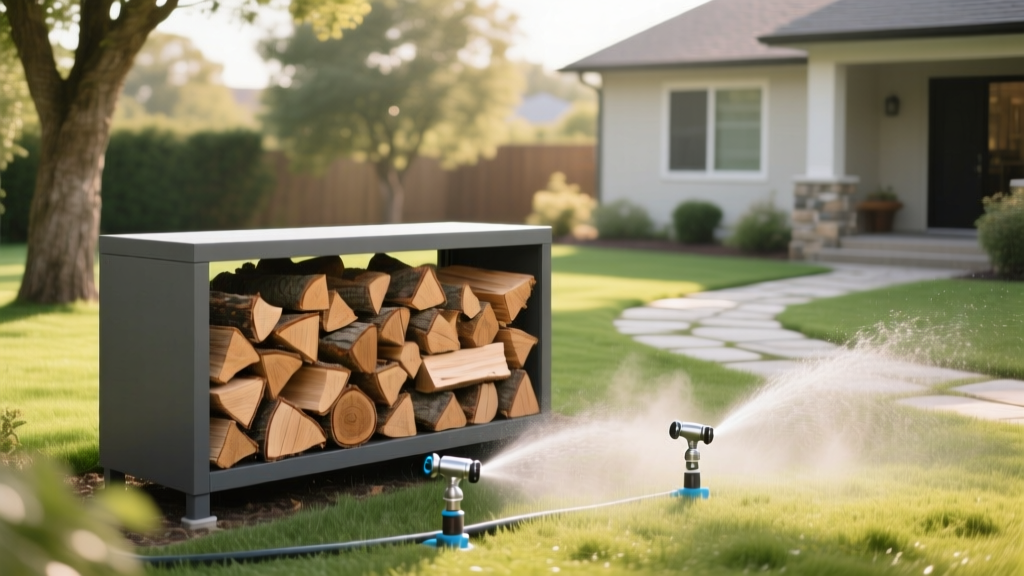
Firewood Racks: Covered vs Open-Air Near Sprinklers 2026
Sarah ChenPublished
The Intersection of Smart Irrigation and Firewood Seasoning
As homeowners in 2026 continue to blur the lines between indoor comfort and outdoor living, the modern landscape is a highly engineered ecosystem. Smart irrigation systems, precision drip lines, and AI-driven weather controllers keep our lawns and garden beds lush with minimal water waste. However, this high-efficiency moisture management creates a unique challenge for a classic outdoor necessity: firewood storage. When evaluating the firewood storage rack covered vs open-air seasoning method, the proximity of your woodpile to active irrigation zones is just as critical as the ambient humidity and sunlight exposure.
Seasoning firewood requires reducing its moisture content to below 20% for clean, efficient burning. According to the EPA's Burn Wise program, burning unseasoned or damp wood leads to excessive smoke, dangerous creosote buildup, and significantly lower heat output. Yet, many homeowners unknowingly sabotage their seasoning process by placing open-air racks directly in the path of smart sprinkler overspray or near garden beds saturated by automated drip irrigation. In this comprehensive guide, we will explore how to choose the right rack style and integrate your wood storage strategy with your 2026 smart irrigation layout.
The Science of Seasoning: Why Sprinkler Overspray is the Enemy
The seasoning process relies on two primary environmental factors: solar heat and consistent airflow. When you stack split wood, the goal is to allow the sun and wind to draw out internal sap and moisture. Modern smart sprinkler systems, such as the latest Rachio 4 or Orbit B-hyve controllers, are designed to apply water deeply and efficiently to root zones. However, wind drift, minor calibration errors, and the natural arc of rotor sprinkler heads often result in 'overspray'—fine mist or direct droplets that land on hardscapes, fences, and nearby firewood racks.
If your firewood is subjected to daily or bi-weekly artificial rain from your irrigation system, the surface moisture repeatedly rewets the wood bark. This not only halts the internal drying process but also creates an ideal breeding ground for wood-decaying fungi and mold. The Wood Heat Organization emphasizes that proper airflow and protection from external moisture sources are non-negotiable for achieving premium firewood quality. Therefore, your irrigation map must dictate your firewood storage strategy.
Covered vs. Open-Air Firewood Racks: A 2026 Comparison
Choosing between a covered and an open-air firewood rack depends heavily on your specific landscape design and the placement of your irrigation heads. Let us break down the pros and cons of each method in the context of modern, irrigated yards.
The Open-Air Seasoning Method
Open-air racks are typically constructed from powder-coated steel or cedar, featuring a slatted bottom to keep wood off the soil. They expose the entire stack to the elements, maximizing cross-breeze ventilation and direct UV exposure.
- Pros: Superior airflow accelerates the initial drying phase. Open racks are generally more affordable and easier to assemble.
- Cons: Highly vulnerable to sprinkler overspray, rain, and snow. If placed near a lawn edge where pop-up spray heads operate, the bottom tiers of wood will constantly absorb moisture from the irrigation drift and splash-back from the wet grass.
- Best Use Case: Only suitable for open-air racks if they are placed in a designated 'dry zone' of your yard, far away from any smart irrigation coverage, or if you have retrofitted your border sprinklers with precision no-spray nozzles.
The Covered Rack Method
Covered racks feature a heavy-duty canvas, polycarbonate, or metal roof that shields the top and sometimes the sides of the woodpile. In 2026, many premium covers are made from UV-resistant, breathable marine-grade fabrics that repel liquid water while allowing water vapor to escape.
- Pros: Excellent protection against overhead sprinkler drift, rain, and falling debris. Keeps the core of the woodpile dry even if the edges are exposed to ambient landscape humidity.
- Cons: Can restrict top-down airflow if the cover is pulled too tightly. Condensation can build up under poorly ventilated tarps if the wood is exposed to high humidity from nearby drip-irrigated garden beds.
- Best Use Case: The mandatory choice for woodpicks located near active garden beds, property lines with neighbor-facing sprinklers, or under the canopy of trees where drip lines are prevalent.
Feature Comparison: Covered vs. Open-Air in Irrigated Zones
| Feature | Open-Air Rack | Covered Rack |
|---|---|---|
| Airflow Efficiency | Excellent (360-degree exposure) | Good (Requires open sides) |
| Sprinkler Overspray Protection | Poor (High risk of rewetting) | Excellent (Sheds artificial rain) |
| Splash-back from Wet Lawns | High (Bottom logs absorb moisture) | Moderate (Elevation is still required) |
| Smart Zone Compatibility | Requires strict 'Dry Zone' mapping | Compatible with most perimeter zones |
| Average 2026 Cost | $60 - $120 | $130 - $250+ |
Mapping Your 2026 Irrigation Zones Around Wood Storage
To successfully season firewood without compromising your lawn's health, you must integrate your wood storage into your smart irrigation strategy. The Irrigation Association continually advocates for 'hydro-zoning'—grouping plants and landscape features by their water needs. In 2026, hydro-zoning also means identifying 'zero-water zones' for functional outdoor storage.
Upgrading to Precision Nozzles
If your firewood rack must sit near a lawn edge, replace traditional spray heads with variable-arc rotary nozzles, such as the Hunter MP Rotator or Toro Precision SRM. These nozzles throw larger, heavier droplets that are highly resistant to wind drift. By carefully adjusting the left and right arc stops on the rotary nozzle, you can create a hard boundary that waters the grass up to exactly one inch away from your firewood rack, eliminating the fine mist that typically coats open-air wood stacks.
Smart Controller Integration and Microclimates
Modern smart controllers utilize local weather stations and soil moisture sensors to adjust watering schedules dynamically. However, a woodpile creates a unique microclimate. It casts a deep shadow that prevents the adjacent soil from drying out as quickly as the rest of the lawn. If your smart controller's soil moisture sensor is located near the woodpile, it may read the soil as 'wet' and delay watering for the entire zone, potentially stressing the grass in the sunnier areas.
The 2026 Solution: Use your smart controller's app to create a dedicated 'Perimeter Zone' for the sprinkler heads nearest to your firewood rack. Set a custom drying offset or reduce the precipitation rate in the software to account for the shade and reduced evaporation caused by the woodpile. Furthermore, ensure that any drip irrigation lines running to nearby shrubs are equipped with pressure-compensating emitters and are routed at least three feet away from the base of the wood rack to prevent ground-level moisture from wicking up into the bottom logs.
Actionable Setup Guide for Homeowners
Whether you opt for a covered or open-air rack, follow these actionable steps to ensure your firewood reaches the ideal sub-20% moisture content while coexisting with your automated landscape:
- Elevate the Base: Never place wood directly on the ground or on flat concrete where irrigation runoff pools. Use a rack with at least a 4-inch clearance, and consider laying down a bed of coarse gravel beneath the rack to promote rapid drainage of any stray sprinkler water.
- Orient for the Wind, Not the Sprinkler: Position the open sides of your rack parallel to the prevailing wind. Ensure the solid back of the rack (or the covered side) faces the nearest active sprinkler head to act as a physical windbreak against overspray.
- Utilize Smart Moisture Meters: Invest in a digital, dual-pin wood moisture meter. Test the core of a split log from the center of your stack every 30 days. If readings remain above 25% after three months of summer weather, audit your nearby irrigation zones for hidden leaks or excessive drift.
- Maintain a 3-Foot Clearance: Keep a minimum three-foot buffer between your firewood rack and any dense, drip-irrigated shrubbery. This prevents the transpiration (natural water vapor release) from the plants from keeping the woodpile in a perpetual state of high humidity.
'The biggest mistake homeowners make is treating firewood storage as an afterthought. In a modern, smart-irrigated landscape, your woodpile is a functional outdoor appliance. Protecting it from artificial moisture sources is just as important as protecting your home's foundation from overwatering.'
Conclusion
The debate between the firewood storage rack covered vs open-air seasoning method ultimately comes down to your landscape's irrigation footprint. If you have the luxury of a dedicated, sun-drenched, un-irrigated corner of your property, an open-air rack offers unparalleled airflow for rapid seasoning. However, for the majority of modern homes where space is optimized and smart sprinklers cover every inch of turf and garden beds, a well-ventilated covered rack is the superior choice. By mapping your irrigation zones, upgrading to drift-resistant nozzles, and respecting the microclimate your woodpile creates, you can enjoy a lush, automated landscape in 2026 while securing a premium, dry supply of firewood for the colder months ahead.
