Lawn Care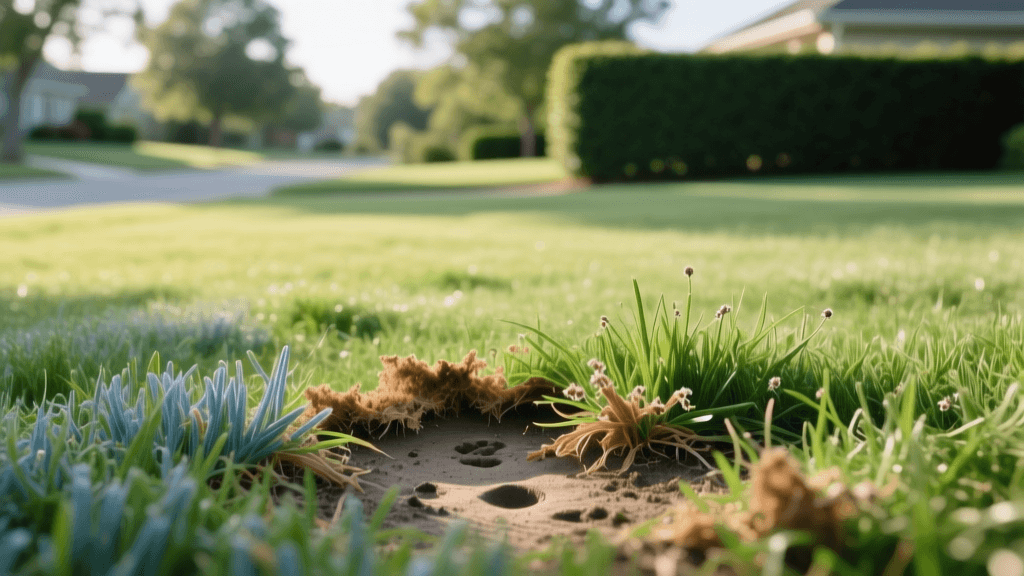
Diagnose and Fix Brown Patches in Cool-Season Lawns
Why Is My Lawn Turning Brown?
Seeing irregular brown patches spreading across your once-lush cool-season lawn can be an alarming experience for any homeowner. Whether you are growing Kentucky bluegrass, tall fescue, or perennial ryegrass, sudden discoloration is a clear distress signal. However, applying the wrong treatment can waste time, money, and potentially worsen the problem. Misdiagnosing a fungal infection as drought stress, or vice versa, is one of the most common mistakes in lawn care. To restore your turf, you must first play detective and identify the exact underlying cause.
According to turfgrass pathologists at Penn State Extension, environmental factors such as high humidity, poor soil drainage, and improper mowing practices frequently create the perfect storm for turfgrass diseases. In this comprehensive troubleshooting guide, we will break down the three primary culprits behind brown spots in cool-season lawns, provide a step-by-step diagnostic process, and outline actionable treatment protocols featuring specific product recommendations and application rates.
The Three Main Culprits Behind Brown Spots
1. Fungal Diseases: Brown Patch and Dollar Spot
Brown patch (Rhizoctonia solani) is the most notorious fungal disease affecting cool-season grasses. It thrives when nighttime temperatures remain above 68°F and daytime temperatures soar into the 80s and 90s, especially when accompanied by high humidity or prolonged leaf wetness. The fungus attacks the leaf blades, creating circular or irregular patches of brown, dead grass that can range from a few inches to several feet in diameter. Often, you will notice a dark, smoky ring at the perimeter of the patch during the early morning hours when dew is present.
Dollar spot (Clarireedia jacksonii) presents differently, forming smaller, silver-dollar-sized bleached spots that eventually coalesce into larger brown areas. Both diseases are exacerbated by excess nitrogen fertilizer in the spring, poor air circulation, and watering the lawn late in the evening.
2. White Grub Infestations
White grubs are the C-shaped larvae of scarab beetles, including Japanese beetles, June bugs, and European chafers. These pests live just beneath the soil surface and feed voraciously on grassroots. As they sever the roots, the turf loses its ability to uptake water and nutrients, resulting in irregular, spongy brown patches that typically appear in late summer or early fall.
Experts at the University of Kentucky Entomology department note that grub damage is often compounded by secondary pests. Animals like skunks, raccoons, and crows will tear up the weakened turf to feast on the protein-rich larvae, causing massive secondary destruction to your lawn.
3. Drought Stress and Summer Dormancy
Cool-season grasses naturally slow their growth during the heat of summer. If rainfall is scarce and supplemental irrigation is lacking, the grass will exhibit drought stress. Initially, the blades will fold inward and take on a dull, grayish-green hue. Footprints will remain visible on the grass long after walking on it. If the drought persists, the lawn will enter summer dormancy, turning uniformly brown to protect its crown and root system until moisture returns.
Diagnostic Comparison Chart
Use the following table to quickly compare the visual and physical symptoms of the three primary causes of brown patches.
| Symptom / Factor | Fungal Disease (Brown Patch) | White Grub Damage | Drought Stress |
|---|---|---|---|
| Patch Shape | Circular, irregular rings | Irregular, spongy brown areas | Large, uniform brown zones |
| Root Attachment | Roots remain firmly anchored | Roots severed; turf rolls back like carpet | Roots are dry but intact |
| Blade Appearance | Lesions with dark borders | Healthy blades initially, then wilting | Folded, dull, grayish-green blades |
| Soil Condition | Often damp and poorly drained | Loose, easily disturbed soil | Hard, compacted, and dry |
| Presence of Pests | None (sometimes mycelium at dawn) | C-shaped white larvae in topsoil | None |
Step-by-Step Troubleshooting Guide
Step 1: The "Tug Test" for Grubs
Walk to the edge of a brown patch where the dying grass meets the green grass. Grab a handful of turf and pull upward gently. If the grass lifts easily like a loose carpet and you see severed roots, you likely have a grub problem. Peel back the sod and inspect the top two inches of soil. Finding more than 5 to 10 white, C-shaped grubs per square foot confirms an active infestation requiring immediate curative treatment.
Step 2: Inspecting Grass Blades for Fungus
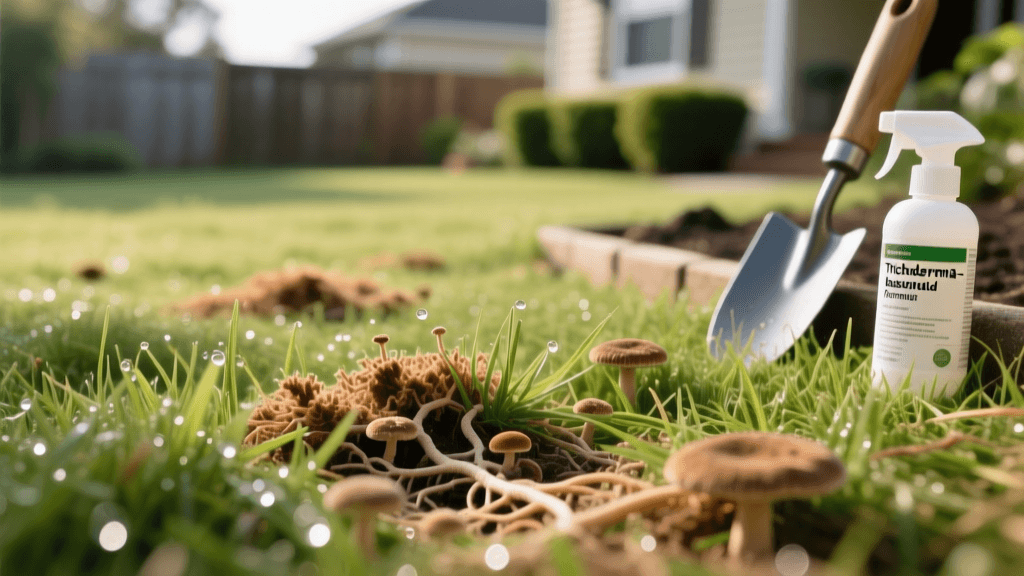
If the roots are firmly anchored and the turf does not pull up easily, examine the grass blades at the margin of the brown patch. Look for tan or light brown lesions on the blades, often bordered by a dark brown or purplish margin. If you inspect the lawn at dawn while the dew is still heavy, you may also see a white, cobweb-like mycelium covering the blades. This confirms a fungal pathogen like Brown Patch.
Step 3: Checking Soil Moisture
If the roots are intact and there are no lesions on the blades, test the soil moisture. Take a standard 6-inch screwdriver and push it into the soil in the brown area, then do the same in a healthy green area. If the screwdriver easily slides into the green area but meets heavy resistance in the brown area, your lawn is suffering from severe drought stress. The soil is hydrophobic and compacted, preventing water penetration.
Treatment Protocols and Product Recommendations
Targeted Fungicide Applications
Once a fungal disease is confirmed, you must act quickly to stop the spread. For curative control of Brown Patch, apply a systemic fungicide containing Azoxystrobin (e.g., Heritage G or Scotts DiseaseEx) or Propiconazole (e.g., Banner Maxx). Apply granular Azoxystrobin at a rate of 2 to 4 pounds per 1,000 square feet, followed by a light watering to activate the product into the soil profile. To prevent fungicide resistance, rotate your chemical classes. For your next application 21 days later, switch to a contact fungicide like Chlorothalonil. Always apply fungicides when temperatures are below 85°F to avoid turf burn.
Curative Grub Control Strategies
If your tug test reveals a heavy grub population in late summer, preventative products will no longer work. You need a fast-acting curative insecticide. Trichlorfon (commonly sold as Dylox) is the industry standard for curative grub control. Apply it at a rate of 1.5 to 2 pounds of active ingredient per acre, and water it in immediately with at least 0.5 inches of irrigation to carry the chemical into the root zone where the grubs are feeding. Note that Trichlorfon degrades quickly in high-pH soils, so a soil test is recommended prior to application.
Irrigation Adjustments
For drought-stressed lawns, the goal is to rehydrate the soil without causing runoff. The Rutgers Cooperative Extension recommends deep, infrequent watering to encourage deep root growth. Apply 1 to 1.5 inches of water per week, ideally split into two sessions. Water strictly between 4:00 AM and 8:00 AM. This timing allows the grass blades to dry quickly once the sun rises, minimizing the risk of fungal diseases while ensuring the soil receives adequate moisture. Use empty tuna cans placed around the lawn to measure exactly how much water your sprinkler system outputs over a given time.
Preventative Lawn Care Maintenance
Troubleshooting and treating brown patches is only half the battle; implementing a robust preventative maintenance routine is essential for long-term turf health. First, adjust your mowing height. During the heat of summer, raise your mower deck to cut cool-season grasses at 3.5 to 4 inches. Taller grass shades the soil, reducing moisture evaporation and keeping soil temperatures cooler, which naturally suppresses both drought stress and fungal activity.
Second, manage your thatch layer. A thatch layer thicker than 0.5 inches acts as a sponge, holding moisture against the grass stems and creating a haven for fungal spores and grub larvae. Schedule core aeration for early fall to alleviate soil compaction, break down thatch, and improve water infiltration. Finally, base your fertilization schedule on a comprehensive soil test. Avoid heavy nitrogen applications in late spring and early summer, as lush, rapid growth is highly susceptible to Brown Patch. Instead, focus on potassium-rich fertilizers in the fall to build root resilience and disease resistance for the following year.