
Landscaping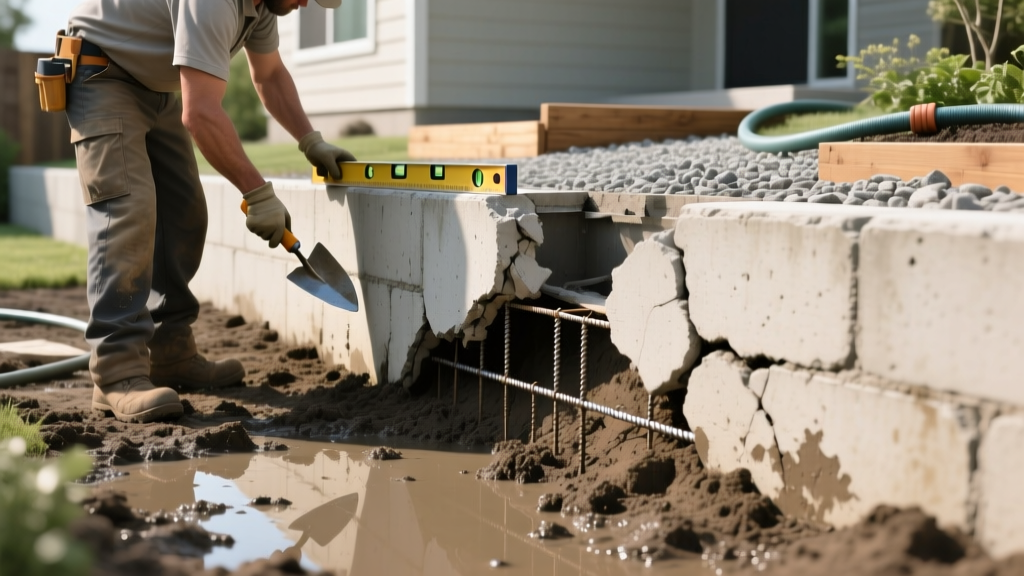
Troubleshooting Retaining Wall Bulges and Structural Failures
Mike RodriguezPublished
Introduction to Retaining Wall Failures
Retaining walls are the unsung heroes of landscape design, transforming unusable slopes into flat, functional outdoor living spaces. However, when a retaining wall begins to bulge, lean, or crack, it transitions from a beautiful hardscape feature into a severe structural liability. Diagnosing the root cause of these failures is critical before attempting any repairs. A bulging wall is rarely just a cosmetic issue; it is a physical manifestation of overwhelming lateral earth pressure or hydrostatic force. In this comprehensive troubleshooting guide, we will explore the primary reasons segmental retaining walls fail, provide a detailed material comparison for proper backfill, and outline a step-by-step repair strategy to restore your landscape's structural integrity.
Diagnosing the Root Cause of Wall Bulges
Before you purchase materials or rent excavation equipment, you must accurately diagnose why the wall is failing. According to the Penn State Extension, the most common cause of segmental retaining wall failure is inadequate drainage and improper base preparation. Let us break down the three primary culprits behind retaining wall bulges.
1. Hydrostatic Pressure and Water Buildup
Water is the number one enemy of any retaining wall. When soil becomes saturated, it expands and exerts immense lateral pressure against the back of the wall blocks. Water weighs approximately 62.4 pounds per cubic foot. If a four-foot-tall wall lacks a proper weep hole system or backfill drainage layer, the trapped water can exert thousands of pounds of hydrostatic pressure, pushing the middle or lower sections of the wall outward. If you notice efflorescence (white, powdery mineral deposits) on the face of the blocks or see water seeping through the block joints rather than draining out of designated weep holes, hydrostatic pressure is likely your primary issue.
2. Inadequate Base and Subgrade Preparation
A retaining wall is only as strong as its foundation. If the base course was laid directly on native topsoil, uncompacted clay, or without a proper crushed gravel foundation, the wall will shift. The University of Minnesota Extension highlights that frost heave is a major factor in northern climates; when the soil beneath the base course freezes and expands, it lifts the wall unevenly, causing severe bulging and rotational failure. The industry standard requires a compacted base of 3/4-inch angular crushed stone, buried at a depth equal to 10 percent of the total wall height plus six inches.
3. Surcharge Loads and Soil Mechanics
Surcharge loads refer to any additional weight placed on the soil surface behind the retaining wall. This includes driveways, swimming pools, heavy patios, or even large mature trees. The National Concrete Masonry Association (NCMA) engineering guidelines dictate that significant surcharge loads require specialized geogrid reinforcement. If a wall was built without geogrid and a heavy structure was later added to the top of the slope, the increased lateral force will easily overcome the friction holding the wall blocks together, resulting in a massive outward bulge near the top third of the wall.
Backfill Material Comparison Chart
Choosing the correct backfill material is non-negotiable when repairing a bulging wall. Native soil, especially clay, retains water and causes the exact hydrostatic issues you are trying to fix. Below is a comparison of common backfill materials used in hardscape drainage repair.
| Material Type | Drainage Rate | Compaction Needs | Avg. Cost per Ton | Best Application |
|---|---|---|---|---|
| Native Clay Soil | Poor | High (Proctor test) | $15 - $25 | None (Do not use behind wall) |
| 3/4-inch Crushed Gravel | Excellent | Self-compacting | $30 - $45 | Immediate 12-inch wall backfill |
| Pea Gravel | Good | Poor interlocking | $35 - $50 | French drain trenches only |
| Coarse Mason Sand | Moderate | Moderate | $20 - $30 | Base leveling (not backfill) |
Step-by-Step Repair Strategy
Repairing a bulging retaining wall requires partial demolition, excavation, and reconstruction. For a standard 20-foot long, 4-foot high wall, expect this project to take two to three weekends for a dedicated DIY team, or roughly three to four days for a professional hardscape crew.
Step 1: Excavation and Drainage Relief
Begin by removing the coping stones and the top courses of block down to the point where the bulge originates. Excavate the soil behind the wall to a depth of at least 12 to 18 inches. If you encounter saturated, foul-smelling clay, remove it entirely. Install a continuous 4-inch SDR 35 rigid PVC perforated drain pipe at the base of the excavation, ensuring it slopes at a minimum grade of 1/8 inch per foot toward a daylight exit point. Wrap the pipe in a non-woven geotextile fabric, such as Mirafi 500X, to prevent fine soil particles from migrating into the pipe and causing clogs over time.
Step 2: Rebuilding the Base and Backfill
If the base course has shifted, you must pull the affected blocks and re-compact the subgrade. Use a mechanical plate compactor (such as a Wacker Neuson with at least 3,000 lbs of centrifugal force) to compact a 6-inch layer of 3/4-inch angular crushed gravel. Re-lay the base course, checking for level with a 4-foot torpedo level and a string line. Once the blocks are stacked back up, backfill the immediate 12 inches directly behind the wall with 3/4-inch clean, crushed gravel. This creates a massive vertical French drain, allowing water to drop straight down to your perforated PVC pipe rather than pushing against the blocks.
Step 3: Installing Geogrid for Reinforcement
If your wall is taller than three feet, or if it supports a surcharge load, you must integrate biaxial geogrid (such as Tensar BX1200) into the block courses. Geogrid acts as a tensile anchor, tying the wall blocks into the compacted soil mass behind it. Lay the geogrid perpendicular to the wall face, extending it back into the soil by a distance equal to 60 percent of the total wall height. For a 4-foot wall, the geogrid should extend 2.4 feet back. Secure the geogrid between the block courses using the manufacturer's specified connection pins or friction, and compact the soil over the grid in 8-inch lifts to ensure maximum interlocking strength.
Cost Breakdown and Timing
Budgeting for a retaining wall repair requires accounting for both materials and heavy equipment rentals. For a 20-foot section of wall requiring excavation, new drainage, and geogrid, anticipate the following material costs:
- 3/4-inch Crushed Gravel: 3 to 4 tons at $40/ton = $120 - $160
- Geogrid (Tensar or equivalent): 100 sq ft roll = $150 - $200
- Drainage Pipe and Fabric: 4-inch PVC and Mirafi wrap = $80 - $120
- Replacement Blocks: Depending on the brand (e.g., Allan Block, Versa-Lok) = $200 - $400
- Equipment Rental: Plate compactor and mini-excavator (2 days) = $400 - $600
Total DIY repair costs typically range from $950 to $1,480 for a localized 20-foot repair. Hiring a professional hardscape contractor will generally cost between $45 and $85 per linear foot for repair work, factoring in labor, liability insurance, and engineered soil disposal.
When to Call a Structural Engineer
While many localized bulges can be repaired by an experienced DIYer or landscaping contractor, certain red flags require the immediate attention of a licensed geotechnical or structural engineer. If the wall is taller than six feet, if it is holding back a municipal right-of-way, or if the failure has caused structural damage to an adjacent home foundation or driveway, do not attempt a DIY fix. An engineer will perform a soil shear-strength analysis and design a reinforced concrete cantilever wall or a specialized mechanically stabilized earth (MSE) system to guarantee long-term safety.
Conclusion
Troubleshooting a bulging retaining wall is a demanding but highly rewarding hardscape project. By correctly identifying hydrostatic pressure, base failures, or surcharge overloads, you can implement targeted repairs that save the wall from total collapse. Always prioritize drainage and use angular, free-draining gravel immediately behind your wall blocks. With proper excavation, geogrid reinforcement, and adherence to industry engineering standards, your restored retaining wall will safely hold back the earth and maintain your landscape's curb appeal for decades to come.

