
Landscaping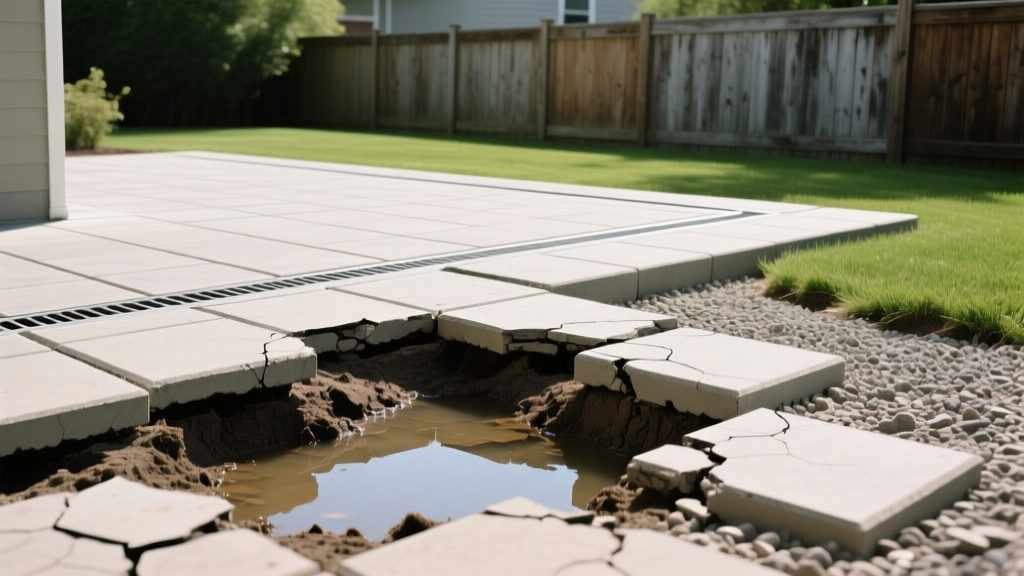
How to Fix Sinking Pavers and Patio Drainage Issues
Robert HayesPublished
Diagnosing the Root Cause of Hardscape Settling
A beautifully installed paver patio can quickly become an eyesore and a tripping hazard when the stones begin to sink, shift, or pool water. Hardscape settling is one of the most common landscaping problems, but it is rarely a spontaneous event. Before you start pulling up stones and buying new sand, it is critical to diagnose the underlying issue. If you only treat the symptom without addressing the root cause, your patio will inevitably sink again.
Inadequate Base Preparation
The most frequent culprit behind sinking pavers is a compromised or insufficient aggregate base. According to the Interlocking Concrete Pavement Institute (ICPI), a standard pedestrian patio requires a minimum of 4 to 6 inches of compacted crushed stone base over a stable subgrade. If the original installer used too little gravel, failed to compact it in 2-inch lifts, or used the wrong material (like rounded river rock instead of angular crushed stone), the base will shift under the weight of foot traffic and patio furniture.
Poor Drainage and Water Erosion
Water is the ultimate enemy of hardscapes. If your patio lacks the proper slope—ideally a 1/8 to 1/4 inch drop per linear foot away from your home's foundation—water will pool on the surface. Over time, this standing water seeps into the joints, washes away the bedding sand, and erodes the sub-base. Furthermore, if downspouts discharge directly onto or near the patio edge, the concentrated volume of water will quickly hollow out the soil beneath the pavers, leading to severe localized sinking.
Tree Root Intrusion
If the sinking or heaving is localized near a large canopy tree, aggressive root systems are likely to blame. As roots expand, they exert immense upward pressure on hardscapes. Conversely, when older roots die and decompose, they leave behind voids in the soil that cause the ground above to collapse. Troubleshooting this requires either installing deep root barriers or redesigning the hardscape to accommodate the tree's critical root zone.
Tools and Materials Needed for Paver Repair
To properly troubleshoot and repair a sunken paver patio, you need the right equipment. Skipping the proper tools will result in a temporary fix that fails after the first heavy rain.
- Paver Extractor or Flathead Screwdriver: For prying up interlocking stones without chipping the edges.
- Shovel and Spade: For excavating the failed base material.
- Hand Tamper or Plate Compactor: A vibratory plate compactor with a minimum of 5,000 lbs of centrifugal force is essential for proper base consolidation.
- 3/4-Inch Crushed Stone: Angular aggregate for the structural base. Never use pea gravel.
- Coarse Concrete Sand: For the 1-inch bedding layer. Avoid mason sand or play sand, as the particles are too fine and round, leading to further settling.
- Polymeric Sand: For locking the joints and preventing water infiltration and weed growth.
- Screed Boards and PVC Pipes: For achieving a perfectly level bedding layer.
Step-by-Step Guide to Fixing Sinking Pavers
Once you have identified the cause and gathered your materials, follow this systematic approach to restore your patio's structural integrity and drainage profile.
Step 1: Extract and Clean the Pavers
Carefully remove the pavers in the sunken area, extending at least two feet into the surrounding stable sections to ensure a seamless transition. Use a paver extractor or two flathead screwdrivers to gently pry the stones apart. Stack the pavers nearby and use a stiff bristle brush to clean off the old sand and debris from their edges. This ensures a tight fit when reinstalling.
Step 2: Excavate the Failed Base
Dig out the existing bedding sand and compromised base rock until you reach the native subgrade soil. If the subgrade is soft, spongy, or heavily saturated, you must excavate deeper and potentially lay a layer of geotextile fabric to separate the clay soil from your new aggregate base. This prevents the clay from migrating up into the gravel and weakening the structural support.
Step 3: Rebuild and Compact the Aggregate Base
Add your 3/4-inch angular crushed stone in 2-inch layers, known as 'lifts.' After spreading each lift, run your plate compactor over the area until the stone is densely locked and no longer shifts under the machine's weight. Repeat this process until the base is exactly 1.5 inches below your desired final patio height (accounting for 1 inch of sand and the thickness of the paver).
Step 4: Lay and Screed the Bedding Sand
Spread a uniform 1-inch layer of coarse concrete sand over the compacted base. Place two 1-inch PVC pipes parallel to each other as guides. Use a straight 2x4 board to screed the sand, pulling it across the pipes to create a perfectly flat, even surface. Do not step on or disturb the screeded sand.
Step 5: Reinstall and Compact the Pavers
Lay the pavers back into their original pattern, dropping them straight down into the sand without sliding them. Maintain a tight, uniform joint spacing. Once all pavers are in place, sweep a layer of regular sand over the surface to protect the stones, and run the plate compactor over the entire repaired section to vibrate the pavers down into the bedding sand.
Step 6: Apply Polymeric Sand
Sweep polymeric sand into the joints until they are completely filled. Use a leaf blower to remove all excess dust from the surface of the pavers. Lightly mist the area with a garden hose fitted with a shower nozzle to activate the polymers. This creates a flexible, water-resistant bond that locks the pavers in place and prevents future washouts.
Hardscape Drainage Solutions: Comparison Chart
If poor drainage caused your pavers to sink, simply repairing the base is not enough; you must redirect the water. The Environmental Protection Agency (EPA) highly recommends integrating green infrastructure and permeable solutions to manage stormwater runoff effectively. Below is a comparison of the most effective drainage solutions for hardscape troubleshooting.
| Drainage Solution | Estimated Cost | Installation Difficulty | Best Use Case | Maintenance Requirements |
|---|---|---|---|---|
| French Drain | $20 - $50 / linear ft | Moderate | Subsurface water and soggy soil adjacent to patios | Clean out catch basins annually |
| Channel Drain | $30 - $70 / linear ft | Moderate | Surface runoff interception on concrete or paver edges | Clear leaves and debris from grates |
| Dry Well | $400 - $1,200 / unit | High | Concentrated downspout and roof runoff dispersal | Inspect for sediment buildup every 3 years |
| Permeable Pavers | $10 - $25 / sq ft | High | Entire patio surface drainage and stormwater management | Vacuum sweep joints bi-annually |
Integrating Sustainable Drainage Practices
When troubleshooting chronic landscape drainage issues, consider upgrading to permeable hardscapes. Permeable interlocking concrete pavers (PICP) are designed with wider joints filled with small, open-graded aggregate that allows water to pass directly through the surface and into a specialized stone reservoir base. This mimics natural hydrology and reduces the burden on municipal storm sewers.
If replacing your entire patio is not in the budget, you can still improve drainage by regrading the surrounding soil to create a swale that directs water away from the hardscape, or by installing a rain garden downhill from the patio to capture and naturally filter the runoff before it reaches municipal storm drains, a practice strongly supported by university extension landscaping programs.
When to Call a Professional
While many localized sinking issues can be tackled as a weekend DIY project, extensive hardscape failures require professional intervention. If more than 30 percent of your patio has settled, if the retaining walls holding back the patio are bowing or leaning, or if the sinking is causing water to pool directly against your home's foundation, it is time to hire a certified hardscape contractor. A professional will have the laser levels, heavy-duty excavation equipment, and engineering knowledge to completely rebuild the sub-base and install comprehensive subsurface drainage systems that guarantee long-term stability.

