
Landscaping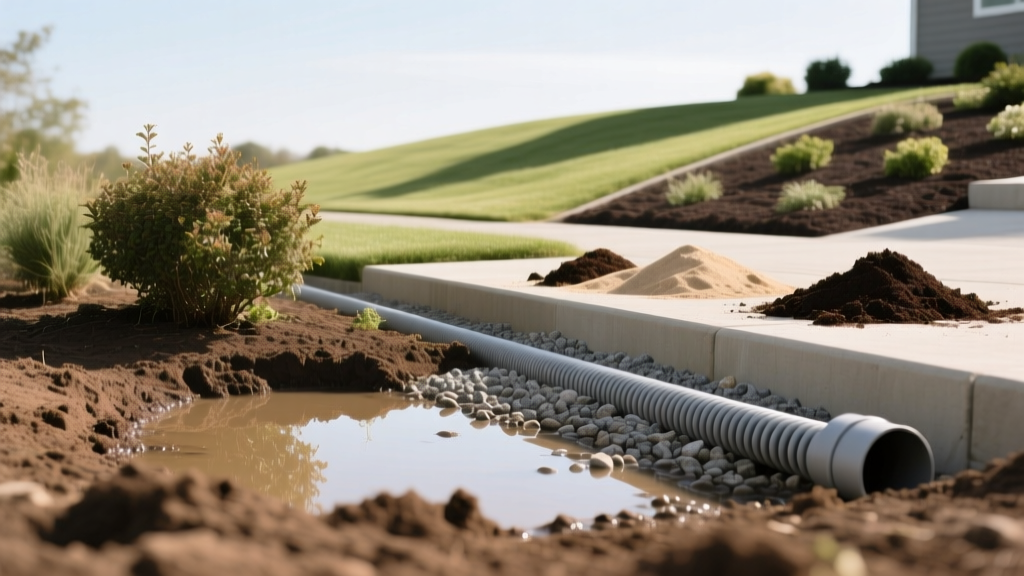
Diagnosing and Fixing Poor Drainage in Landscape Beds
Sarah ChenPublished
Introduction to Landscape Bed Drainage Problems
There is nothing more frustrating for a home gardener than watching expensive shrubs, perennials, and ornamental trees slowly drown in a poorly draining landscape bed. Standing water and chronically saturated soil lead to root rot, fungal diseases, and nutrient leaching, ultimately killing your plants and ruining your landscape investment. According to the University of Minnesota Extension, excess soil moisture is one of the leading causes of landscape plant failure in residential settings.
Troubleshooting poor drainage requires a systematic approach. You cannot simply throw more mulch on a swampy garden bed and hope the problem disappears. Instead, you must diagnose the underlying hydrological issue—whether it is heavy clay soil, improper grading, or a high water table—and implement a targeted hardscaping or soil amendment solution. This guide will walk you through the exact diagnostic steps and actionable fixes required to rescue your waterlogged landscape beds.
Step 1: Diagnose the Root Cause of Standing Water
Before purchasing drainage pipes or ordering topsoil, you must understand how water moves through your specific landscape bed. Water follows the path of least resistance, and pooling usually indicates a disruption in that path.
The Percolation Test
The most reliable way to diagnose soil drainage capacity is the percolation (or "perc") test. This simple diagnostic tool measures how quickly water absorbs into your soil.
- Dig a test hole: In the center of the problematic landscape bed, dig a hole exactly 12 inches deep and 12 inches wide.
- Pre-soak the soil: Fill the hole with water and let it drain completely. This pre-saturates the surrounding soil, mimicking conditions after a heavy rainstorm.
- Measure the drop: Refill the hole with water. Place a ruler or yardstick in the center. Measure the water level drop every hour for three to four hours.
Interpreting the Results:
- Ideal Drainage: Water drops 1 to 6 inches per hour.
- Poor Drainage: Water drops less than 1 inch per hour (indicative of heavy clay or severe compaction).
- Excessive Drainage: Water drops more than 6 inches per hour (indicative of sandy soil, which struggles to retain nutrients).
Identifying Soil Composition and Grading Errors
If your perc test reveals poor drainage, perform a simple ribbon test to confirm clay content. Take a handful of moist soil from the bed and squeeze it between your thumb and forefinger. If it forms a long, sticky ribbon that holds its shape past two inches, you have heavy clay soil. Additionally, use a line level and a string line to check the grading of the bed. Landscape beds should ideally slope away from your home's foundation at a minimum grade of 1/4 inch per foot. If the bed slopes toward the house or features a "bowl" shape in the center, surface grading is your primary culprit.
Step 2: Troubleshooting Common Drainage Issues
Once you have identified the soil type and grading profile, you can match the symptom to the appropriate landscaping solution. Below is a diagnostic comparison chart to help you select the right intervention.
| Drainage Symptom | Primary Cause | Recommended Solution | Estimated Cost |
|---|---|---|---|
| Water pools on surface for 24+ hours | Heavy clay soil / Compaction | Deep soil amendment with expanded shale | $0.50 - $1.50 / sq ft |
| Bed floods during heavy rain but drains slowly | Negative grading / Bowl effect | Regrading and installing a French drain | $20 - $30 / linear ft |
| Constant boggy soil near downspouts | Concentrated runoff | Rain garden or dry well installation | $500 - $1,500 per project |
| Water seeps up from below after rain | High seasonal water table | Raised landscape beds / Curtain drain | $15 - $40 / sq ft |
Step 3: Actionable Fixes for Poor Drainage
Amending Heavy Clay Soil
If your soil is dense clay, simply adding more topsoil or peat moss will not fix the drainage issue; it will only create a "bathtub effect" where water gets trapped in the loosened top layer while the hardpan clay below remains impermeable. To permanently fix clay soil drainage, you must physically alter the soil structure using inorganic amendments.
The Prescription: Till the top 10 to 12 inches of the landscape bed. Incorporate a mixture of 30% coarse compost (like pine bark fines) and 20% expanded shale. Expanded shale is a lightweight, porous aggregate that permanently fractures clay compaction and creates microscopic air pockets for water to escape. Avoid using sand, as mixing sand with clay often creates a concrete-like substance that worsens drainage.
Installing a French Drain System
When grading issues or heavy runoff overwhelm the soil's capacity, a French drain is the most effective hardscaping solution. A French drain intercepts subsurface water and redirects it to a safe discharge point, such as a storm drain, dry well, or lower-elevation swale.
Installation Steps:
- Trenching: Dig a trench 12 inches wide and 18 inches deep through the wettest part of the landscape bed. Ensure the trench maintains a continuous downward slope of at least 1% (1/8 inch drop per linear foot).
- Lining: Line the trench with a high-quality non-woven geotextile fabric, such as Mirafi 500X. Non-woven fabric is critical; woven weed barriers will quickly clog with silt and fail.
- Gravel Base: Add 2 to 3 inches of washed, angular 3/4-inch drain rock to the bottom. Never use rounded river rock, as it does not lock together and can shift, altering your pipe slope.
- Pipe Placement: Lay a 4-inch perforated corrugated pipe (such as the NDS Pro Series) with the holes facing down. This counterintuitive placement allows water to rise through the gravel and enter the pipe from the bottom, preventing top-soil silt from washing directly into the perforations.
- Backfilling: Cover the pipe with more washed drain rock until you are 3 inches below the surface grade. Fold the excess geotextile fabric over the top of the gravel to create a "burrito" wrap, then cover with 3 inches of topsoil and sod or mulch.
For a comprehensive visual guide on trenching and pipe placement, Fine Gardening offers excellent step-by-step schematics that highlight common DIY mistakes to avoid.
Regrading and Creating a Rain Garden
If your landscape bed is located at the base of a downspout or a natural runoff path, fighting the water with pipes might be unnecessary. Instead, embrace the moisture by converting the low-lying area into a rain garden. According to the Environmental Protection Agency (EPA), rain gardens can absorb up to 30% more water than a conventional lawn, filtering pollutants while providing a stunning landscape feature.
How to Build a Rain Garden:
- Excavation: Dig a shallow depression, typically 4 to 8 inches deep, with gently sloping sides. Ensure the bottom is level so water distributes evenly.
- Soil Mix: Replace the native soil with a highly permeable rain garden mix consisting of 60% sand, 20% compost, and 20% topsoil.
- Plant Selection: Choose native, moisture-tolerant plants for the center of the depression, and drought-tolerant plants for the berms. Excellent choices include Joe Pye Weed, Swamp Milkweed, Blue Flag Iris, and New England Aster.
- Mulching: Use heavy hardwood mulch or river rock. Avoid lightweight pine bark mulch, which will simply float away during the next heavy rainstorm.
Cost and Time Estimates for Drainage Solutions
Budgeting and timing are critical when troubleshooting landscape issues. Below is a breakdown of what to expect when hiring a professional landscaping contractor versus tackling the project yourself.
- Soil Amendment (DIY): Costs roughly $40 to $80 per cubic yard for expanded shale and compost. A 100-square-foot bed requires about 3 cubic yards to amend the top 12 inches. Time: 1 weekend of heavy labor.
- French Drain (Professional): Expect to pay between $20 and $35 per linear foot for a contractor to trench, lay pipe, and restore the landscaping. A standard 50-foot run will cost $1,000 to $1,750. Time: 1 to 2 days.
- Rain Garden (DIY/Pro): DIY costs range from $3 to $5 per square foot for plants and soil. Professional installation averages $10 to $15 per square foot. Time: 2 to 3 days for excavation and planting.
Pro Tip: Always call 811 before you dig. Hitting a buried gas, water, or fiber-optic line will turn a simple drainage troubleshooting project into a catastrophic and expensive emergency.
Conclusion
Troubleshooting poor drainage in landscape beds is a process of elimination. By conducting a percolation test, evaluating your soil composition, and observing the grading, you can pinpoint the exact reason your plants are drowning. Whether you choose to fracture heavy clay with expanded shale, intercept subsurface water with a meticulously sloped French drain, or work with nature by installing a native rain garden, taking decisive action will save your landscape investment and restore the health and beauty of your outdoor space.

