Home & Garden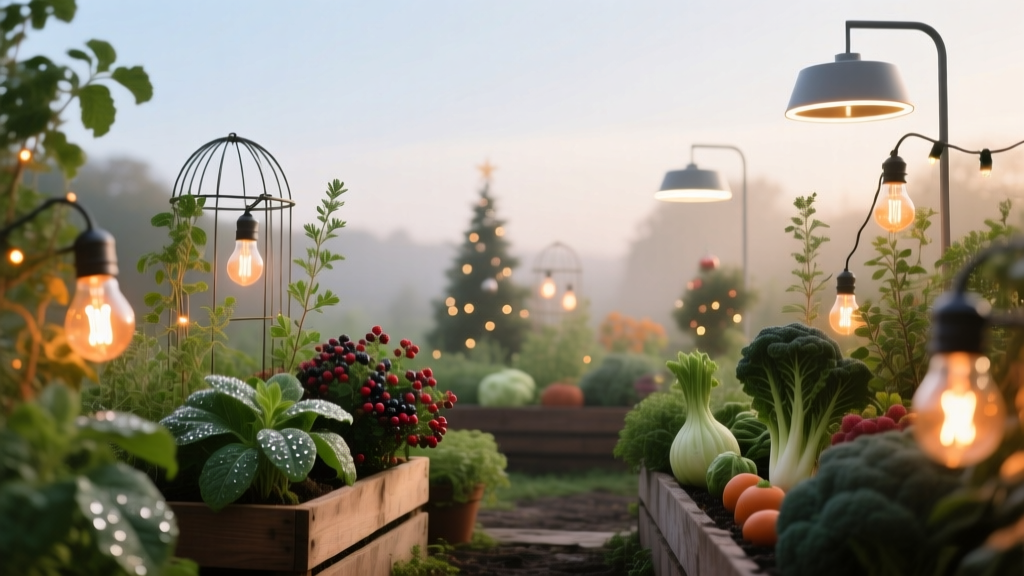
Holiday LED vs Incandescent Wattage & Timers for Foodscapes 2026
Anna KowalskiPublished
The Intersection of Holiday Cheer and Edible Landscaping
As edible landscaping and foodscaping continue to dominate garden design trends in 2026, our outdoor spaces are no longer just summer vegetable patches. They are year-round culinary and aesthetic hubs. Winter brings a unique opportunity to showcase the structural beauty of dormant fruit trees, the vibrant hues of cold-hardy brassicas, and the evergreen foliage of dwarf citrus. Naturally, homeowners want to integrate these foodscaped areas into their holiday outdoor lighting displays. However, wrapping your edible landscape in holiday lights requires a deep understanding of wattage, heat emission, and plant biology. Choosing between LED and incandescent bulbs—and pairing them with the right smart timers—is not just a matter of energy efficiency; it is a critical step in protecting your winter crops and preserving the dormancy of your fruit-bearing trees.
The Hidden Danger: Incandescent Heat vs. Winter Edibles
When designing a holiday lighting scheme for a traditional ornamental garden, the primary concerns are usually aesthetics and power consumption. In a foodscape, the biological needs of the plants take precedence. Incandescent holiday lights, particularly the classic C7 and C9 bulbs, operate by heating a filament until it glows. Consequently, they emit up to 90% of their consumed energy as radiant heat.
While this heat might seem negligible in freezing winter air, it creates dangerous microclimates when bulbs are pressed against plant tissue. According to research on winter plant care from Penn State Extension, fluctuating temperatures and artificial heat sources can trick woody perennials into breaking dormancy prematurely. If an incandescent C9 bulb rests against the bark of a dormant peach or apple tree, the localized heat can stimulate cambium activity. When the lights are eventually turned off or the weather drops to extreme lows, that newly active tissue is highly susceptible to frost cracking and winter kill.
Furthermore, for cold-hardy winter edibles like Russian kale, Swiss chard, and winter spinach, the radiant heat from incandescent strands can scorch the waxy cuticle of the leaves, leading to dehydration and tissue necrosis. In short, incandescent lighting is fundamentally incompatible with the delicate biological rhythms of a winter foodscape.
Wattage Showdown: LED vs. Incandescent in the Foodscape
The shift toward Light Emitting Diode (LED) technology has revolutionized outdoor holiday lighting, and by 2026, commercial-grade micro-LEDs and faceted C9 LEDs are the undisputed standard for edible landscapes. LEDs generate light through the movement of electrons in a semiconductor, producing virtually zero radiant heat. This makes them entirely safe to drape over delicate winter greens, berry bushes, and the thin bark of dwarf fruit trees.
Below is a comprehensive comparison of traditional incandescent C9 bulbs versus modern 2026 faceted LED C9 bulbs, specifically contextualized for a 100-foot strand wrapped around a foodscape perimeter or large fruit tree.
| Feature | Incandescent C9 (100 ft Strand) | LED C9 (100 ft Strand) |
|---|---|---|
| Wattage per Bulb | 7.0 Watts | 0.08 Watts |
| Total Strand Wattage | ~700 Watts | ~8 Watts |
| Heat Emission | High (Risk of plant burn/dormancy break) | Negligible (Safe for all plant tissue) |
| Lifespan | 1,000 - 3,000 Hours | 50,000+ Hours |
| Estimated Monthly Cost (6 hrs/day) | $15.12 (at $0.18/kWh) | $0.17 (at $0.18/kWh) |
| Circuit Load Capacity | Max 2-3 strands end-to-end | Up to 40+ strands end-to-end |
As highlighted by the U.S. Department of Energy, LED lighting choices drastically reduce electricity consumption, but in a foodscape, the ability to daisy-chain dozens of strands without tripping a 15-amp outdoor GFCI breaker is equally important. This allows you to illuminate an entire orchard or berry patch using a single outdoor outlet.
Respecting the Dark: Smart Timers and Plant Circadian Rhythms
Wattage and heat are only half the equation; the timing of your lights is equally critical. Plants rely on photoperiodism—the physiological reaction to the length of day and night—to regulate dormancy, flowering, and cold-hardiness. Artificial light pollution can severely disrupt these cycles. The International Dark-Sky Association notes that excessive nighttime lighting disrupts local ecosystems, and this applies directly to the micro-ecosystem of your edible garden.
If you leave holiday lights on your dormant blueberry bushes or wintering citrus trees for 24 hours a day, or if your timer keeps them illuminated well past midnight, you risk confusing the plant's hormonal signals. For evergreen edibles like Meyer lemons or rosemary, continuous light can inhibit the nighttime cellular respiration required for robust health.
Setting Up 2026 Smart Timers for Foodscapes
In 2026, the integration of Matter-compatible smart outdoor plugs and astronomical timers makes it easier than ever to respect your plants' need for darkness. Here is how to configure your timers for an edible landscape:
- The Astronomical Sunset Trigger: Use a smart plug with GPS-based astronomical timing to turn the lights on exactly at local sunset. This ensures your garden is lit during peak evening enjoyment hours without wasting wattage during daylight.
- The 4-Hour Rule for Dormant Trees: For fully dormant deciduous fruit trees (apples, pears, cherries), limit illumination to 4 to 5 hours max (e.g., 5:00 PM to 10:00 PM). This provides ample holiday ambiance while guaranteeing a long, uninterrupted dark period.
- The Midnight Shutoff for Evergreens: For winter-active edibles like citrus, olive trees, or cold-hardy greens, ensure all lighting is completely extinguished by 11:00 PM. This mimics natural nighttime conditions and allows the stomata on the leaves to function normally without artificial light interference.
- Dimming Capabilities: Many 2026 smart LED controllers allow for dimming. Running your foodscape lights at 50% brightness after 9:00 PM reduces ambient light pollution while maintaining a soft, festive glow that is less disruptive to local pollinators and overwintering beneficial insects.
Step-by-Step: Lighting Your Winter Foodscape Safely
To safely integrate holiday lighting into your edible landscape, follow these actionable steps tailored to specific plant types:
1. Wrapping Dormant Berry Bushes and Fruit Trees
Use warm-white micro-LED fairy lights on copper wire. The copper is easily bendable and won't damage delicate bark. Wrap the trunk and primary scaffolding branches loosely. Never wrap the lights tightly, as this can girdle the tree if left on too long into the spring. Secure the wire with soft, biodegradable jute twine rather than plastic zip ties, which can trap moisture and harbor fungal pathogens against the bark.
2. Illuminating Winter Greens and Brassicas
Cold-weather crops like Red Russian kale, purple cauliflower, and Swiss chard look stunning under holiday lights. Instead of draping lights directly on the foliage, use low-voltage LED pathway spotlights or stake-mounted LED downlights positioned 18 inches above the garden bed. This highlights the architectural beauty of the edible leaves without resting any physical wires on the plants, ensuring zero risk of mechanical damage or localized shading.
3. Highlighting Potted Edibles and Citrus
Potted dwarf citrus or bay laurel trees moved to sheltered patio areas for the winter are prime candidates for holiday decor. Use faceted LED C9 bulbs wrapped around the terracotta or ceramic pot, and weave a single strand of cool-white or warm-white micro-LEDs through the outer canopy. Because LEDs emit no heat, the waxy leaves of the citrus will remain unharmed, and the fruit will not be subjected to premature ripening or heat stress.
Final Thoughts on 2026 Foodscape Lighting
Bridging the gap between holiday festivities and sustainable foodscaping requires a mindful approach to outdoor electrical usage. By definitively choosing low-wattage, zero-heat LED bulbs over traditional incandescent strands, you protect the structural integrity and biological rhythms of your edible plants. Pairing these LEDs with intelligent, astronomy-based smart timers ensures that your garden remains a vibrant, productive ecosystem, even in the depths of winter. As you plan your 2026 holiday display, remember that the best garden lighting doesn't just look beautiful—it respects the living landscape it illuminates.
