
Landscaping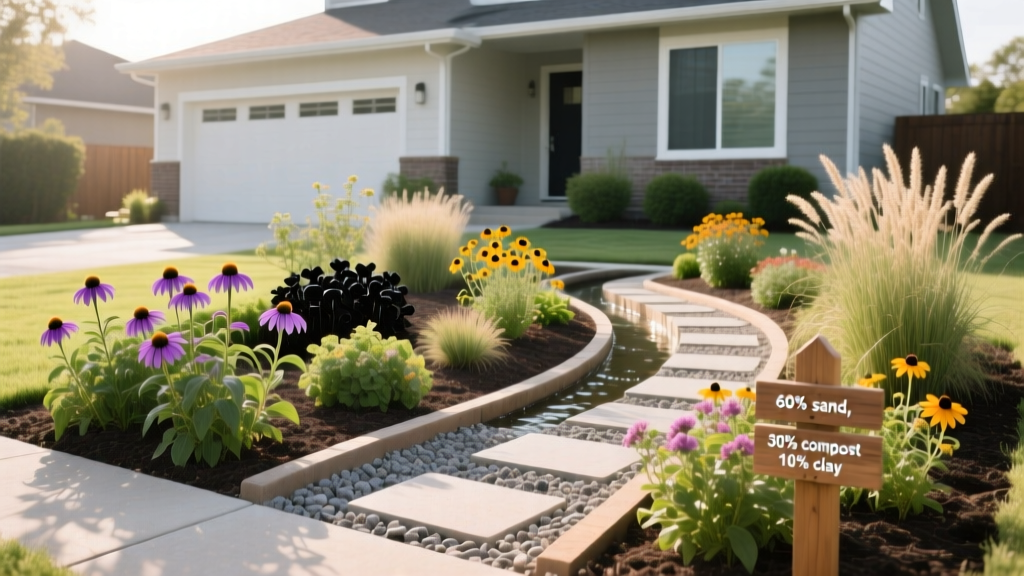
Designing a Front Yard Rain Garden: Layout, Soil, and Plants
Robert HayesPublished
Front yard landscaping often prioritizes aesthetics over environmental function, but a well-designed rain garden seamlessly merges curb appeal with sustainable stormwater management. According to the Environmental Protection Agency (EPA), bioretention areas like rain gardens can reduce stormwater runoff volume by up to 90 percent, filtering out pollutants like heavy metals, nitrogen, and phosphorus before they reach local waterways. Planning a front yard rain garden requires a strategic approach to grading, soil engineering, and native plant selection. This comprehensive guide walks you through the design ideas, spatial planning, and material costs needed to transform a low-lying, water-logged front yard into a thriving ecological asset.
Step 1: Site Selection and Spatial Planning
The success of a rain garden hinges entirely on proper placement. You are looking for a natural depression or an area where downspouts can be easily redirected. However, safety and structural integrity must come first. The University of Minnesota Extension strongly recommends placing rain gardens at least 10 feet away from your home's foundation to prevent water seepage into basements or crawl spaces. Additionally, avoid placing them over septic systems, underground utilities, or within the drip line of large, established trees, as the excavation process can damage critical root systems.
Before breaking ground, always call your local utility locating service (such as 811 in the United States) to mark underground lines. For optimal inflow, the site should have a gentle slope of at least 2 percent from the downspout to the garden basin. If your front yard is entirely flat, you may need to install a shallow, gravel-lined swale or a buried 4-inch PVC drain pipe to channel water from the roof to the garden depression.
Step 2: Sizing, Depth, and Grading
A common mistake in landscape planning is building a rain garden that is too small to handle the volume of water generated during a heavy storm. A standard rule of thumb for residential design is to size the rain garden to capture runoff from 20 percent of the impervious roof area that drains into it. For example, if a 1,000-square-foot section of your roof drains toward the front yard, your rain garden should be approximately 200 square feet.
Regarding depth, the ideal ponding depth is between 6 and 8 inches. This depth allows water to infiltrate the soil within 24 to 48 hours, which is crucial for preventing mosquito breeding. The sides of the rain garden should feature gentle, sloped edges with a 3:1 ratio (three feet horizontal for every one foot vertical) to prevent erosion and create a more natural, aesthetically pleasing transition into the surrounding lawn.
Step 3: Engineering the Bioretention Soil Mix
Native clay soils drain far too slowly for a rain garden, often leading to stagnant water and plant rot. To ensure rapid infiltration while retaining enough moisture for plant health, you must excavate the native soil to a depth of 18 to 24 inches and replace it with a specialized bioretention soil mix. The NC State Extension provides excellent guidelines on soil engineering for stormwater management.
Below is the industry-standard soil mix ratio for residential rain gardens:
| Component | Volume Ratio | Purpose and Specifications |
|---|---|---|
| Coarse Washed Sand | 50% to 60% | Provides structural integrity and ensures rapid drainage. Must be concrete-grade, washed sand to avoid fine silt particles that clog soil pores. |
| Native Topsoil | 20% to 30% | Supplies essential minerals and microbial life. Should be screened and free of heavy clay content or construction debris. |
| Organic Compost | 10% to 20% | Retains moisture during dry spells, provides slow-release nutrients, and supports beneficial mycorrhizal fungi. Use fully decomposed, aged leaf mold or yard waste compost. |
After filling the basin with this engineered mix, lightly compact the soil and allow it to settle for a few days before planting. Top the soil with 2 to 3 inches of double-shredded hardwood mulch. Avoid using pine bark or lightweight mulches, as they will float away during heavy rainfall events.
Step 4: Hydrozoning and Native Plant Selection
A rain garden is not a uniform environment; it features distinct microclimates based on moisture retention. Landscape designers use a technique called hydrozoning to group plants with similar water requirements. A well-planned rain garden is divided into three distinct zones:
Zone 1: The Basin (Wettest Area)
The center of the rain garden holds water the longest. Plants here must tolerate both prolonged inundation and severe summer droughts once the garden dries out.
- Swamp Milkweed (Asclepias incarnata): Essential for monarch butterflies, thrives in wet soils, and features beautiful pink blooms.
- Blue Flag Iris (Iris versicolor): Provides striking architectural foliage and vibrant purple flowers in late spring.
- Cardinal Flower (Lobelia cardinalis): Attracts hummingbirds with its brilliant red, tubular flowers and loves wet roots.
Zone 2: The Slopes (Moderate Moisture)
The sloped sides experience fluctuating water levels. Plants here need robust root systems to stabilize the soil and prevent erosion.
- New England Aster (Symphyotrichum novae-angliae): Offers late-season nectar and deep roots that hold the slopes together.
- Wild Bergamot (Monarda fistulosa): A highly aromatic, drought-tolerant native that handles periodic flooding with ease.
- Switchgrass (Panicum virgatum): A deep-rooted ornamental grass that provides winter interest and excellent erosion control.
Zone 3: The Edges (Driest Area)
The outer rim of the rain garden rarely sees standing water and functions much like a standard garden bed. Plants here must be highly drought-resistant.
- Purple Coneflower (Echinacea purpurea): A landscape staple that draws pollinators and requires minimal maintenance.
- Black-Eyed Susan (Rudbeckia hirta): Cheerful yellow blooms that reseed naturally and tolerate dry, poor soils.
- Little Bluestem (Schizachyrium scoparium): A compact native grass that turns a stunning bronze-red in the autumn.
Step 5: Cost Breakdown and Project Timeline
Understanding the financial and temporal investment is crucial for landscape planning. A typical 150-square-foot DIY rain garden takes one full weekend of heavy labor to excavate, mix soil, and plant. Hiring a professional landscaping contractor will significantly reduce the physical toll but increase the cost.
| Expense Category | DIY Estimate (150 sq ft) | Professional Estimate (150 sq ft) |
|---|---|---|
| Excavation & Haul Away | $0 (Manual Labor) | $600 - $1,200 |
| Engineered Soil & Mulch | $350 - $500 | $500 - $800 |
| Native Plants (Plugs & 1-Gallon) | $250 - $400 | $400 - $600 |
| Drainage Pipe & River Rock | $100 - $150 | $200 - $350 |
| Labor & Design Fees | $0 | $1,500 - $3,000 |
| Total Estimated Cost | $700 - $1,050 | $3,200 - $5,950 |
Many local municipalities and conservation districts offer rebate programs or cost-share grants for homeowners who install rain gardens to alleviate municipal storm sewer burdens. Check with your local Department of Public Works or Soil and Water Conservation District before purchasing materials.
Long-Term Maintenance Planning
While rain gardens are designed to be self-sustaining ecosystems, they require vigilant maintenance during the first two years of establishment. Water the garden deeply once a week during dry spells to encourage deep root growth. Inspect the basin after heavy rainstorms to ensure water is draining within 24 hours; if it pools longer, the soil may be compacted or clogged with sediment.
Annually, replenish the hardwood mulch to maintain a 2-inch depth, which suppresses weeds and retains moisture. Avoid using chemical fertilizers or pesticides near the rain garden, as these will wash into the basin and contaminate the groundwater you are working so hard to protect. By carefully planning your layout, engineering the correct soil profile, and selecting resilient native plants, your front yard rain garden will serve as a stunning, eco-friendly focal point for decades to come.

