Home & Garden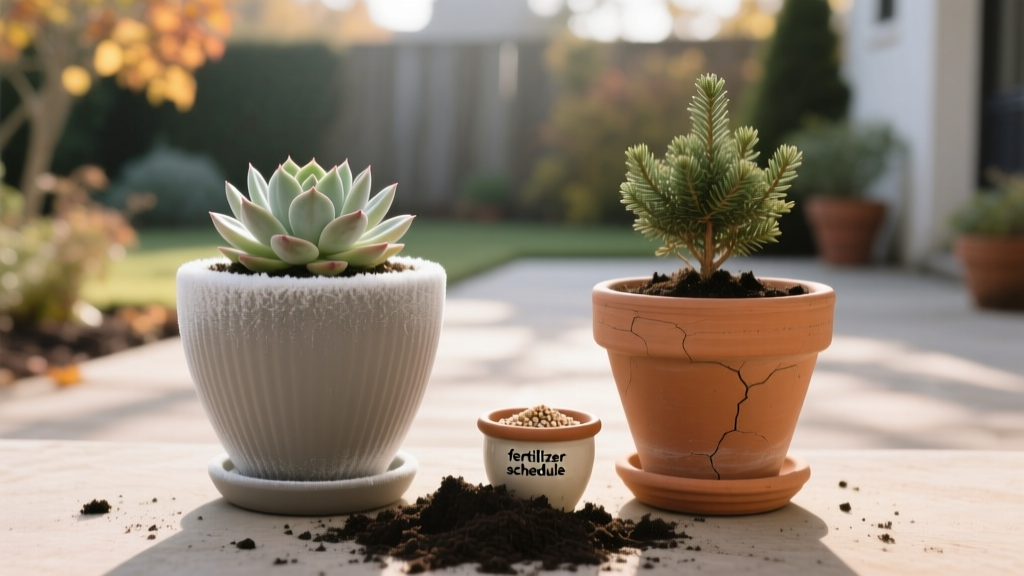
Frost-Proof vs Terracotta: 2026 Overwintering & Fertilizer Schedule
Anna KowalskiPublished
The Intersection of Planter Porosity and Nutrient Retention
As we navigate the 2026 gardening season, the debate between modern frost-proof composite planters and traditional terracotta remains central to outdoor landscape design. While most gardeners focus solely on the structural integrity of these materials during freezing temperatures, a critical and often overlooked factor is how planter porosity dictates your fertilizer types and schedules during the overwintering and early spring transition periods.
Overwintering container plants is fundamentally about managing the soil ecosystem. According to the Royal Horticultural Society (RHS), container plants are far more vulnerable to freezing because their roots are exposed to ambient air temperatures on all sides. However, the material of your planter also determines how moisture and water-soluble nutrients move through the soil profile. Terracotta is highly porous; it breathes, wicks moisture, and allows rapid evaporation. Frost-proof planters—typically made from UV-stabilized poly-resin, fiberglass, or fiber-cement—are non-porous, trapping moisture and nutrients inside. This distinction requires two entirely different autumn and spring fertilizer schedules to prevent root burn, nutrient leaching, and winter rot.
Frost-Proof Planters: 2026 Overwintering & Fertilizer Protocol
Modern frost-proof planters have evolved significantly by 2026, utilizing advanced poly-resins and insulated double-wall fiberglass that mimic the look of stone or wood without the risk of cracking. Because these materials are non-porous, they retain soil moisture and water-soluble fertilizers exceptionally well. While this is great for summer watering, it poses a distinct challenge for overwintering.
The Danger of Late-Season Nitrogen
In frost-proof planters, excess moisture combined with dormant roots is a recipe for fungal rot. If you continue applying high-nitrogen synthetic fertilizers (like a standard 20-20-20 water-soluble blend) into early autumn, you force late-season top growth that will be destroyed by the first hard frost. Furthermore, the trapped water prevents the fertilizer from leaching out, leading to a toxic buildup of mineral salts around the root ball.
The Frost-Proof Fertilizer Schedule
- August 15: Cease all high-nitrogen synthetic fertilizers. Switch to a bloom-boosting or root-hardening formula.
- September 10: Apply a liquid kelp or seaweed extract (such as Neptune's Harvest 0-0-1). Kelp provides essential trace minerals, amino acids, and natural growth hormones that increase cellular wall thickness, helping the plant withstand freezing temperatures without promoting vulnerable new foliage.
- October 15: Apply a dry, low-nitrogen winterizer. A granular 0-10-10 organic fertilizer provides phosphorus and potassium to fortify the root system. Because the frost-proof planter traps moisture, use only half the manufacturer's recommended dose to prevent salt accumulation during the wet winter months.
- November to February: Zero fertilizer. Allow the plant to enter full dormancy. Monitor drainage holes to ensure winter rains are not turning the trapped soil into a freezing block of ice.
Terracotta Planters: Protection and Slow-Release Nutrient Loading
Traditional terracotta offers a classic aesthetic and excellent root aeration during the growing season. However, as noted by The Old Farmer's Almanac, the very porosity that makes terracotta great in summer makes it a liability in winter. Water absorbed into the clay walls freezes, expands, and causes the pots to spall or shatter. Overwintering terracotta requires physical intervention—such as wrapping the pots in bubble wrap and burlap, or moving them to an unheated garage or shed.
Nutrient Wicking and Leaching
From a fertilizer perspective, terracotta's wicking action means that any liquid or water-soluble fertilizer applied in the fall will rapidly evaporate or leach out of the soil before the dormant roots can absorb the nutrients. Therefore, liquid feeding is entirely counterproductive for terracotta overwintering prep.
The Terracotta Fertilizer Schedule
Instead of liquids, terracotta requires heavy, slow-release organic amendments that break down gradually over the winter and early spring, aided by soil microbes rather than water flow.
- September 1: Stop all liquid feeding. Allow the terracotta soil to begin drying out slightly, which helps signal to the plant that dormancy is approaching.
- October 1: Top-dress the soil with dry, organic phosphorus sources. Scratch 2 tablespoons of Espoma Bone Meal (4-12-0) or soft rock phosphate into the top inch of soil per gallon of container volume. These heavy organics will not wick out through the clay walls.
- October 20: Add a layer of compost or worm castings to the soil surface. This acts as a mild, slow-release nutrient blanket and provides a buffer against extreme temperature fluctuations at the soil line.
- Winter Storage: If moving the terracotta to an unheated shed, ensure the soil is barely moist (not wet). Dry soil freezes less destructively, and the dry environment ensures the bone meal and compost remain dormant until spring warmth activates microbial breakdown.
Comparative Breakdown: Frost-Proof vs. Terracotta
Understanding the structural and chemical differences between these two planter types is essential for mastering your 2026 container garden. The University of Minnesota Extension emphasizes that container media and pot material must be matched to your specific watering and feeding regimen. Below is a comparative chart to guide your seasonal strategy.
| Feature | Frost-Proof (Resin/Fiberglass) | Traditional Terracotta |
|---|---|---|
| Porosity | Non-porous (Traps moisture & salts) | Highly porous (Wicks moisture & air) |
| Winter Prep | Leave outdoors; ensure drainage holes are clear | Wrap in insulation or move to unheated shelter |
| Fall Fertilizer Type | Liquid Kelp / Low-dose Granular Winterizer | Dry Organics (Bone Meal, Rock Phosphate) |
| Leaching Risk | Low (Risk of salt buildup and root burn) | High (Liquid nutrients wick out through clay) |
| Spring Re-feeding | Requires soil flushing before applying new fertilizer | Requires deep rehydration before synthetic feeding |
The 2026 Spring Awakening: Re-Feeding Strategies
The transition from winter dormancy to spring growth in 2026 requires a tailored approach based on your planter material. You cannot simply resume your summer feeding schedule on March 1st without preparing the soil environment first.
Flushing Frost-Proof Planters
Because frost-proof planters trap water and minerals all winter, the soil is likely saturated with accumulated fertilizer salts. Before applying any spring fertilizer, you must flush the soil. Place the planter in a location where it can drain freely. Slowly pour 2 to 3 gallons of room-temperature water through the soil per 10 gallons of pot volume. This leaches out the toxic salt buildup. Wait one week, then apply a gentle, water-soluble spring fertilizer (such as a 10-15-10 blend or FoxFarm Grow Big) to kickstart foliage production without shocking the roots.
Rehydrating and Top-Dressing Terracotta
Terracotta planters emerging from winter storage are often bone-dry. The organic bone meal and compost applied in the autumn are sitting inert in the soil. To activate these nutrients, you must rehydrate the clay and the soil core. Submerge the entire terracotta pot in a tub of water for 2 hours until the clay stops bubbling. This re-saturates the porous walls. Once drained, the moisture will activate the soil microbes, which will begin breaking down the autumn-applied phosphorus and compost. Wait two weeks before introducing synthetic nitrogen fertilizers, allowing the natural organic cycle to provide the first gentle push of spring growth.
Conclusion
Mastering the 2026 outdoor planter overwintering process requires looking beyond the physical pot and focusing on the soil chemistry within. By recognizing that frost-proof planters demand salt management and low-dose liquid hardening, while terracotta requires physical insulation and heavy, dry organic loading, you can ensure your container plants survive the deepest freezes and explode with vibrant growth when spring finally arrives.
