Home & Garden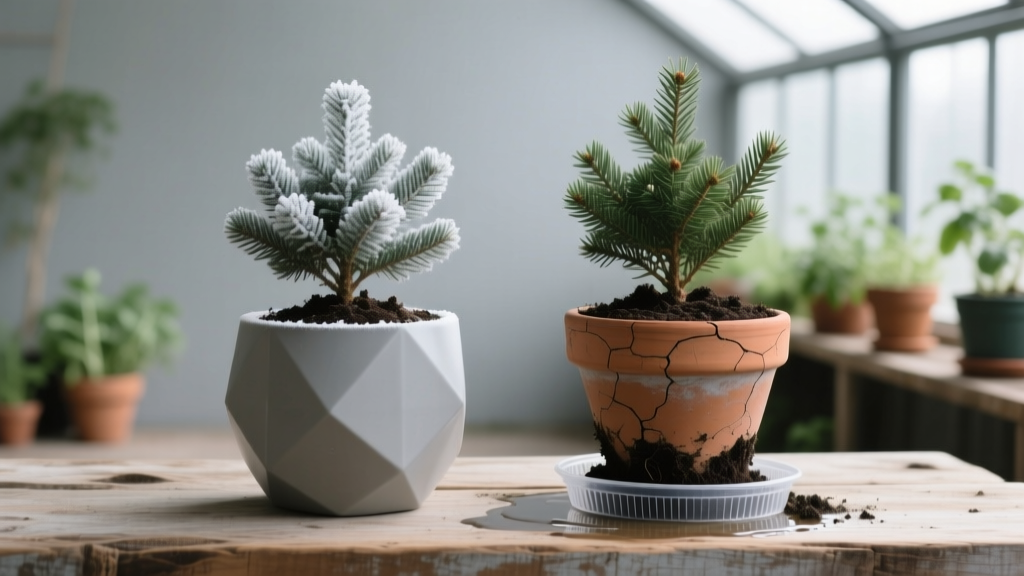
Frost-Proof vs Terracotta Planters: 2026 Overwintering Guide
Mike RodriguezPublished
The Intersection of Core Aeration and Container Overwintering
As we navigate the unpredictable winter climate of 2026, gardeners are rethinking how they protect their outdoor container plants. The debate between traditional terracotta and modern frost-proof planters is no longer just about aesthetics or weight; it is fundamentally a question of soil physics, drainage, and gas exchange. To truly understand how to overwinter plants successfully, we must look through the lens of core aeration.
In lawn care, core aeration is the practice of removing small plugs of soil to relieve compaction, allowing oxygen to reach the root zone and enabling water to infiltrate rather than pool on the surface. When soil is compacted, water pools, freezes, and suffocates roots. The exact same principle applies to container gardening. Over a single growing season, potting media breaks down, organic matter decomposes, and the soil profile compacts. When winter arrives, this compacted soil holds excess moisture. Because water expands by approximately 9 percent when it freezes, waterlogged soil acts like a bomb inside your planter, destroying root systems and cracking pots from the inside out.
By applying core aeration principles to our winter planters, we can bridge the gap between the natural breathability of terracotta and the structural durability of modern frost-proof materials.
Terracotta Planters: The Aeration Champion with a Fatal Flaw
Unglazed terracotta has been the gold standard for centuries, primarily because its microporous structure mimics the benefits of an aerated lawn. The clay walls literally breathe, allowing for exceptional gas exchange and lateral moisture evaporation. This natural aeration prevents the soil from becoming anaerobic, keeping roots healthy and vigorous during the active growing season.
However, this same porosity is terracotta's fatal flaw during the winter. The microscopic pores absorb rain and melting snow. When the temperature drops below freezing, the trapped water expands, creating immense internal pressure. In 2026, with erratic winter storms causing rapid freeze-thaw cycles, leaving a standard terracotta pot outdoors is almost a guarantee that it will spall, crack, or shatter completely by spring. While the soil inside might be well-aerated, the vessel itself cannot survive the physical forces of winter ice.
Frost-Proof Planters: The 2026 Standard for Winter Survival
To combat the fragility of clay, the horticultural industry has heavily invested in frost-proof alternatives. The leading materials in 2026 include UV-stabilized poly-resin, fiberglass composites, and high-density architectural polymers. These materials are entirely non-porous. They will not absorb a single drop of water, meaning the vessel itself is immune to freeze-thaw fracturing.
Yet, this lack of porosity introduces a new challenge: the bathtub effect. Because the walls cannot breathe or wick away moisture, all drainage and aeration must occur vertically through the soil profile and out the bottom drainage holes. If the soil inside a frost-proof planter becomes compacted, water has nowhere to go. According to the Royal Horticultural Society, ensuring adequate drainage and preventing waterlogging is the single most critical factor in container survival, making internal soil aeration an absolute necessity when using non-porous pots.
Material Comparison Chart: Frost-Proof vs. Terracotta
| Feature | Traditional Terracotta | 2026 Frost-Proof Composites |
|---|---|---|
| Porosity & Aeration | High (Lateral and vertical gas exchange) | None (Strictly vertical gas exchange) |
| Freeze-Thaw Durability | Poor (Prone to cracking and spalling) | Excellent (Immune to ice expansion) |
| Soil Compaction Risk | Moderate (Wicking helps dry soil) | High (Traps water if drainage is poor) |
| Weight | Very Heavy | Ultra-Lightweight |
| 2026 Average Cost (Large) | $45 - $80 | $90 - $250 |
| Overwintering Verdict | Must be emptied and stored indoors | Can remain outdoors if soil is aerated |
Applying Core Aeration Principles to Winter Planters
Since we cannot rely on the walls of a frost-proof planter to provide the aeration that terracotta naturally offers, we must manually engineer the soil profile to mimic the results of a lawn core aerator. Soil scientists at the University of Minnesota Extension emphasize that soil structure degrades over time, reducing pore space and limiting oxygen availability to roots. Here is how to apply aeration science to your containers.
The Container Core Aeration Technique
In late autumn, before the first hard freeze, take a narrow dibber, a long screwdriver, or a specialized deep-soil probe and punch vertical holes directly into the container's soil. Space these holes about three to four inches apart, driving them down to the bottom third of the pot. This mimics the tines of a core aerator penetrating a compacted lawn.
Instead of leaving the holes empty, fill them with a highly porous, non-degrading amendment like coarse pumice, expanded shale, or calcined clay. These materials create permanent, vertical macropores that act as chimneys, allowing oxygen to travel deep into the root zone and providing a channel for excess water to escape rapidly during winter thaws. This simple mechanical intervention prevents the soil from becoming a waterlogged, anaerobic block of ice.
Elevation and the Air-Pruning Effect
Core aeration on a lawn improves surface infiltration, but container drainage relies on the bottom hole. If a frost-proof planter sits flat on a frozen patio or soil, the drainage hole seals shut with ice, nullifying all your aeration efforts. You must elevate the pot using heavy-duty pot feet or risers. This creates an air gap beneath the planter, allowing gravity to pull water completely out of the soil profile. Furthermore, this air gap exposes the bottom roots to cold air, encouraging a natural 'air-pruning' response that stops roots from circling and rotting against the plastic base.
Step-by-Step Overwintering Strategy for 2026
To ensure your frost-proof planters and their root systems survive the winter, follow this actionable checklist:
- Step 1: Stop Fertilizing Early. Cease all nitrogen applications by late summer to allow plants to harden off and enter natural dormancy.
- Step 2: Perform Container Core Aeration. Punch vertical channels into the soil and backfill with pumice or expanded shale to guarantee internal drainage and oxygen flow.
- Step 3: Top-Dress with Mulch. Apply a two-inch layer of coarse wood chips or straw. This acts as an insulator, moderating the soil temperature and preventing rapid freeze-thaw heaving that can snap roots.
- Step 4: Elevate the Vessel. Place the planter on pot feet to ensure the drainage hole remains clear of ice and debris.
- Step 5: Group and Shelter. Cluster your frost-proof planters together against a south-facing wall. The microclimate created by grouping pots reduces wind desiccation and leverages the thermal mass of the house to keep the root zone just above lethal temperatures.
Conclusion
The choice between terracotta and frost-proof planters for overwintering is ultimately a choice between natural breathability and structural survival. While terracotta offers unparalleled aeration, its inability to withstand the physical expansion of ice makes it a poor choice for outdoor winter storage in freezing climates. Modern 2026 frost-proof composites solve the cracking problem, but they demand that the gardener take an active role in soil management. By treating your container soil with the same respect for drainage, compaction relief, and oxygenation that you apply when core aerating a lawn, you can transform any frost-proof planter into a safe, breathable winter sanctuary for your plants.
