Home & Garden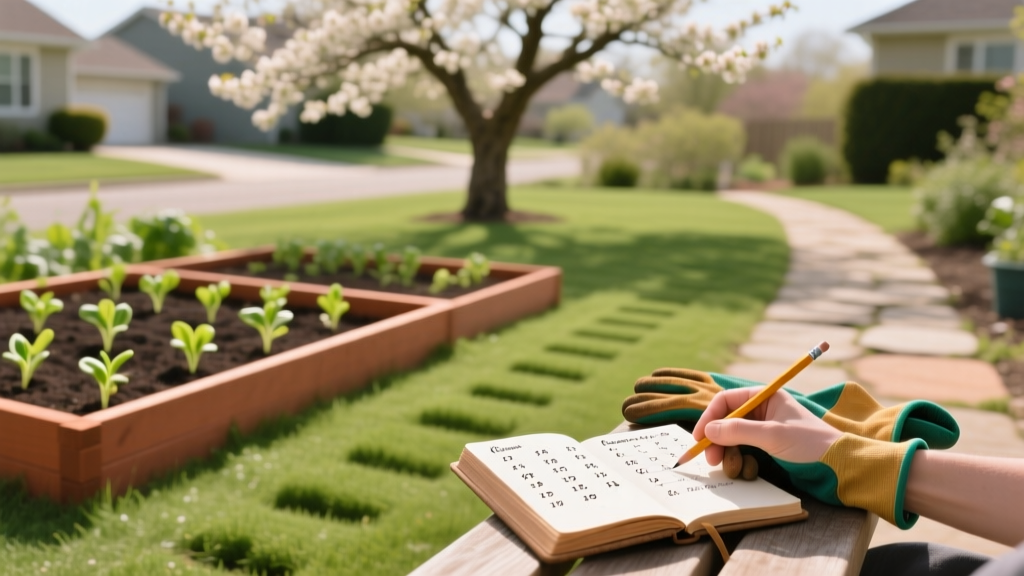
2026 Garden Journal: Planting Calendars, Harvest Logs & Mowing
James MillerPublished
The Holistic Yard: Why Turf and Garden Beds Share the Same Soil
As a turf management specialist, I often tell homeowners that a lawn is essentially a horizontal garden. The principles that dictate a lush, stripe-patterned fescue lawn are the exact same principles that govern a high-yield vegetable garden: soil aeration, nutrient cycling, water management, and, most importantly, spatial patterns. In 2026, with shifting climate zones and more erratic spring frost dates, relying on memory to manage your landscape is no longer viable. You need a centralized command center. Enter the holistic garden journal.
When you mow a lawn in the exact same direction every single week, the grass blades begin to lean, the soil develops microscopic compaction channels, and wheel ruts form. We solve this in turf care by alternating mowing patterns—horizontal one week, vertical the next, and diagonal the week after. This simple technique promotes upright growth and even root distribution. Your vegetable garden requires the exact same spatial awareness. If you plant heavy-feeding brassicas in the same raised bed year after year, you are creating nutrient ruts in your soil. Your 2026 garden journal must act as your pattern-alternation guide, utilizing a rigorous planting calendar and harvest log to ensure you are rotating crops just as meticulously as you rotate your mower cutting direction.
Designing the 2026 Planting Calendar
A planting calendar is the blueprint of your landscape ecosystem. Rather than simply listing dates, a professional-grade journal maps out succession planting, companion planting, and frost-tolerance thresholds. According to the Old Farmer's Almanac Planting Calendar, understanding your specific local frost dates is the foundational step for any successful spring rollout. In 2026, microclimate tracking has become more critical than ever. Your journal should include a dedicated grid for each garden bed, detailing not just what you are planting, but the precise spacing and expected canopy height.
Think of your planting calendar like a turf seeding schedule. You would never overseed a cool-season lawn during the peak heat of July; similarly, your journal must dictate the exact windows for sowing heat-sensitive crops like spinach or cilantro. By logging your seed-starting dates indoors and your hardening-off periods outdoors, you create a repeatable timeline that eliminates the guesswork. Include columns for seed variety, days to maturity, and companion plants. For example, noting that your Dragon Tongue beans are planted adjacent to your sweet corn allows you to track the symbiotic nitrogen-fixing benefits over the course of the season.
The Harvest Log: Measuring Yield Like Turf Density
A harvest log is not merely a tally of tomatoes; it is a vital diagnostic tool for soil health. When I evaluate a commercial lawn, I look at turf density, root depth, and color uniformity to judge the underlying soil ecosystem. In your garden journal, your harvest log should track yield weight, flavor profiles, and pest resistance. Did your Sun Gold tomatoes succumb to early blight despite your fungicide schedule? Did your root vegetables fork and stunt due to unseen soil compaction? By logging these metrics alongside your local weather patterns, you create a historical dataset that informs next year's seed orders and soil amendment strategies.
Furthermore, the harvest log helps you calculate the true return on investment for your garden space. Just as we measure grass clippings to determine if we are over-fertilizing a lawn, measuring your harvest by weight per square foot tells you which crops are truly earning their keep. If a specific variety of bell pepper consistently underperforms in your journal's harvest log, you know to rotate it out for a more robust cultivar next season. The USDA Gardening Resources portal frequently highlights the importance of tracking local yield data to adapt to changing regional growing conditions, making your personal harvest log a micro-level contribution to broader agricultural resilience.
Integrating Lawn Care: Mowing Techniques and Pattern Logging
Because the lawn and the garden share the same microclimate, irrigation runoff, and soil biology, your journal must include a dedicated turf tracker. This is where the mowing techniques and patterns perspective truly elevates your landscape management. Logging your weekly mowing patterns helps you correlate lawn health with garden success and prevents long-term turf degradation.
According to the University of Minnesota Extension Turfgrass Mowing Guide, adhering to the one-third rule—never removing more than one-third of the grass blade height in a single mowing—is paramount for root health. Your journal should track your cutting height alongside your pattern. For instance, if you notice your garden beds are suffering from fungal issues, checking your mowing log might reveal you have been mulching heavy, wet grass clippings directly near the garden borders, inadvertently transferring spores to your vegetables.
Alternating your mowing patterns is equally critical. Week one might feature horizontal stripes to encourage upright growth. Week two shifts to vertical lines to prevent soil compaction along the same wheel tracks. Week three introduces a diagonal crosshatch pattern, which is especially useful for masking minor turf imperfections and ensuring an even cut. By documenting these patterns in your journal, you ensure that the heavy wheels of your mower or tractor are never repeatedly compacting the soil adjacent to your delicate raised garden beds, protecting the root zones of your perimeter crops.
The Weekly Landscape Ledger
To bridge the gap between the vegetable garden and the turf, use a unified weekly ledger. This structured approach ensures that no part of your outdoor living space is neglected. Below is a sample layout of how you can integrate planting, harvesting, and mowing patterns into a single weekly view.
| Week | Garden Task (Planting/Harvest) | Lawn Task (Mowing Pattern) | Soil and Ecosystem Notes |
|---|---|---|---|
| Week 16 | Transplant Brassicas (North Bed) | Horizontal Stripes (3.0 in) | Heavy compost applied; watch for runoff into turf. |
| Week 17 | Harvest Spring Radishes | Vertical Lines (3.25 in) | Radish beds aerated; lawn clippings used as mulch. |
| Week 18 | Sow Succession Beans | Diagonal Crosshatch (3.5 in) | Diagonal cut prevents ruts near expanding garden border. |
Analog vs. Digital Tracking in 2026
As we navigate the 2026 gardening season, the debate between analog notebooks and digital smart-garden apps continues. Digital apps offer automated frost alerts and barcode scanning for seed packets, seamlessly integrating with smart irrigation controllers. However, there is an undeniable tactile benefit to a physical, weatherproof garden journal. When your hands are covered in potting soil or grass clippings, flipping a laminated page with a grease pencil is often more practical than unlocking a smartphone.
Many top-tier landscape architects now recommend a hybrid approach. Use a digital app for long-term data storage, weather integration, and mapping out your mowing patterns on a digital grid. Then, keep a rugged, waterproof analog ledger in your garden shed for quick daily notes, harvest weights, and immediate observations about turf color or pest sightings. This dual-system ensures your data is backed up while remaining accessible in the dirt and the rain.
Conclusion: Mastering the Pattern of the Seasons
Ultimately, a garden journal is a living document that evolves with your landscape. By adopting the meticulous, pattern-oriented mindset of a turf management professional, you transform your planting calendar and harvest log from simple to-do lists into powerful ecological tools. Alternating your crops, tracking your yields, and logging your mowing patterns ensures that every square inch of your yard—from the deepest garden bed to the outermost lawn stripe—is managed with intention. Start your 2026 journal today, respect the patterns of nature, and watch as both your turf and your harvest reach their full, vibrant potential.
