Home & Garden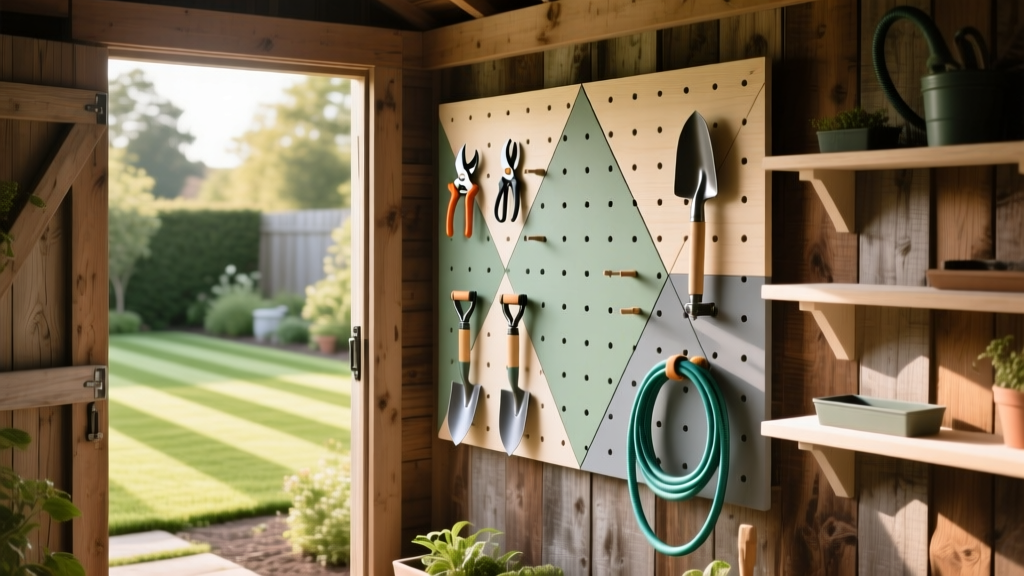
2026 Guide: Aesthetic Pegboard Shed Organization Patterns
Robert HayesPublished
The Lawn Striping Philosophy Applied to Shed Walls
There is a distinct, undeniable satisfaction that comes from looking back at a freshly striped lawn. The alternating light and dark bands of bentgrass or fescue, created by meticulously bending the grass blades in opposite directions, represent a triumph of geometry, planning, and precision. As landscaping enthusiasts, we spend hours perfecting the checkerboards and diamonds on our lawns using advanced 2026 striping kits. But what happens when we step off the grass and open the door to our garden shed? Often, we are greeted by chaos.
In 2026, the trend of 'functional aesthetics' has finally merged outdoor landscaping principles with interior shed organization. By treating your blank pegboard wall like an uncut lawn and your shelving units like a canvas for geometric patterns, you can create a workspace that is as visually stunning as it is highly efficient. Organizing a garden shed with pegboard walls and shelving is no longer just about hiding clutter; it is about creating visual flow, symmetry, and deliberate 'striping' patterns that guide the eye and the hand to the exact tool you need.
Designing Your Pegboard 'Striping' Layout
Just as a lawn care professional uses a roller to lay down perfect lines, a shed owner must use laser levels and spatial planning to lay out pegboard zones. The goal is to mimic the aesthetic patterns we love outdoors, translating them into a functional indoor storage system.
The Linear 'Stripe' Zones
On a lawn, stripes are created by alternating mowing directions. On a pegboard, you can create 'stripes' by alternating color-coded horizontal zones. Using the 2026 Wall Control Magnetic Metal Pegboard system, you can assign specific colored hooks and magnetic backing strips to distinct horizontal rows. For example, the top 'stripe' (row) might be dedicated to long-handled pruning tools using green hooks, the middle 'stripe' for hand trowels and cultivators using yellow hooks, and the bottom 'stripe' for heavy-duty landscaping clamps using red hooks. This linear pattern creates a sense of order that mimics the parallel lines of a freshly mowed athletic field.
The Diamond Focal Point
The diamond pattern is a hallmark of advanced lawn striping, requiring overlapping diagonal passes. To replicate this on your pegboard, establish a central focal point—typically at eye level and directly in the center of the wall. Place your most frequently used, premium tools here, such as your 2026 EGO Power+ string trimmer attachments or your favorite Felco bypass pruners. From this center point, arrange lesser-used tools radiating outward in a diamond or 'X' formation. This not only creates a striking visual geometry but also ensures that the tools you reach for most are within the shortest physical distance from your natural standing position.
The Checkerboard Alternation
A checkerboard lawn requires alternating horizontal and vertical passes. In shed organization, the checkerboard method involves alternating the visual weight of the tools hung on the board. Avoid clustering all heavy, dark-colored steel tools in one corner. Instead, alternate a heavy steel tool with a lightweight, brightly colored tool (like a fiberglass-handled rake or a neon-orange safety trowel) in a grid-like pattern. This prevents the pegboard from looking 'bottom-heavy' and distributes the physical weight load evenly across the wall anchors.
Top Pegboard and Shelving Systems for 2026
To achieve these crisp, aesthetic patterns, you need hardware that supports precision. Flimsy MDF (medium-density fiberboard) pegboards from the past decade sag under weight and warp in humid shed environments. The 2026 market is dominated by metal, modular, and smart-integrated systems.
| System Brand & Model (2026) | Material | Aesthetic Pattern Capability | Estimated Cost (per 4x8 ft) |
|---|---|---|---|
| Wall Control Pro Metal Pegboard | Galvanized Steel | High (Magnetic color stripes, precise grid) | $210 - $240 |
| Gladiator GearWall (2026 Edition) | Composite PVC | Medium (Horizontal slat lines, robust hooks) | $280 - $320 |
| Proslat Aluminum Slatwall | Extruded Aluminum | High (Sleek metallic lines, modern symmetry) | $350 - $400 |
Integrating Shelving: The Checkerboard Storage Method
A pegboard wall does not exist in a vacuum; it must be flanked by shelving. To maintain the aesthetic patterns established on the wall, apply the 'Checkerboard Storage Method' to your adjacent shelving units. This involves alternating open-front bins with closed, opaque drawers on your shelf grids.
For instance, on a standard 4-tier heavy-duty steel shelving unit, place open acrylic bins on the top-left and bottom-right shelves, and closed steel drawers on the top-right and bottom-left shelves. This alternating visual texture prevents the shelving from looking monotonous and allows you to quickly identify where frequently accessed items (in open bins) versus seasonal or hazardous items (in closed drawers) are located. Symmetrical shelving also anchors the room, providing a 'frame' for the pegboard art in the center.
Safety Stripes: Handling Chemicals and Power Tools
While aesthetics are paramount, safety dictates the boundaries of our patterns. Just as we use physical edging to separate garden beds from turfgrass, we must use 'safety stripes' to separate hazardous materials from everyday hand tools.
When organizing the lower shelves or a dedicated corner of the pegboard for liquid fertilizers, herbicides, and pesticides, you must adhere to strict safety guidelines. According to the Environmental Protection Agency (EPA), pesticides must be stored in their original containers, kept in a well-ventilated area, and secured away from flooding or temperature extremes. To visually enforce this, use bright yellow and black hazard tape to create a 'safety stripe' border on the specific shelf or pegboard zone dedicated to chemicals. This visual cue acts as a psychological barrier, reminding all users to exercise caution and wear appropriate PPE when entering that specific geometric zone.
Similarly, the storage of heavy power tools and lithium-ion batteries requires adherence to safety standards. The Occupational Safety and Health Administration (OSHA) emphasizes that tools must be stored in a manner that prevents them from falling or causing tripping hazards. For 2026 cordless landscaping equipment, utilize specialized battery racks on your pegboard that keep lithium-ion cells off the cold concrete floor and away from direct sunlight, maintaining both safety and battery longevity.
Step-by-Step Installation for Perfect Alignment
To ensure your shed's organization mimics the crisp lines of a professional lawn striping job, precision during installation is non-negotiable. Follow these steps to guarantee perfect alignment:
- Step 1: The Laser Pass. Just as you would mark the perimeter of a lawn before mowing, use a 360-degree laser level (such as the Bosch GLL3-330CG) to project perfectly level horizontal and vertical lines across the shed wall.
- Step 2: Furring Strip Foundation. Do not mount pegboard directly to drywall or bare studs without a gap. Attach 1x2 wooden furring strips along the laser lines to create a breathing room behind the board, allowing hooks to pass through easily and preventing moisture buildup.
- Step 3: Mounting the Canvas. Secure your metal pegboard to the furring strips using washer-head screws, ensuring the corners align perfectly with the laser intersections.
- Step 4: Shadow Boarding (The 'Ghost' Stripes). To maintain your aesthetic patterns even when tools are in use, trace the outline of each tool onto the pegboard using a silver paint pen or specialized 2026 UV-reactive tape. When a tool is removed, its 'ghost stripe' remains, ensuring it is returned to the exact correct spot to preserve the geometric integrity of the wall.
Conclusion: The Harmony of Form and Function
Organizing a garden shed with pegboard walls and shelving is an opportunity to extend your passion for outdoor aesthetics into your indoor workspace. By applying the principles of lawn striping—linear zones, diamond focal points, checkerboard alternation, and meticulous alignment—you transform a chaotic storage space into a sanctuary of order. In 2026, the most beautiful gardens are not just those with perfect turf, but those with sheds that reflect the same dedication to symmetry, precision, and visual harmony. Treat your pegboard like a blank lawn, and let your tools create the masterpiece.
