
Home & Garden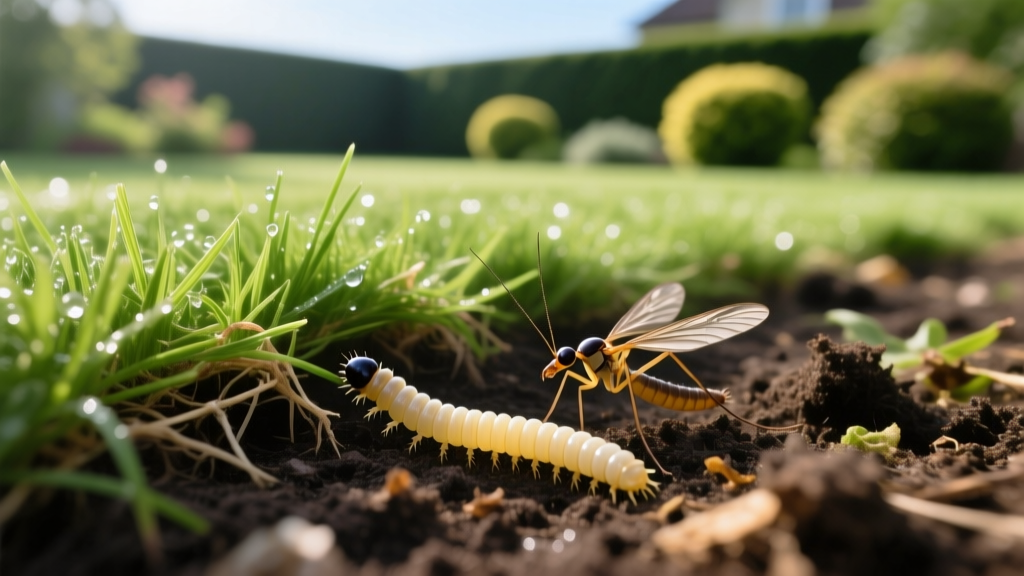
How Do You Get Rid of Crane Flies? Targeting Lawn-Damaging Larvae
When homeowners ask, "how do you get rid of crane flies?", they are usually reacting to the swarms of awkward, long-legged insects bumping against their siding in late summer or early fall. However, focusing your pest control efforts on the adult flying insects is a fundamental misunderstanding of the crane fly life cycle. Adult crane flies are entirely harmless, do not bite, and live for only a few days with the sole purpose of mating. The actual threat to your yard lies beneath the soil surface in the form of their root-eating larvae, commonly known as leatherjackets.
To effectively defend your lawn, you must shift your strategy from swatting adults to managing soil-dwelling larvae. This guide details the exact biological, chemical, and cultural protocols required to eliminate leatherjackets and protect your turfgrass roots.
The Real Threat: Adult Crane Flies vs. Leatherjacket Larvae
Myth vs. Fact: The Mosquito Hawk Misconception
Myth: Crane flies are "mosquito hawks" or "skeeter eaters" that prey on mosquitoes and will bite humans if provoked.
Fact: Adult crane flies lack the mouthparts to bite or feed on other insects. They do not eat mosquitoes. According to University of Kentucky Entomology, adult crane flies often do not feed at all, relying on fat reserves from their larval stage. The true turf pests are the immature larval stage (leatherjackets), which chew on grass roots, crowns, and lower stems, causing severe brown patches and turf detachment.
How to Confirm a Leatherjacket Infestation (The Soap Flush Test)
Before purchasing any treatments, you must confirm that crane fly larvae are actually causing your lawn damage. Brown patches can also be caused by drought, fungal diseases like dollar spot, or grub worms. The industry standard for sampling is the soapy water flush test.
- Mix the Solution: Combine 2 tablespoons of lemon-scented liquid dish soap with 1 gallon of water in a watering can.
- Mark the Area: Measure and mark a 1-square-yard (3x3 feet) section of your lawn, ideally at the border of a brown patch and healthy green grass.
- Apply and Wait: Pour the soapy solution evenly over the marked area. The soap irritates the larvae, forcing them to the surface. Wait 10 minutes.
- Count and Assess: Count the grayish-brown, legless, 1-inch-long leatherjackets on the surface. If you count more than 25 to 30 larvae per square yard, treatment is economically justified. Populations below this threshold rarely cause visible turf damage and can be managed by natural predators like birds.
Biological Warfare: Using Beneficial Nematodes
For environmentally conscious yard defense, beneficial nematodes are the most effective and ecologically sound method for eliminating crane fly larvae. Specifically, the species Steinernema carpocapsae and Heterorhabditis bacteriophora actively seek out leatherjackets in the soil, enter their bodies, and release symbiotic bacteria that kill the host within 48 hours.
Application Specifics for Maximum Efficacy
- Timing: Apply in early to mid-fall (September to October) when larvae are in their 1st or 2nd instar (small and highly susceptible). Spring applications are less effective because mature 4th-instar larvae have thicker cuticles that resist nematode penetration.
- Soil Temperature: Soil temperatures must be between 55°F and 85°F. Nematodes go dormant and die in cold or excessively hot soil.
- Product Selection & Cost: Look for commercial formulations like Arbico Organics NemAttack or BioLogic's Scan-E-Mask. Expect to pay $35 to $50 for a pack of 50 million nematodes, which treats approximately 5,000 square feet.
- Moisture Requirements: Water the lawn deeply before application to open soil pores. Apply the nematodes in the late afternoon or evening to avoid UV degradation, then water immediately with at least 1/4 inch of irrigation to wash them off the grass blades and into the thatch layer.
Chemical Interventions for Severe Infestations
When leatherjacket populations exceed 50 per square yard, or when biological controls fail due to improper soil moisture, targeted synthetic insecticides may be necessary. However, residential lawn care has strict regulatory boundaries; older organophosphates like Diazinon and Dursban are strictly banned for residential turf use due to groundwater toxicity.
Below is a comparison matrix of the current active ingredients approved for crane fly larval control.
| Active Ingredient | Target Stage | Application Rate | Est. Cost per 1,000 sq ft | Environmental Impact |
|---|---|---|---|---|
| Bifenthrin (e.g., Talstar P) | Early instar larvae | 1.0 fl oz / 1,000 sq ft | $0.08 - $0.12 | Highly toxic to aquatic life and bees; avoid near storm drains. |
| Imidacloprid (e.g., Merit 75 WP) | Preventative / Early larvae | 1.4 to 1.8 oz / 1,000 sq ft | $0.15 - $0.20 | Systemic; moderate risk to pollinators if applied to flowering weeds in turf. |
| Chlorantraniliprole (e.g., Acelepryn) | All larval stages | 0.08 to 0.11 fl oz / 1,000 sq ft | $0.25 - $0.35 | Low toxicity to mammals and bees; excellent environmental profile. |
Note: Always refer to the National Pesticide Information Center for detailed safety data sheets and re-entry intervals (REI) before applying synthetic chemicals.
Managing the Harmless Adults (Exclusion & Lighting)
While you cannot and should not spray adult crane flies, their sheer numbers can be a nuisance when they invade porches and garages. Yard defense against adults relies on physical exclusion and light management.
- Upgrade Exterior Lighting: Adult crane flies are highly phototactic (attracted to light). Replace standard white LED or incandescent porch bulbs with yellow "bug lights" or sodium vapor lamps, which emit wavelengths in the 550-600nm range that are virtually invisible to insects.
- Seal Entry Points: Inspect window screens for tears. Crane flies are large (up to 1.5 inches across), so standard 18x16 mesh fiberglass screening is highly effective at blocking them.
- Airflow Deterrence: Install an outdoor ceiling fan on covered patios. Crane flies are notoriously weak fliers; a moderate breeze (above 5 mph) makes it physically impossible for them to navigate and land in your seating areas.
Cultural Lawn Practices to Deter Egg-Laying
Female crane flies prefer to lay their eggs in moist, heavily thatched lawns in late August and September. Modifying your lawn's microenvironment makes it an unattractive nursery.
Pro-Tip: Reduce your irrigation frequency in late summer. Allowing the top inch of soil to dry out between waterings significantly decreases egg survival rates. Furthermore, core aeration in early fall disrupts the soil profile, physically destroying early-stage larvae and reducing the thatch layer where they hide.
Frequently Asked Questions
Do crane flies eat grass?
The adults do not eat at all. The larvae (leatherjackets) feed aggressively on the roots, crowns, and lower stems of turfgrass, which manifests as detached, dead brown patches that roll back like a carpet.
Are beneficial nematodes safe for my pets?
Yes. According to the Environmental Protection Agency, beneficial nematodes are completely safe for humans, dogs, cats, and earthworms. They only target specific insect hosts and die off once the host population is eliminated.
Why do I see thousands of crane flies in my yard in September?
This is the synchronized adult emergence period. The larvae pupate in late summer, and the adults emerge simultaneously to mate. This swarm lasts only 10 to 14 days. Focus on treating the soil for the next generation rather than trying to kill the short-lived adults.