Lawn Care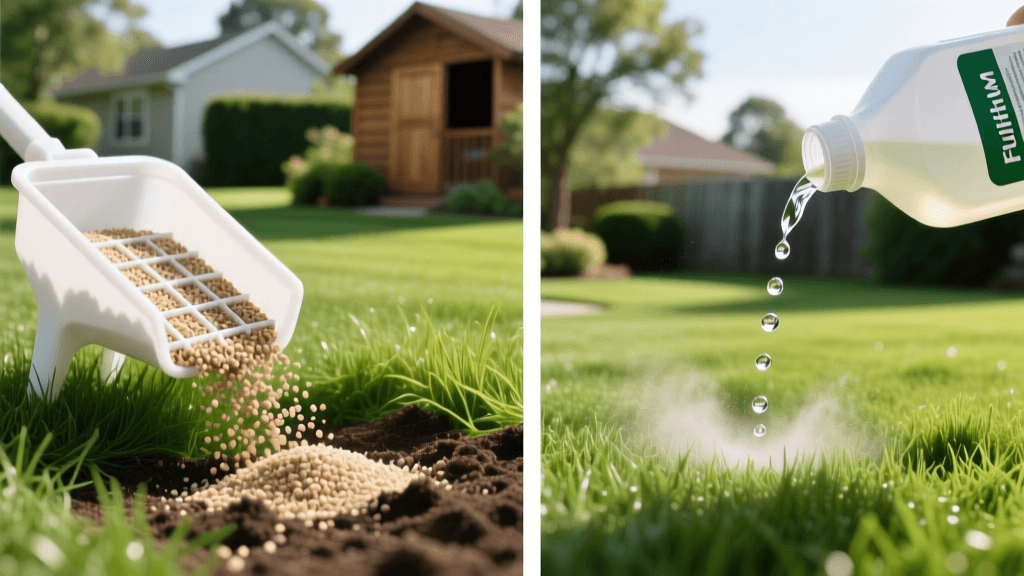
Granular vs Liquid Lawn Fertilizers: Top Products Compared
The Great Fertilizer Debate: Granular vs. Liquid
Every lush, green lawn shares a common secret: a consistent, well-planned fertilization schedule. However, when you walk into a garden center or browse online, you are immediately faced with a fork in the road. Should you choose traditional granular fertilizers, or opt for the increasingly popular liquid alternatives? Both delivery methods have distinct advantages, specific use cases, and unique cost structures. In this comprehensive review, we break down the science, compare top-rated products, and help you decide which fertilizer type is best for your specific turfgrass needs.
Understanding Granular Fertilizers
Granular fertilizers consist of small, solid pellets that are broadcast across the lawn using a drop or rotary spreader. These pellets must be watered into the soil to dissolve and release their nutrients to the root zone. They are generally categorized into quick-release and slow-release formulations.
Top Pick: Scotts Turf Builder Lawn Food
NPK Ratio: 24-25-4
Coverage: 5,000 sq. ft. (14 lb bag)
Estimated Cost: $35.00
Scotts Turf Builder is the undisputed heavyweight in the granular category. It utilizes an All-In-One Particle technology that ensures even distribution of nutrients. The high nitrogen content (24%) promotes aggressive blade growth and deep greening, while the 25% phosphorus aids in robust root development. It is best applied in early spring and late fall. Pro Tip: Always use a rotary spreader on setting 'J' for optimal coverage, and water the lawn lightly immediately after application to activate the granules without causing runoff.
Top Organic Pick: Milorganite Slow-Release Nitrogen
NPK Ratio: 6-4-0
Coverage: 2,500 sq. ft. (32 lb bag)
Estimated Cost: $22.00
Milorganite is a biosolid-based organic fertilizer that has been a staple for golf courses and home lawns for decades. Because it is composed of heat-dried microbes, it is virtually impossible to burn your lawn, even in the peak of summer heat. Its low nitrogen analysis means you need to apply more volume, but it enriches the soil microbiome over time. It also contains 2.5% chelated iron, which provides a deep, dark green color without causing excessive, unmowable top-growth.
Understanding Liquid Fertilizers
Liquid fertilizers are concentrated solutions mixed with water and applied via a hose-end sprayer. They offer immediate nutrient availability, as the grass can absorb nutrients not only through the roots but also directly through the foliage (foliar feeding). This makes them ideal for quick corrections of nutrient deficiencies.
Top Pick: Simple Lawn Solutions Liquid Lawn Fertilizer
NPK Ratio: 16-4-8
Coverage: 3,200 sq. ft. (32 oz bottle)
Estimated Cost: $25.00
Simple Lawn Solutions provides a highly concentrated, balanced liquid feed that attaches directly to your garden hose. The 16-4-8 profile is excellent for general maintenance and summer stress recovery. Because it contains a blend of fast-acting urea and slower-release nitrogen sources, you get an immediate color pop followed by sustained feeding. Pro Tip: Apply in the early morning or late evening to prevent rapid evaporation and potential leaf scorch during hot afternoons.
Top Subscription Pick: Sunday Lawn Care Nutrient Pouches
NPK Ratio: Varies by custom soil test
Coverage: Varies by lawn size
Estimated Cost: ~$120 - $180/year
Sunday has revolutionized liquid lawn care by eliminating the guesswork. After sending in a soil test kit, Sunday ships custom-formulated liquid pouches tailored to your lawn's exact deficiencies. The pouches attach to your hose, and the application is foolproof. While the upfront annual cost is higher, it prevents the common mistake of over-applying unnecessary nutrients, saving you money and protecting local waterways from nitrogen runoff.
Head-to-Head Comparison Chart
| Feature | Granular Fertilizers | Liquid Fertilizers |
|---|---|---|
| Application Speed | Moderate (requires spreading & watering) | Fast (spray and go) |
| Nutrient Release | Slow to Moderate (weeks to months) | Immediate to Fast (days to weeks) |
| Equipment Needed | Drop or Rotary Spreader | Garden Hose & Sprayer Nozzle |
| Cost per Sq. Ft. | Lower (bulk purchasing) | Higher (concentrates & shipping) |
| Best Used For | Baseline seasonal feeding programs | Quick fixes, foliar feeding, spot treatments |
The Critical First Step: Soil Testing
Before purchasing any product, you must understand your soil's baseline chemistry. Applying nitrogen to a lawn that is actually suffering from a pH imbalance or phosphorus lockout is a waste of money. As noted by the Clemson University Home & Garden Information Center, a soil test is the critical first step in any turf management program. It dictates exactly which NPK ratio you need, preventing environmental damage and saving you from buying unnecessary products.
Application Best Practices and Timing
The timing of your fertilizer application is just as important as the product you choose. According to University of Minnesota Extension, cool-season grasses like Kentucky Bluegrass and Tall Fescue benefit most from heavy fertilization in the early fall (September) and a lighter application in late spring. Fall feeding promotes deep root growth that sustains the grass through winter and triggers early spring green-up.
Conversely, warm-season grasses such as Bermuda, Zoysia, and St. Augustine should be fertilized during their active growing season. Research from Penn State Extension highlights that applying high-nitrogen fertilizers to warm-season grasses too early in the spring can encourage weed competition and make the turf susceptible to late frost damage. Wait until the grass has fully greened up and you have mowed it at least twice before initiating your liquid or granular spring schedule.
Spreader Calibration and Sprayer Maintenance
One of the most common reasons for fertilizer failure or lawn burn is improper equipment calibration. When using granular products, always calibrate your spreader over a hard surface like a driveway to measure the exact output rate before hitting the grass. Overlap your passes by 20% to avoid striping. For liquid applications, ensure your hose-end sprayer dial is set to the exact dilution ratio specified on the bottle. Rinse your sprayer thoroughly with clean water after every use to prevent crystallized salts from clogging the nozzle and ruining future applications.
Final Verdict: Which Should You Choose?
For the most cost-effective, long-term lawn care strategy, granular fertilizers remain the gold standard. Products like Scotts Turf Builder and Milorganite provide the sustained, slow-release nutrition required to build a resilient root system over the course of a season. They are cheaper per square foot and easier to store in bulk.
However, liquid fertilizers are an invaluable supplemental tool. Keeping a bottle of Simple Lawn Solutions 16-4-8 in your garage allows you to quickly correct summer yellowing or give your lawn a rapid boost before a major outdoor event. For beginners or those who hate calibrating spreaders, subscription services like Sunday offer a premium, foolproof liquid alternative that takes the science directly to your door.