Home & Garden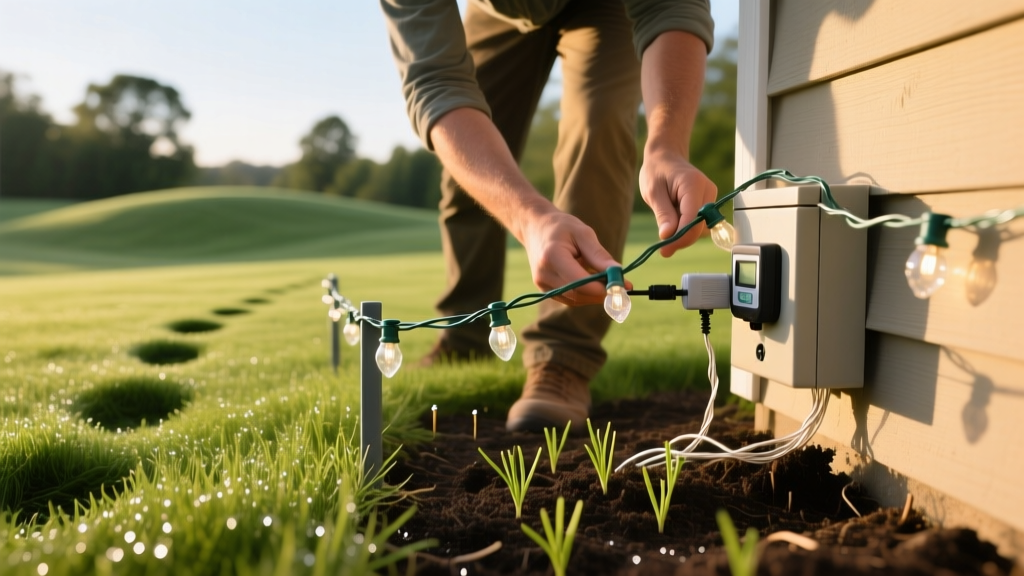
Install Guide Wire String Lights Over Seeded Lawns 2026
Mike RodriguezPublished
The Post-Aeration Dilemma: Lighting vs. Germination
Welcome to the 2026 outdoor living season. As homeowners increasingly bridge the gap between indoor comfort and outdoor garden-to-table entertaining, ambient patio lighting has transitioned from a luxury to a necessity. However, a major conflict arises for lawn care enthusiasts during the critical spring and fall renovation windows. You have just spent the weekend renting a core aerator, pulling thousands of soil plugs, and broadcasting premium tall fescue or Kentucky bluegrass seed. Your lawn is essentially a fragile, moisture-rich nursery. The last thing you should be doing is trampling across it to install traditional outdoor lighting.
Core aeration is designed to alleviate soil compaction, allowing oxygen, water, and nutrients to reach the root zone. When you immediately follow this process with overseeding, the seed-to-soil contact is paramount for germination. Walking across this vulnerable terrain to measure, drag extension cords, and hammer metal lighting stakes into the ground completely defeats the purpose of your aeration efforts. The foot traffic re-compacts the soil, while the stakes physically uproot emerging radicles and disrupt the delicate micro-environment required for seedling establishment. Fortunately, modern hardscape lighting techniques offer a zero-turf-impact solution: the structural guide wire system paired with smart irrigation-synchronized timers.
The Hidden Dangers of Traditional Lighting Stakes on New Seed
To understand why the guide wire method is superior for newly renovated lawns, we must examine the biology of seed germination and soil physics. When grass seed germinates, it pushes a fragile root (the radicle) into the top quarter-inch of the soil. During the first 21 to 28 days of the 2026 growing season, the soil must remain consistently moist but not waterlogged. This frequent watering schedule turns the topsoil into a soft sponge.
If you attempt to install traditional pole-mounted string lights using ground stakes, you introduce three major threats to your lawn renovation:
- Severe Soil Compaction: A 180-pound person walking on wet, freshly aerated soil exerts immense downward pressure, collapsing the macropores you just created with your aerator. This restricts root growth and water infiltration.
- Seed Displacement: Dragging heavy rubber extension cords across the lawn to reach distant outlets will drag and clump your carefully distributed seed, leading to uneven germination and patchy bare spots.
- Root Shearing: Forcing metal or plastic stakes into the ground shears through newly formed root networks and disrupts the soil plugs left by the aerator, which are meant to break down and top-dress the lawn naturally.
The Guide Wire Solution: Zero-Turf-Impact Installation
The professional landscaping standard for 2026 involves suspending outdoor string lights using a high-tension guide wire, also known as aircraft cable. By anchoring the cable to existing structures—such as your home's fascia board, a sturdy pergola, or the trunk of a mature, established tree—you completely eliminate the need to step foot on the newly seeded grass. The string lights are then attached to the guide wire using small, integrated snap hooks or zip ties, allowing them to float effortlessly above the germinating lawn.
Essential Tools and Materials for 2026 Guide Wire Setups
Before you begin, gather the following materials. All hardware should be marine-grade or stainless steel to withstand the constant moisture of your seeding irrigation schedule.
- 1/8-inch stainless steel aircraft cable (guide wire)
- Heavy-duty turnbuckles (for tensioning)
- Stainless steel eye hooks and structural lag screws
- Wire rope clips and thimbles
- Commercial-grade LED string lights with built-in snap hooks
- Smart outdoor plug with weather-resistant housing
- Ladder (to be placed strictly on the patio or hardscape, never on the grass)
Step-by-Step Installation Over Vulnerable Turf
Follow these steps to ensure a flawless installation that protects your lawn investment.
Step 1: Plan Your Anchor Points from the Hardscape
Stand on your patio, deck, or driveway. Identify two solid structural points that span the area you wish to illuminate. One point will typically be the exterior wall of your home (drilling into brick, stone, or wood fascia), and the other will be a mature tree or a structural post. Ensure the span does not exceed 25 feet without intermediate support, as the weight of the lights and wind load can cause sagging.
Step 2: Install Structural Anchors
Using your ladder positioned safely on the hardscape, drill pilot holes and install stainless steel eye hooks using structural lag screws. If attaching to a mature tree, use a specialized tree-friendly strap with a D-ring rather than drilling into the bark, which can introduce disease to the tree.
Step 3: Thread and Tension the Guide Wire
Attach one end of the aircraft cable to the first anchor using a wire rope clip and thimble to prevent kinking. Run the cable across the span (you can use a lightweight string to pull it across if the gap is wide, avoiding walking on the lawn). Thread the opposite end through the turnbuckle, attach it to the second anchor, and use a wrench to tighten the turnbuckle until the cable is taut. A properly tensioned guide wire should have minimal deflection when the lights are added.
Step 4: Hang the String Lights
With the guide wire secured, clip your LED string lights onto the cable every 12 inches. Leave a small amount of slack in the light cord between clips to prevent stress on the bulb sockets. Plug the main cord into your designated outdoor outlet, ensuring the cord runs along the edge of the patio rather than across the wet grass.
Synchronizing Smart Timers with Your Irrigation Schedule
In 2026, smart home integration is no longer just about convenience; it is a critical component of landscape management. Newly seeded lawns require frequent, shallow watering cycles—often programmed to run in the early evening to minimize evaporation. Running your string lights during these irrigation windows creates unnecessary glare, increases the risk of electrical hazards, and subjects the light fixtures to constant, heavy water exposure.
By utilizing a modern smart outdoor timer (such as the latest Wi-Fi-enabled dual-outlet smart plugs), you can synchronize your lighting schedule with your smart irrigation controller. According to the EPA WaterSense program, smart irrigation controllers adjust watering based on local weather conditions and soil moisture. You should program your lighting smart plug to activate only after your evening irrigation window has completely closed, allowing the grass blades and the light fixtures a chance to dry slightly before the lights power on. This not only extends the lifespan of your LED fixtures but also ensures your outdoor dining space is perfectly lit precisely when you and your guests are ready to use it, without interfering with the crucial watering needs of your germinating seed.
Material Comparison: Stakes vs. Guide Wires
To visualize the benefits of the guide wire method over traditional installation, review the comparison below:
| Feature | Traditional Ground Stakes | Guide Wire System (2026 Standard) |
|---|---|---|
| Soil Compaction Risk | High (Requires walking on wet soil) | Zero (Anchored to structures/hardscape) |
| Seed Disruption | Severe (Stakes uproot seedlings) | None (Suspended above the turf) |
| Installation Longevity | Low (Stakes shift during mowing) | High (Permanent structural anchors) |
| Mowing Interference | High (Must navigate around poles) | Zero (Clear airspace for mowers) |
| Initial Cost | $40 - $80 | $75 - $120 (Includes cable & hardware) |
Electrical Safety in High-Moisture Seeding Zones
Overseeded lawns are inherently wet environments. The combination of frequent irrigation, morning dew, and outdoor electricity demands strict adherence to safety protocols. The Electrical Safety Foundation International (ESFI) strongly advises that all outdoor electrical connections be kept elevated and protected from direct water exposure. When using a guide wire system, ensure that the main plug connection is elevated off the ground and housed in a weatherproof, GFCI-protected outlet cover. Never allow the connection point between the string light cord and the extension cord to rest on the wet, newly seeded soil, as this can lead to ground faults, tripped breakers, and severe shock hazards. By suspending the lights and keeping all connections on the dry hardscape, you maintain a safe environment for your family while your lawn establishes its new root system.
Conclusion: Patience Yields a Perfect Lawn and Patio
Renovating a lawn through core aeration and overseeding is a significant investment of time, money, and physical effort. Protecting that investment requires a holistic approach to your outdoor space, recognizing that hardscape installations and turf health are deeply interconnected. By adopting the guide wire method for your outdoor string lights and integrating smart timers with your 2026 irrigation schedule, you achieve the perfect balance of aesthetic appeal and agronomic science. You can enjoy a beautifully illuminated, garden-to-table evening on the patio, knowing that just inches away, your newly seeded lawn is germinating undisturbed, free from compaction, and on its way to becoming the lush, vibrant turf you envisioned.
