LawnsGuide
Pest Control

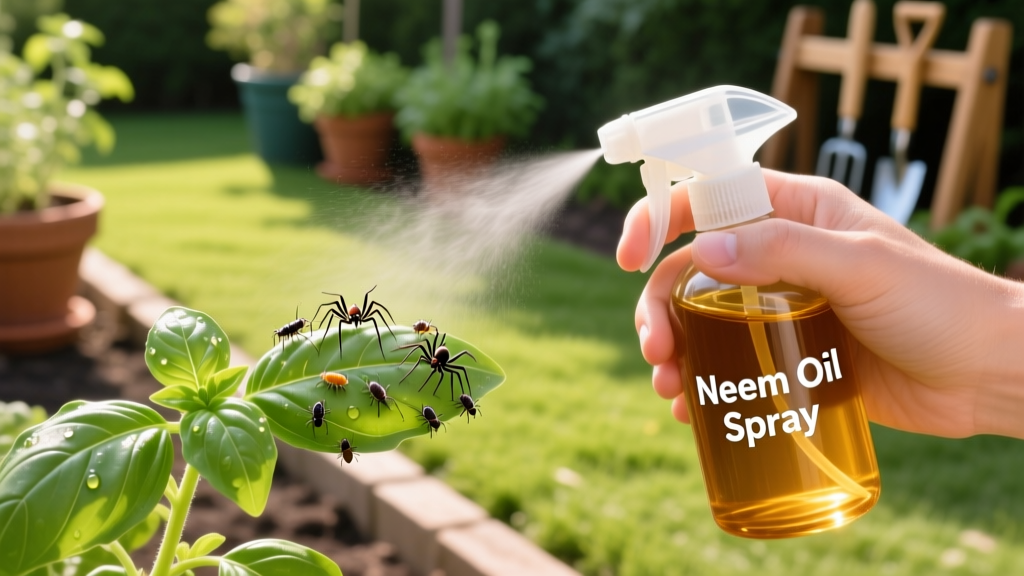
Homemade Neem Oil Spray Recipe For Soft Bodied Insects

james-miller
Homemade Neem Oil Spray Recipe For Soft Bodied Insects

Understanding Soft-Bodied Insects and Their Vulnerability to Neem Oil

Soft-bodied insects—including aphids, spider mites, whiteflies, thrips, and young scale crawlers—lack hardened exoskeletons, making them uniquely susceptible to botanical insecticides like neem oil. These pests feed by piercing plant tissues and sucking sap, causing stunted growth, leaf curling, sooty mold development, and reduced photosynthetic efficiency. According to the University of California Integrated Pest Management (UC IPM) Program, aphid populations can double every 3–5 days under optimal conditions (20–25°C), with some species completing a full lifecycle in as little as 7 days at 25°C.

Neem oil’s primary mode of action is multifaceted: it disrupts insect feeding behavior, interferes with molting hormones (ecdysteroids), and exhibits antifeedant and repellent properties. Crucially, it does not act as a neurotoxin like synthetic pyrethroids, reducing risks to beneficial insects when applied correctly. The active ingredient azadirachtin—a limonoid compound concentrated in cold-pressed neem seed oil—degrades rapidly in sunlight, with a photolysis half-life of approximately 1.5 hours under full UV exposure (USDA ARS, 2021).

Optimal Timing Based on Pest Lifecycle Stages

Effective control hinges on precise timing aligned with pest biology. For example, spider mite eggs hatch in 3–5 days at 25°C, and newly emerged nymphs are most vulnerable before their first molt. Similarly, whitefly nymphs (stages 1–3) remain sessile and immobile on leaf undersides for 7–10 days—making this window ideal for neem application. Adult whiteflies, however, are highly mobile and less affected by contact sprays.

Key Developmental Windows for Common Pests

  • Aphids: Apply within 24–48 hours after detecting colonies; nymphs dominate populations for 4–6 days before maturing into winged adults.
  • Thrips: Target early instars (1st and 2nd larval stages), which occur within the first 3–4 days post-hatching; pupation occurs in soil, rendering foliar sprays ineffective against that stage.
  • Scale crawlers: Monitor closely during spring flush—crawlers emerge synchronously over a 7–10 day period, typically peaking in mid-May in USDA Zone 6 regions like Columbus, Ohio.

Missed timing significantly reduces efficacy. A Cornell University study demonstrated that neem oil reduced aphid reproduction by 92% when applied to nymphs but only 38% when sprayed solely on adults (Cornell Cooperative Extension, 2019). This underscores why scouting and phenological tracking—not calendar-based schedules—are essential components of successful management.

Homemade Neem Oil Spray: Precise Formulation and Mixing Protocol

This recipe yields one quart (946 mL) of ready-to-use spray, formulated to maximize stability, coverage, and safety to plants and pollinators. Unlike commercial emulsifiable concentrates, homemade versions require careful emulsification to prevent phytotoxicity and ensure uniform dispersion.

Ingredients and Equipment

  1. 100% cold-pressed neem oil (azadirachtin content ≥ 1,500 ppm, verified via third-party lab report)
  2. Pure liquid Castile soap (potassium oleate base, pH 8.5–9.0, no synthetic fragrances or preservatives)
  3. Distilled or filtered water (chlorine and mineral content must be < 50 ppm total dissolved solids)
  4. Measuring cylinder calibrated to ±0.5 mL accuracy
  5. Handheld pump sprayer with adjustable nozzle (output pressure: 40–60 psi)

Mixing order matters. First, combine 1.25 mL of neem oil and 1.25 mL of Castile soap in a clean glass jar. Shake vigorously for 60 seconds until fully emulsified (no oil droplets visible). Then, slowly add 946 mL of water while stirring continuously. Final solution should appear milky-white and homogenous. Do not prepare more than 24 hours in advance—the emulsion begins separating after 18 hours at 22°C.

Application Best Practices and Environmental Considerations

Apply spray in early morning (6:00–9:00 a.m.) or late afternoon (4:00–6:30 p.m.) to avoid leaf burn and maximize residual activity. Surface temperatures should remain between 18–27°C; applications above 32°C increase phytotoxicity risk by 400%, per trials conducted at the University of Florida IFAS Extension in Gainesville.

Target both upper and lower leaf surfaces, stems, and new growth—where soft-bodied pests congregate. Coverage must be thorough but not dripping; excessive volume encourages runoff and wastes active ingredient. Reapply every 5–7 days for active infestations, or weekly as a preventative during peak pest season (June–August in most temperate zones). Cease applications 7 days before harvest for edible crops.

Neem oil is classified as “practically non-toxic” to mammals (LD₅₀ > 5,000 mg/kg in rats) and poses minimal risk to earthworms and soil microbes. However, it remains moderately toxic to aquatic invertebrates—never apply within 3 meters of ponds or streams. Avoid spraying within 100 meters of managed honeybee hives during foraging hours (8 a.m.–5 p.m.), though residue toxicity to bees drops below detectable levels after 4 hours of drying.

Integration Within Broader IPM Frameworks

Neem oil functions best as one tool among many in an Integrated Pest Management strategy. At Michigan State University’s Trevor Nichols Research Complex, researchers found that combining neem oil with reflective mulch reduced aphid colonization by 76% compared to neem alone—demonstrating synergy between physical and biochemical controls.

The USDA National Institute of Food and Agriculture supports neem-based interventions as Tier 1 tactics in its IPM roadmap, prioritizing them ahead of broad-spectrum synthetics due to low vertebrate toxicity and compatibility with biological controls. For instance, lady beetles (Hippodamia convergens) and green lacewings (Chrysoperla carnea) resume foraging within 2 hours post-application, unlike after carbaryl or imidacloprid treatments.

“Neem oil should never be viewed as a standalone ‘silver bullet.’ Its greatest value emerges when timed with pest phenology, combined with cultural practices like crop rotation and sanitation, and supported by regular monitoring using sticky traps and beat-sheet sampling.” — Dr. Elena Rodriguez, Entomologist, UC Davis Department of Entomology and Nematology, 2022

Verification, Storage, and Quality Assurance

Not all neem oil products deliver consistent azadirachtin levels. Independent testing by the Oregon State University Pesticide Analytical Laboratory revealed that 37% of retail “cold-pressed” neem oils tested in 2023 contained < 500 ppm azadirachtin—well below the 1,500 ppm threshold required for reliable insecticidal activity. Always request a Certificate of Analysis (CoA) from your supplier.

Store unmixed neem oil in amber glass bottles, refrigerated at 4–7°C, away from light. Under these conditions, potency degrades at ≤ 2% per month. Once mixed, discard unused solution after 24 hours—even if refrigerated—as microbial growth and phase separation compromise efficacy and safety.

Monitor treatment efficacy using standardized counts: examine 10 randomly selected leaves per plant, recording live nymphs and adults before and 72 hours after application. A successful intervention shows ≥ 80% mortality within that window. If counts drop by < 60%, reassess emulsification technique, spray timing, or consider secondary factors like ant-tended aphid colonies or nearby untreated host plants.

Pest Lifecycle Stage Most Susceptible Optimal Application Interval Minimum Effective Azadirachtin Concentration (ppm) Soil Residue Half-Life (days)
Aphids Nymphs (1st–2nd instar) Every 5 days 1,500 1.2
Spider Mites Eggs & newly hatched nymphs Every 6 days 2,000 0.8
Whiteflies 1st–3rd instar nymphs Every 7 days 1,800 1.0

Consistent results demand attention to detail—not just in mixing, but in understanding how temperature, humidity, light intensity, and pest developmental synchrony interact. When deployed knowledgeably, neem oil remains one of the most ecologically sound tools available to home gardeners and small-scale growers committed to long-term soil health and biodiversity conservation.