Home & Garden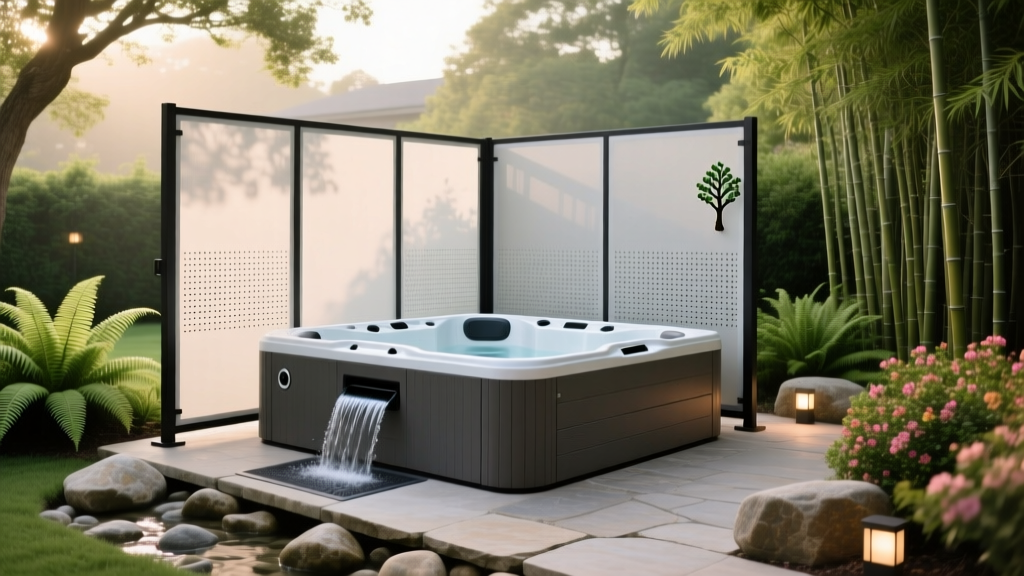
2026 Hot Tub Privacy Screens: Drainage & Web Worm Control
Sarah ChenPublished
Integrating Hot Tub Drainage with Privacy Landscaping
Creating a secluded outdoor oasis in 2026 requires more than just dropping a hot tub onto a concrete pad and planting a few shrubs. True luxury demands a seamless integration of hardscaping, hydrology, and living privacy screens. However, many homeowners overlook the critical intersection between water management and tree health. A standard hot tub holds between 400 and 500 gallons of water. Between splash-out, evaporation, and periodic draining, the surrounding soil can become heavily saturated. If your privacy screen consists of trees that are sensitive to waterlogged roots, the resulting stress makes them highly susceptible to pests—most notably, tree web worms.
Proper drainage planning is the first line of defense in pest control. When tree roots sit in stagnant water, they suffer from hypoxia (oxygen deprivation). A stressed tree emits specific volatile organic compounds (VOCs) that act as a beacon for pests like the fall webworm (Hyphantria cunea) and the eastern tent caterpillar. To protect your privacy investment, you must engineer the landscape to handle the hot tub's water displacement while keeping the root zones of your screening trees optimally moist but never flooded.
Engineering the Spa Runoff System
Before planting your privacy screen, establish a comprehensive drainage network. Grade the soil away from the hot tub at a minimum slope of 1/4 inch per foot. Install a French drain system wrapped in landscape fabric and filled with washed gravel to intercept splash-out and direct it away from both the spa's electrical components and the tree root zones. For heavy clay soils common in many regions, consider incorporating a dry well or a catch basin connected to a corrugated pipe that daylight safely away from your property line. By keeping the soil structure intact and well-aerated, your privacy trees will maintain the vigor needed to naturally resist severe pest damage.
Selecting Privacy Trees: Balancing Aesthetics and Pest Resistance
Choosing the right trees for your hot tub privacy screen requires balancing year-round density, soil moisture tolerance, and susceptibility to defoliating insects. In 2026, landscapers are favoring resilient native and hybrid species that can handle the microclimates created by heated spa environments. Below is a comparison of popular privacy trees, evaluating their drainage needs and their risk for web worm infestations.
| Tree Species | Privacy Density | Drainage Tolerance | Web Worm Susceptibility |
|---|---|---|---|
| Green Giant Arborvitae | High (Evergreen) | Low (Requires well-drained soil) | Low |
| River Birch | Medium (Deciduous) | High (Tolerates wet, poor drainage) | Moderate |
| Sweetgum | High (Deciduous) | Moderate | High |
| Persimmon | Medium (Deciduous) | Moderate | High |
| Eastern Redcedar | High (Evergreen) | High (Drought and wet tolerant) | Low |
As the table illustrates, evergreen options like the Green Giant Arborvitae and Eastern Redcedar are excellent for year-round hot tub privacy and generally avoid the worst of the web worm issues. However, if your landscape design calls for deciduous trees like River Birch or Sweetgum to provide summer shade and autumn color, you must be prepared to manage the web worms that frequently target these species when environmental stress occurs.
The Web Worm Threat to Outdoor Living Spaces
Tree web worms are not just an aesthetic nuisance; they are a direct threat to the functionality and cleanliness of your hot tub environment. The fall webworm, a native North American pest, constructs large, silken tents at the terminal ends of tree branches in late summer and early fall. Eastern tent caterpillars, conversely, build their webs in the crotches of branches in the spring.
When a privacy screen tree is heavily infested, the consequences for your hot tub are immediate. First, the defoliation creates gaps in your privacy screen, defeating the primary purpose of the landscaping. Second, the silken webs, along with insect frass (excrement) and shed larval skins, easily catch the wind and blow directly into your spa. This organic debris rapidly depletes your hot tub's sanitizer levels, clogs the filtration system, and disrupts the water chemistry, forcing you to drain and refill the tub more frequently. According to entomologists at the University of Kentucky, fall webworms can produce multiple generations in a single year in warmer climates, meaning a single neglected tree can continuously contaminate your outdoor living space from mid-summer through late autumn.
2026 Web Worm Control Protocols for Spa Environments
Controlling web worms near a hot tub requires a delicate approach. You cannot use broad-spectrum, highly volatile chemical pesticides that might drift into the spa water or expose relaxing bathers to harmful fumes. Modern 2026 integrated pest management (IPM) relies on targeted, low-toxicity biological controls that are safe for humans, pets, and beneficial pollinators.
1. Biological Control: Bacillus thuringiensis var. kurstaki (Btk)
Btk is a naturally occurring soil bacterium that specifically targets the digestive systems of caterpillars, including web worms. When the larvae consume leaves treated with Btk, they stop feeding within hours and die shortly after. The Environmental Protection Agency (EPA) recognizes Bt as a safe, highly effective biological pesticide that poses minimal risk to the environment and human health. For hot tub privacy screens, apply Btk as a foliar spray in the early evening when the caterpillars are actively feeding and UV degradation is minimal. Because it breaks down quickly in sunlight and is entirely non-toxic to humans, any minor overspray near the hot tub area poses zero risk to your water chemistry.
2. Organic Contact Sprays: Spinosad
For heavier infestations where Btk requires a boost, Spinosad is a premier organic option derived from soil-dwelling bacteria. It acts as both a contact and ingestion poison for web worms. Spinosad is highly effective but should be applied carefully to avoid drifting onto blooming companion plants near the spa, as it can be toxic to bees while wet. Once dried, it is safe and provides excellent residual control against web worm larvae.
3. Mechanical Pruning and Disposal
Because fall webworms build their tents at the very tips of the branches, mechanical control is highly effective and requires no chemicals. Using a long-handled pole pruner, simply snip off the webbed branches and drop them into a sealed yard waste bag. Do not burn the webs near the hot tub, as the smoke and ash will contaminate the water and the spa cover. Pruning also improves air circulation through the privacy screen, reducing the humid, stagnant microclimates that encourage both pest proliferation and fungal diseases.
Long-Term Maintenance for a Pristine Spa Oasis
The synergy between a clean hot tub and a thriving privacy screen relies on proactive, year-round maintenance. In early spring, apply a 2-to-3-inch layer of organic mulch around the base of your privacy trees to regulate soil temperature and retain moisture, but keep the mulch at least three inches away from the tree trunks to prevent rot. Ensure your French drains and catch basins are cleared of autumn leaves and winter debris before the heavy spring rains begin.
A healthy, well-drained tree is your best defense against pests. By managing the hydrology of your hot tub landscape, you eliminate the environmental stressors that invite web worms to colonize your privacy screen.
Monitor your trees weekly during the peak summer months. Look for the early signs of webbing or localized leaf skeletonizing. Catching a web worm colony when it is the size of a tennis ball allows you to simply prune it out, whereas waiting until the colony expands to engulf entire limbs will require biological spraying. By combining rigorous drainage planning with targeted, eco-friendly web worm control, your 2026 hot tub landscape will remain a private, lush, and immaculate retreat for years to come.
