Home & Garden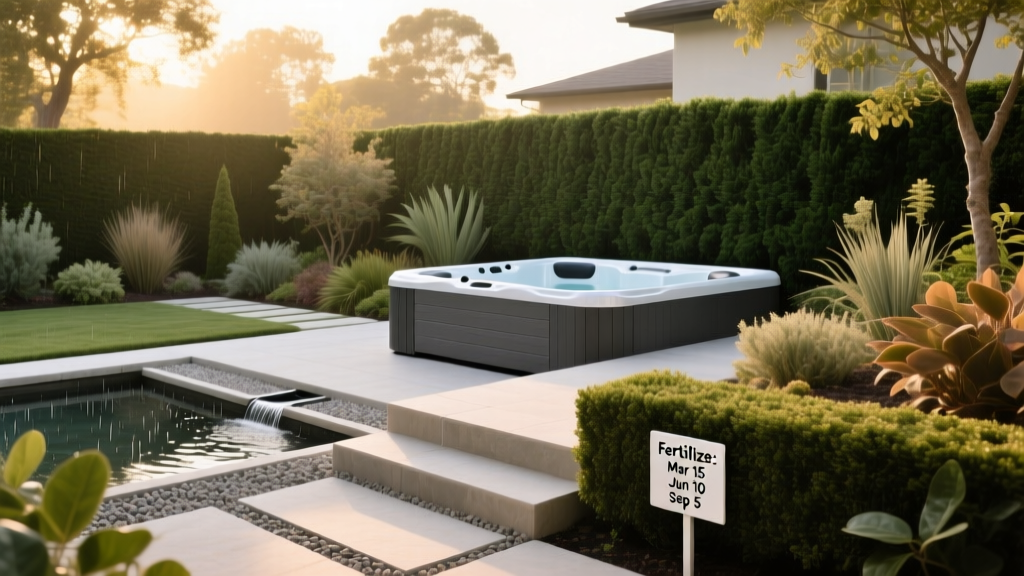
Hot Tub Privacy Landscaping 2026: Drainage & Fertilizer Schedules
Lisa ThompsonPublished
Designing the Ultimate Hot Tub Oasis: Where Privacy Meets Plant Health
Creating a secluded hot tub retreat requires more than just dropping a few potted ferns around the perimeter. In 2026, homeowners are increasingly investing in living privacy screens—dense, fast-growing hedges and ornamental grasses that block sightlines while elevating the landscape. However, the microclimate surrounding a hot tub is notoriously hostile to plant life. Between constant chemical splash, high humidity, and the massive water displacement from hot tub drainage, your privacy plants face severe environmental stress.
To maintain a lush, impenetrable green wall, you must integrate precise drainage planning with a specialized fertilizer schedule. The traditional approach to landscape fertilization simply does not work in moisture-heavy, chemically exposed hot tub zones. This comprehensive guide explores the intersection of drainage engineering and advanced 2026 fertilizer protocols to ensure your privacy screen thrives year-round.
The Drainage Dilemma: Protecting Roots and Preventing Nutrient Leaching
Before discussing fertilizer types, we must address the foundation of plant health: drainage. A standard hot tub holds between 300 and 500 gallons of water. When you perform routine maintenance, backwash filters, or experience heavy rainfall runoff from the hot tub cover, that water has to go somewhere. If it pools around the base of your privacy screen, it creates an anaerobic soil environment that suffocates roots and leaches essential nutrients deep beyond the root zone.
Strategic Drainage Planning for Privacy Beds
- French Drains and Gravel Trenches: Install a perforated pipe wrapped in landscape fabric along the backside of your privacy screen. Cover with washed gravel to ensure rapid water dispersal away from the root balls.
- Dry Well Integration: For properties with heavy clay soil, route hot tub discharge into a subterranean dry well filled with rubble, preventing surface saturation that renders fertilizer applications useless.
- Berming and Grading: Plant your privacy screen on a slight 2% to 3% berm. This elevates the root crown above the hot tub's splash and drainage zone, ensuring that when you do apply fertilizer, it remains in the active root zone rather than washing away.
According to the Clemson University Home & Garden Information Center, poorly drained soils severely limit a plant's ability to uptake applied nutrients, often leading to a false diagnosis of nutrient deficiency when the real issue is waterlogged roots.
Top Privacy Plants and Their Unique Nutrient Demands
Not all privacy screens are created equal. The species you choose dictates your fertilizer strategy. In 2026, the most popular hot tub privacy plants include clumping bamboo, Arborvitae (Thuja), and fast-growing shrubs like Viburnum.
Arborvitae is a staple for year-round screening. As noted by the University of Minnesota Extension, these evergreens require consistent nitrogen to maintain their dense, green foliage, but they are highly susceptible to root rot in poorly drained soils. Bamboo, while incredibly fast-growing, is a heavy feeder that will quickly deplete soil nutrients, requiring aggressive, scheduled feeding to maintain its height and density as a privacy barrier.
2026 Fertilizer Types for Moisture-Heavy Privacy Screens
Because hot tub zones are prone to excess moisture and occasional chemical contamination, the type of fertilizer you use is critical. Standard synthetic, water-soluble fertilizers will wash away immediately in a drainage-heavy zone, polluting local waterways and leaving your plants starving.
1. Sulfur-Coated Urea (SCU) and Biochar-Infused Granules
With recent 2025 and 2026 environmental regulations phasing out microplastic polymer coatings on fertilizers, sulfur-coated and biochar-infused slow-release fertilizers have become the industry standard. These formulations release nitrogen gradually based on soil temperature and microbial activity, rather than dissolving instantly upon contact with water. This is vital for hot tub privacy screens, as it prevents nutrient burn and leaching during heavy drainage events.
2. Organic Amino Acid and Kelp-Based Formulations
Organic granular fertilizers derived from feather meal, kelp, and bone meal are excellent for hot tub perimeters. They not only provide a steady N-P-K release but also introduce beneficial microbes that help break down organic matter in wet soils. Kelp extracts are particularly valuable because they contain natural cytokinins and auxins, which help plants recover from the stress of hot tub chemical splash (chlorine or bromine).
3. Liquid Chelated Micronutrients
Hot tub chemicals can alter soil pH, locking out vital micronutrients like iron and manganese, leading to chlorosis (yellowing leaves). Liquid chelated iron and manganese can be applied as a foliar spray, bypassing the compromised soil environment entirely and delivering nutrients directly to the leaves of your privacy screen.
The 2026 Fertilizer Schedule for Hot Tub Landscaping
Timing is everything. Applying fertilizer right before a hot tub drain-and-clean cycle will result in total nutrient loss. Follow this specialized schedule to align plant needs with the unique rhythms of hot tub ownership.
| Season | Fertilizer Type | Application Rate & Method | Hot Tub Zone Considerations |
|---|---|---|---|
| Early Spring | Organic Granular (4-3-3) | 2 lbs per 100 sq ft, top-dressed and watered in lightly. | Apply before spring hot tub opening/cleaning to avoid chemical wash-off. |
| Early Summer | Biochar-Infused Slow Release (16-4-8) | 1.5 lbs per 100 sq ft, applied to the drip line. | Supports rapid foliage growth during peak hot tub usage and high splash periods. |
| Late Summer | Liquid Chelated Iron (Foliar) | Mix per label, spray directly on foliage in the evening. | Corrects yellowing caused by bromine/chlorine splash altering soil pH. |
| Late Fall | Potassium-Rich Winterizer (0-0-10) | 1 lb per 100 sq ft, soil incorporated. | Hardens off Arborvitae and Bamboo against winter freezes and hot tub steam. |
For a deeper understanding of how soil pH and nutrient availability interact, the Penn State Extension emphasizes that soil testing should be conducted every two years, especially in specialized microclimates like hot tub enclosures where chemical runoff can drastically alter soil chemistry.
Mitigating Chemical Splash and Fertilizer Burn
Even with perfect drainage and a meticulous fertilizer schedule, hot tub chemicals pose a threat. Chlorine and bromine are phytotoxic in high concentrations. When users splash chemically treated water onto the privacy screen, it can burn the foliage and create a toxic buildup in the topsoil.
To combat this, incorporate a physical splash barrier. A decorative border of river rock or permeable pavers extending 18 inches from the hot tub edge to the plant base acts as a buffer zone. Furthermore, keep a garden hose nearby to rinse the foliage of your privacy screen with fresh water immediately after a large gathering or heavy splashing event. This dilutes the chemicals before they can dry on the leaves or seep into the root zone, protecting both the plant tissue and the carefully balanced fertilizer ecosystem you have established.
Smart Irrigation and Soil Moisture Sensors
In 2026, smart home integration extends to the garden bed. Installing wireless soil moisture sensors at the base of your privacy screen allows you to monitor saturation levels in real-time. If the hot tub drainage system fails or the soil becomes waterlogged, the sensor alerts your smartphone, preventing you from applying fertilizer to saturated soil—a practice that guarantees nutrient runoff and root suffocation. Pairing these sensors with smart drip irrigation ensures your privacy screen receives exactly the moisture it needs to process the slow-release fertilizers, without adding to the drainage burden.
Conclusion
Landscaping around a hot tub requires a delicate balance of hardscape engineering and precise botanical care. By prioritizing aggressive drainage planning and adopting a specialized, slow-release fertilizer schedule tailored to the unique stresses of the hot tub microclimate, you can cultivate a vibrant, towering privacy screen. In 2026, leveraging organic formulations, biochar technology, and smart soil monitoring ensures your outdoor oasis remains both completely private and perfectly manicured for years to come.
