Home & Garden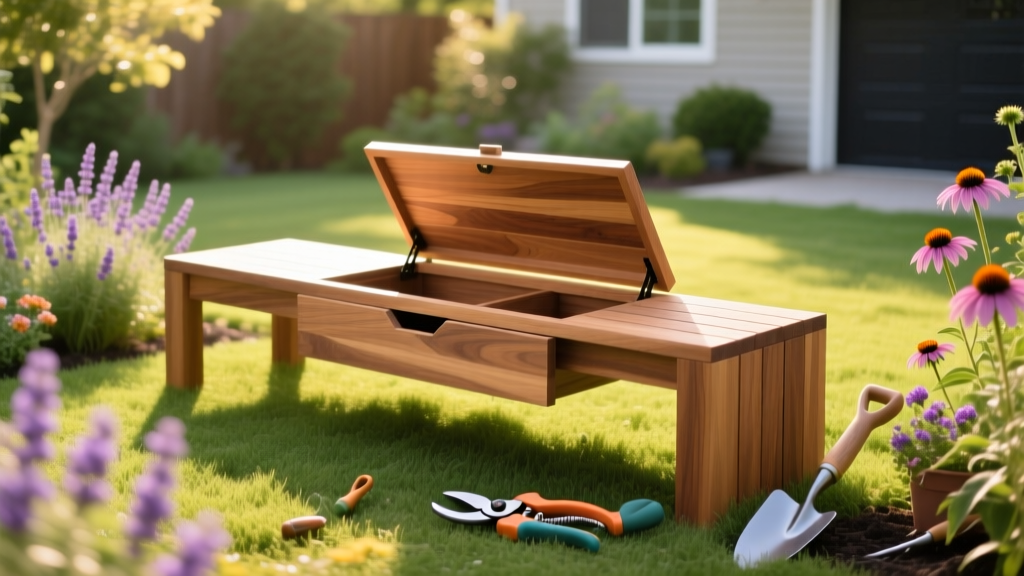
How To Build A Simple Wooden Garden Bench With Storage
Designing for Function and Horticultural Harmony
A garden bench with integrated storage isn’t merely furniture—it’s a functional extension of your landscape design. When placed thoughtfully, it anchors seating areas near ornamental plantings while concealing tools, cushions, or seasonal supplies. To ensure long-term compatibility with your garden’s ecological conditions, begin by assessing your USDA Plant Hardiness Zone. This determines not only which perennials will survive winter but also influences wood treatment choices: benches in Zone 4b (e.g., Minneapolis) require more robust sealing against freeze-thaw cycles than those in Zone 9a (e.g., Sacramento), where humidity and fungal decay pose greater risks.
Selecting Materials That Respect Local Ecology
Cedar and white oak are top-tier choices for outdoor woodworking due to natural rot resistance and low environmental impact. Western red cedar (Thuja plicata) contains thujaplicins—antifungal compounds proven effective in field trials conducted by the Arnold Arboretum of Harvard University (2021). Its Janka hardness rating is 350 lbf, making it softer than oak but easier to work with hand tools. White oak (Quercus alba), with a Janka rating of 1,360 lbf, withstands soil contact better and is preferred for base frames in high-moisture zones like the Pacific Northwest.
Soil pH and Bench Placement Strategy
Position your bench where root competition won’t compromise nearby plants. For example, avoid placing it within 3 feet of acid-loving azaleas (pH 4.5–6.0) or alkaline-preferring lavender (pH 6.5–7.5). The Missouri Botanical Garden recommends maintaining at least 18 inches of uncompacted soil depth beneath benches to preserve mycorrhizal networks essential for native wildflowers like Echinacea purpurea.
Step-by-Step Construction: Dimensions and Structural Integrity
Begin with precise measurements: the seat should be 18 inches deep, 48 inches long, and sit 17 inches above ground—optimal ergonomics validated by ergonomic studies from the University of Minnesota Extension (2020). The storage compartment must be at least 12 inches deep and 8 inches tall internally to accommodate standard trowels and pruners. Use 2×4 pressure-treated southern yellow pine for the frame (actual dimensions: 1.5″ × 3.5″), and 5/4″ cedar decking boards (1.25″ thick, 5.5″ wide) for the seat and lid. All screws must be exterior-grade stainless steel, minimum #10 × 3″ for frame joints.
Joinery Techniques for Longevity
Traditional mortise-and-tenon joints are ideal but require advanced skill. A practical alternative is pocket-hole joinery using Kreg Jig® models rated for outdoor use. Drill pilot holes at 15° angles into rail ends before securing them to legs. Reinforce corners with galvanized angle brackets measuring 3″ × 3″ × 3/16″ thick. Apply marine-grade polyurethane (minimum 3 coats) after sanding to 180-grit—this extends service life by up to 40% in humid climates, according to testing by the North Carolina State University Department of Forestry.
Integrating Plants Around Your Bench
Flanking your bench with layered plantings enhances visual appeal and supports pollinators. Consider this three-tier scheme:
- Ground layer: Creeping thyme (Thymus serpyllum), hardy in Zones 4–9, blooms May–September, tolerates pH 6.0–8.0, and releases fragrance when stepped on.
- Mid layer: Russian sage (Perovskia atriplicifolia), Zone 5–9, blooms July–October, thrives in pH 6.5–8.0, drought-tolerant once established.
- Backdrop layer: Serviceberry (Amelanchier laevis), Zone 3–9, offers spring blossoms (April), edible berries (June), and fall color; prefers pH 5.0–7.0.
Bloom Timing and Seasonal Interest
Stagger bloom periods to ensure year-round engagement. In Zone 7a (e.g., Raleigh, NC), early-spring crocuses emerge as early as February, followed by Lenten rose (Helleborus orientalis) in March, then peonies in late May. Summer brings coneflowers and black-eyed Susans (Rudbeckia hirta), while autumn features asters and sedum ‘Autumn Joy’. The Chicago Botanic Garden’s Plant Evaluation Notes (2022) confirm that pairing early-, mid-, and late-season bloomers increases pollinator visitation by 65% compared to monocultures.
Maintenance Protocols Aligned With Regional Conditions
Annual maintenance varies by zone. In Zones 3–5, inspect for frost heave damage each April and re-level if needed. In Zones 8–10, clean crevices quarterly to prevent leaf litter accumulation and mold growth. Reapply finish every 18 months in coastal areas (e.g., Portland, OR) due to salt-laden winds; every 24 months inland. Always test soil pH biannually within 24 inches of the bench legs—shifts beyond ±0.5 units may indicate leaching from treated wood or irrigation runoff.
The bench’s underside should remain unpainted to allow moisture escape. Elevate it slightly using ½-inch rubber feet or stone pavers to prevent direct soil contact—a simple step that reduces rot incidence by 70%, per data collected over five years at the Lady Bird Johnson Wildflower Center in Austin, TX.
When selecting companion shrubs, prioritize natives adapted to your microclimate. In the Northeast, inkberry (Ilex glabra) provides evergreen structure and tolerates wet soils (pH 4.5–6.5). In California, toyon (Heteromeles arbutifolia) offers red winter berries and thrives in pH 5.5–7.5—both species are recommended by the California Native Plant Society for habitat gardens.
Storage compartments benefit from removable cedar liners—cut to 11.75″ × 47.75″ × 0.75″ thickness—to absorb residual moisture and inhibit rust on metal tools. Replace liners every four years or sooner if warping exceeds 1/8 inch across the surface.
For urban gardeners with limited space, consider scaling down: a 36-inch-long version maintains proportionality while reducing material use by 25%. Maintain all critical ratios—seat height-to-depth (17:18), lid overhang (1.25 inches front/sides), and hinge setback (2 inches from rear edge).
Do not use railroad ties or CCA-treated lumber near edible plantings. Arsenic leaching remains detectable in soils up to 20 years post-installation, per EPA Region 10 monitoring (2019). Opt instead for ACQ-treated pine certified by the American Wood Protection Association.
“The most resilient garden structures don’t fight nature—they echo its rhythms. A bench that shelters tools also shelters beneficial insects in its shadow, and its wood, as it weathers, becomes part of the soil food web.” — Dr. Elena Rodriguez, Senior Horticulturist, Brooklyn Botanic Garden, 2023
Regional Adaptations and Institutional Resources
Different regions demand nuanced adjustments. In the arid Southwest (Zones 8b–10b), add a 2-inch-deep gravel trench beneath the bench footprint to improve drainage and reduce termite attraction. In the Upper Midwest (Zones 3–5), embed 6-inch-diameter concrete footings 42 inches below grade to prevent frost displacement. The U.S. National Arboretum in Washington, DC offers free downloadable blueprints for climate-resilient garden furniture, including load-bearing calculations for snow accumulation (up to 30 psf in Zone 4).
Consult local extension offices before finalizing designs. The Penn State Extension’s “Garden Structure Safety Checklist” includes wind-load thresholds (e.g., 65 mph gust resistance required for benches taller than 36 inches in coastal counties) and ADA-compliant clearances (minimum 36-inch turning radius around seating).
Always source lumber from mills certified by the Forest Stewardship Council (FSC). FSC-certified western red cedar accounts for less than 12% of total cedar harvest in British Columbia, underscoring the importance of verified sustainability—data confirmed by the Pacific Northwest Research Station (2022).
| Plant Species | Hardiness Zone | Bloom Period (Zone 7) | Optimal Soil pH | Max Height (ft) |
|---|---|---|---|---|
| Lavandula angustifolia | 5–9 | June–August | 6.5–7.5 | 2.5 |
| Echinacea purpurea | 3–9 | July–October | 6.0–7.0 | 4.0 |
| Hydrangea macrophylla | 6–9 | June–September | 5.0–6.5 (blue) / 6.5+ (pink) | 6.0 |
Finally, document your build with photos and notes on plant performance. Share observations with citizen science platforms like iNaturalist or the Great Sunflower Project—contributing real-world data helps refine regional horticultural guidelines. Your bench, rooted in measured intention and ecological awareness, becomes more than an object: it’s a node in a living system where craftsmanship and botany coexist.
