Pest Control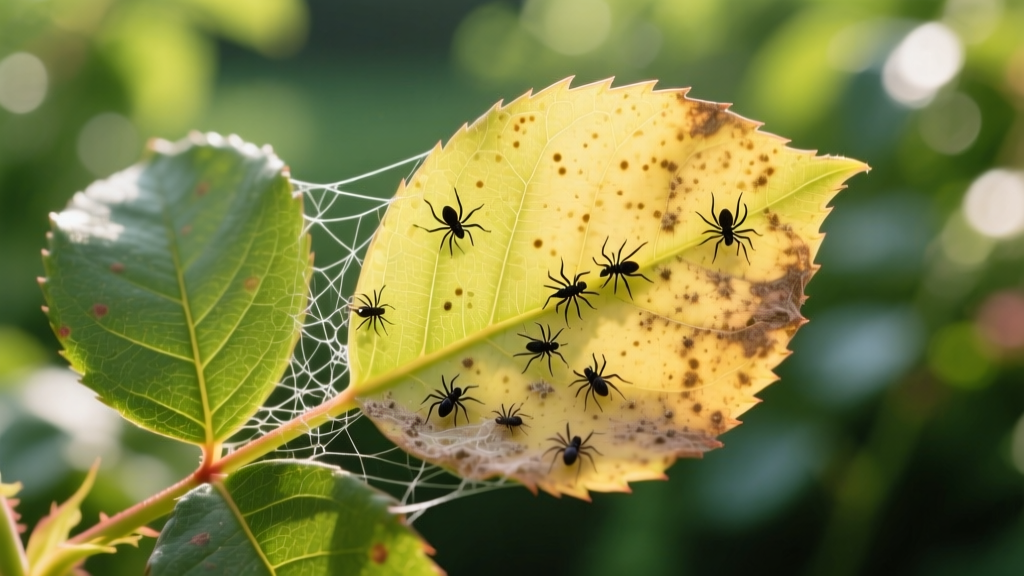
How To Identify And Treat Spider Mite Infestations On Roses
Recognizing Early Signs of Spider Mite Damage on Roses
Spider mites—tiny arachnids in the family Tetranychidae—are among the most persistent pests affecting roses in home gardens and commercial nurseries. Though less than 0.5 mm long, their feeding activity causes visible stress within days. Initial symptoms include stippling: minute yellow or white speckles on upper leaf surfaces caused by chlorophyll loss as mites pierce epidermal cells. At 10× magnification, you’ll see translucent, oval-shaped adults with eight legs—distinct from six-legged insects. A key diagnostic clue is fine, silken webbing on undersides of leaves or along stems; unlike true spiders, spider mites produce minimal webbing only under high population pressure.
Damage progresses rapidly under hot, dry conditions. In Davis, California, university trials recorded a 90% reduction in photosynthetic efficiency in heavily infested ‘Peace’ rose cultivars after just 72 hours of sustained feeding (UC Davis Department of Entomology, 2021). Leaf bronzing follows stippling, then curling and premature defoliation. Severe infestations can stunt new growth and reduce bloom size by up to 40% compared to untreated controls.
Understanding the Spider Mite Lifecycle for Targeted Intervention
Spider mites complete development in as few as 5–7 days at 85°F (29°C), making multiple overlapping generations possible per growing season. Eggs—spherical, pearly white, and ~0.14 mm in diameter—are laid singly on leaf undersides or in webbing. Nymphs hatch in 3–5 days and pass through three immature stages (larva, protonymph, deutonymph), each requiring a 24–48 hour feeding period before molting. Adults live 2–4 weeks and lay 1–3 eggs daily; a single female may produce 100+ eggs over her lifespan.
This rapid turnover means populations can explode exponentially: one female starting on April 1 yields over 1 million descendants by mid-July under optimal conditions. Monitoring must therefore occur weekly during peak risk periods—late May through early September in USDA Hardiness Zones 6–9. The University of Minnesota Extension notes that egg hatch peaks occur when accumulated degree-days exceed 120°F above a 50°F base (UMN Extension, 2022).
Effective Monitoring Techniques and Thresholds
Regular scouting is essential. Use a 10–20× hand lens to examine the underside of at least five randomly selected leaves per plant, focusing on young foliage near shoot tips where mites concentrate. Tap leaves over a white sheet of paper and count moving specks—10–20 mites per leaf signals need for intervention. Thresholds vary by cultivar sensitivity: disease-prone varieties like ‘Double Delight’ warrant treatment at ≥5 mites/leaf, while vigorous growers like ‘Knock Out’ tolerate up to 15 before yield loss occurs.
Environmental data improves accuracy. Install a simple hygrometer: spider mite populations surge when relative humidity drops below 60% and temperatures exceed 80°F for three consecutive days. In Portland, Oregon, Cooperative Extension field surveys found that 87% of severe infestations occurred when average July humidity fell to 48% ± 3% (OSU Extension, 2020).
Organic Control Options with Proven Efficacy
Horticultural oils and insecticidal soaps remain first-line organic tools. They work by smothering eggs and disrupting cuticular membranes of active stages. Apply at dawn or dusk when temperatures are between 60–85°F to avoid phytotoxicity. Reapply every 5–7 days for three cycles to target newly hatched nymphs. Studies at Cornell University’s Long Island Horticultural Research & Extension Center confirmed 82–91% mortality of Tetranychus urticae with 2% potassium salts of fatty acids applied at 7-day intervals (Cornell IPM Program, 2019).
- Neem oil (azadirachtin concentration ≥0.3%) disrupts molting and feeding behavior
- Rosemary oil formulations (≥5% active) show repellent effects lasting 48–72 hours
- Predatory mites (Phytoseiulus persimilis) establish best when release rates exceed 10 per infested leaf
Chemical Controls and Resistance Management
When organic methods fail, miticides with novel modes of action offer precision. Abamectin (0.15% active ingredient) targets glutamate-gated chloride channels and achieves >95% control in two applications spaced 10 days apart. However, resistance has been documented in 14 U.S. states since 2016—prompting the National Pesticide Resistance Management Guidelines to recommend rotating chemistries across IRAC Groups 6 (mitochondrial electron transport inhibitors), 21A (chitin synthesis inhibitors), and 23 (lipid biosynthesis inhibitors).
Avoid broad-spectrum pyrethroids, which eliminate natural enemies and often worsen outbreaks. In controlled trials at the Texas A&M AgriLife Research Station in Dallas, plots treated with bifenthrin showed 300% higher mite counts after 14 days versus untreated controls due to suppression of Stethorus punctum, a native predatory beetle.
Integrated Pest Management Protocols for Sustainable Rose Care
IPM success hinges on combining biological, cultural, and chemical tactics. Begin with cultural practices: maintain soil moisture at 20–25% volumetric water content—drought-stressed roses exude amino acids that attract mites. Mulch with 3 inches of shredded hardwood to buffer soil temperature swings and support beneficial soil fauna. Prune dense inner canes to improve airflow; aim for ≥30% light penetration into the canopy.
Biological controls require careful timing. Release Phytoseiulus persimilis when mite densities reach 5–10 per leaf—not after populations explode. These predators consume 20+ spider mites daily but cannot survive without prey; introduce them within 48 hours of detecting first motiles. Supplement with banker plants like lima beans interplanted at 1:10 ratio (lima bean: rose) to sustain predator colonies during low-mite periods.
Product Selection Guide: Active Ingredients and Application Parameters
Select products based on life stage targeted, environmental conditions, and compatibility with beneficials. Always read labels for re-entry intervals (REIs) and pre-harvest intervals (PHIs)—especially important for edible-flower roses. Below is a comparative summary of registered miticides for residential rose use:
| Active Ingredient | IRAC Group | Target Stage | REI (hours) | Max Applications/Season |
|---|---|---|---|---|
| Bifenthrin | 3A | Adults & nymphs | 12 | 2 |
| Abamectin | 6 | Eggs & motiles | 12 | 3 |
| Fenpyroximate | 21A | All stages | 24 | 2 |
Rotate products annually to delay resistance. For example, use abamectin in Year 1, fenpyroximate in Year 2, and return to abamectin only in Year 4—following the “two-then-switch” principle endorsed by the University of Florida IFAS Extension.
Post-Treatment Evaluation and Long-Term Prevention
Assess efficacy 72 hours after application by re-scanning leaves with a hand lens. A successful treatment reduces motile mite counts by ≥80% and halts new stippling. If webbing persists or eggs remain viable, reapply with a different mode of action. Record dates, products, and observed outcomes in a garden journal—this builds localized phenology data critical for refining future timing.
Prevent recurrence by eliminating overwintering sites: remove fallen leaves and prune canes to 12-inch stubs in late fall. Sanitize pruners with 70% ethanol between plants. Encourage biodiversity—plant yarrow, dill, and alyssum within 10 feet of rose beds to attract predatory insects. At the Chicago Botanic Garden, such habitat enhancements increased Anthocoris nemoralis populations by 65% and reduced seasonal mite pressure by 52% over five years.
“Spider mite management isn’t about eradication—it’s about maintaining ecological balance where natural enemies keep pest numbers below economic injury levels.” — Dr. Sarah Lin, Senior Entomologist, UC Riverside Center for Invasive Species Research, 2023
Finally, avoid overhead irrigation during peak heat. Drip systems delivering 1 gallon per plant per day maintain optimal turgor without raising foliar humidity—conditions that favor fungal pathogens but suppress mite reproduction. Monitor weekly until October, as late-season generations often overwinter in bark crevices at temperatures as low as 23°F (-5°C).
Early detection, precise targeting, and ecological context separate effective control from reactive spraying. With consistent observation and science-based tools, even heavily infested roses recover fully within 21 days of initiating IPM protocols.