Lawn Care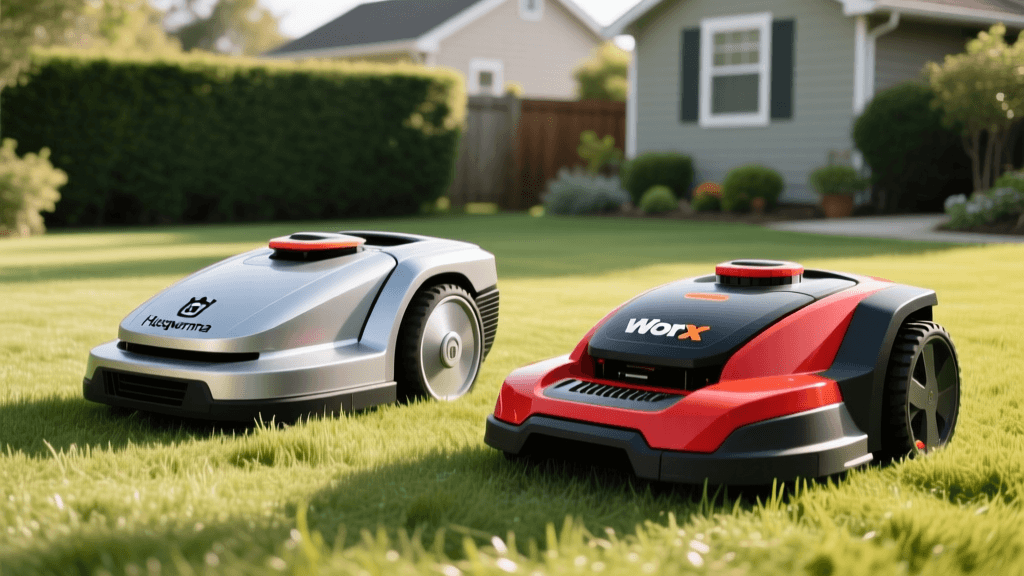
Husqvarna Automower vs Worx Landroid: Robotic Mower Review
The Rise of Autonomous Lawn Care
The landscape of residential lawn care is undergoing a massive technological revolution. Gone are the days when maintaining a pristine yard required spending your entire Saturday pushing a heavy, gas-powered machine in the sweltering heat. Today, robotic lawn mowers offer a hands-off approach to turf management, promising perfectly manicured lawns with minimal human intervention. But with dozens of models on the market, choosing the right autonomous machine can be overwhelming. In this comprehensive product review and comparison, we are pitting the two undisputed heavyweights of the robotic mower industry against one another: the Husqvarna Automower and the Worx Landroid.
Both brands offer compelling visions for the future of lawn maintenance, but they cater to slightly different demographics, budgets, and yard topographies. Whether you are dealing with steep slopes, complex garden beds, or a simple rectangular suburban lawn, understanding the agronomic and mechanical differences between these two machines is critical for your lawn care success.
Husqvarna Automower: The Industry Pioneer
Husqvarna is widely credited with inventing the commercial and residential robotic mower category. With decades of research and development, their Automower line represents the premium, gold-standard tier of autonomous lawn care. Models like the Automower 430XH and the newer NERA series (which utilize GPS instead of boundary wires) are engineered for reliability, complex terrain, and seamless integration into smart home ecosystems.
Key Features and Performance
The Husqvarna Automower excels in navigation and slope handling. Utilizing a proprietary guide-wire system, the mower can navigate narrow passages and reliably find its charging station even in sprawling, multi-zone properties. For homeowners with challenging terrain, Husqvarna offers All-Wheel Drive (AWD) models capable of tackling staggering 70% (35-degree) slopes without losing traction or scalping the turf.
- Cutting System: A three-blade pivoting disc that delivers a razor-sharp cut and exceptional micro-mulching.
- Smart Connectivity: The Automower Connect app allows for GPS tracking, geofencing, and scheduling based on local weather data.
- Wire-Free Innovation: The EPOS (Exact Positioning Operating System) uses RTK-GPS technology to create virtual boundaries accurate to within an inch, eliminating the need to bury physical wires.
Worx Landroid: The Modular Challenger
Worx entered the robotic mower market with a clear mission: to democratize autonomous lawn care by offering high-tech features at a fraction of the premium price point. The Worx Landroid series, particularly the M700 and L100 models, has become a massive hit among suburban homeowners who want smart features without the four-figure price tag.
Key Features and Performance
The standout feature of the Landroid is its modularity. Worx offers a suite of plug-and-play accessories, such as the ACS (Anti-Collision System) which uses ultrasonic sensors to help the mower navigate around trees and lawn ornaments without bumping into them. Another highly praised feature is 'Cut to Edge,' where the cutting disc is offset to one side, allowing the mower to trim closer to retaining walls and fences than almost any competitor.
- Modular Upgrades: Add off-limits wires, ultrasonic collision sensors, or voice control modules as needed.
- Security: The 'Find My Landroid' GPS module provides real-time tracking and theft recovery assistance.
- Battery Ecosystem: The Landroid uses the same 20V Power Share lithium-ion batteries found in other Worx power tools, making replacements affordable and versatile.
Head-to-Head Specification Comparison
To truly understand how these mowers stack up, we must look at the raw data. Below is a comparison chart detailing the specifications of two highly popular mid-to-large yard models: the Husqvarna Automower 430XH and the Worx Landroid M700.
| Feature | Husqvarna Automower 430XH | Worx Landroid M700 |
|---|---|---|
| Max Cutting Area | 0.8 Acres (3,200 sqm) | 0.17 Acres (700 sqm) |
| Max Slope Capacity | 45% (24 degrees) | 35% (20 degrees) |
| Boundary Type | Low-voltage wire / GPS (NERA) | Low-voltage wire |
| Cutting Height | 0.8 - 3.6 inches | 1.2 - 2.4 inches |
| Anti-Theft | PIN, Alarm, GPS Tracking | PIN, Alarm, GPS (Optional Module) |
| Average Retail Price | $2,199 - $2,499 | $999 - $1,199 |
Impact on Lawn Health: The Micro-Mulching Advantage
Beyond the convenience of automation, robotic mowers fundamentally change the agronomic health of your soil and turf. Both the Husqvarna and Worx models utilize a 'micro-mulching' technique. Because they mow daily or every other day, they only clip a few millimeters of grass at a time. These microscopic clippings fall directly to the soil surface, where they decompose rapidly.
According to turfgrass experts at the University of Minnesota Extension, leaving grass clippings on the lawn can provide up to 25% of your turf's annual nitrogen requirement. This natural, slow-release fertilizer reduces the need for synthetic chemical applications, promoting a deeper root system and richer soil microbiome. Furthermore, because the clippings are so small, they do not contribute to thatch buildup—a common misconception among traditional gardeners.
Consistent, frequent mowing at the proper height encourages lateral turf growth, resulting in a denser lawn that naturally crowds out invasive weeds like crabgrass and dandelions.
The NC State University TurfFiles program consistently recommends adhering to the 'one-third rule' of mowing, which states you should never remove more than one-third of the grass blade in a single mowing session. Robotic mowers inherently enforce this rule, ensuring the grass is never stressed by severe cutting, which preserves vital moisture and protects the crown of the plant.
Installation: Boundary Wires vs. GPS Technology
The most labor-intensive aspect of owning a robotic mower is the initial setup. For the Worx Landroid and standard Husqvarna models, this involves laying a low-voltage boundary wire around the perimeter of your lawn and around any 'no-go' zones like flower beds or pools. You can either stake this wire to the surface (where it will eventually be buried by grass growth) or use an edging tool to trench it an inch below the soil. For a standard suburban lawn, this process takes between 4 to 8 hours.
However, Husqvarna is actively changing this paradigm with their EPOS GPS technology. By utilizing satellite positioning, homeowners can map their lawn using a smartphone app while walking the perimeter, entirely eliminating the need for physical wires. While this technology is currently restricted to Husqvarna's premium NERA lineup (pushing the price well over $3,000), it represents the future of the industry. Worx currently relies strictly on physical boundary wires, though their modular off-limits wire accessories make creating complex island zones relatively straightforward.
Maintenance, Security, and Long-Term Costs
When evaluating the total cost of ownership, robotic mowers offer significant long-term savings compared to gas-powered alternatives. A traditional riding mower requires annual oil changes, spark plug replacements, air filter cleanings, and expensive gasoline. Research from the University of Nebraska-Lincoln Turfgrass Science program highlights the environmental and economic benefits of transitioning to electric turf equipment, noting massive reductions in localized emissions and fuel costs.
Annual Maintenance Costs:
- Electricity: Running a robotic mower costs roughly $15 to $30 per season in electricity.
- Blades: Replacement blades cost about $20 to $30 per year. (Husqvarna blades are easily swapped with a single screw; Worx uses a similar system).
- Battery Replacement: Lithium-ion batteries typically last 3 to 5 seasons. A replacement battery costs between $80 (Worx) and $150 (Husqvarna).
Security is another vital consideration. Both mowers require a PIN code to operate and feature lift-and-tilt sensors that immediately stop the blades if the machine is picked up. However, Husqvarna includes GPS theft tracking as a standard feature on most mid-to-high-tier models, whereas Worx requires the purchase of an add-on module to enable 'Find My Landroid' capabilities.
Winterization and Storage
Proper winterization is critical to ensuring your robotic mower survives the off-season. When the grass goes dormant in late autumn, you must thoroughly clean the undercarriage with a soft brush and damp cloth. The lithium-ion battery should be removed and stored indoors in a climate-controlled environment, ideally kept at a 50% charge state to prevent deep-discharge degradation over the winter months. The charging station can be left outside, but it is recommended to unplug it and cover it to protect the electrical contacts from snow and ice damage.
Final Verdict: Which Robotic Mower Wins?
The choice between the Husqvarna Automower and the Worx Landroid ultimately comes down to your lawn's topography, your budget, and your desire for premium features.
Choose the Husqvarna Automower if: You have a large, complex property with narrow passages, steep hills, or highly irregular terrain. If budget is less of a concern and you want the peace of mind that comes with industry-leading reliability, integrated GPS tracking, and the option for wire-free EPOS navigation, Husqvarna is the undisputed king of the hill.
Choose the Worx Landroid if: You have a standard, relatively flat suburban lawn under half an acre and want to experience the benefits of autonomous mowing without breaking the bank. The Landroid's 'Cut to Edge' feature, modular accessory ecosystem, and compatibility with the broader Worx 20V battery platform make it an incredible value proposition for the everyday homeowner.
By transitioning to a robotic mower, you are not just buying back your free time; you are investing in a scientifically proven method of micro-mulching that will result in a denser, greener, and healthier lawn for years to come.