Home & Garden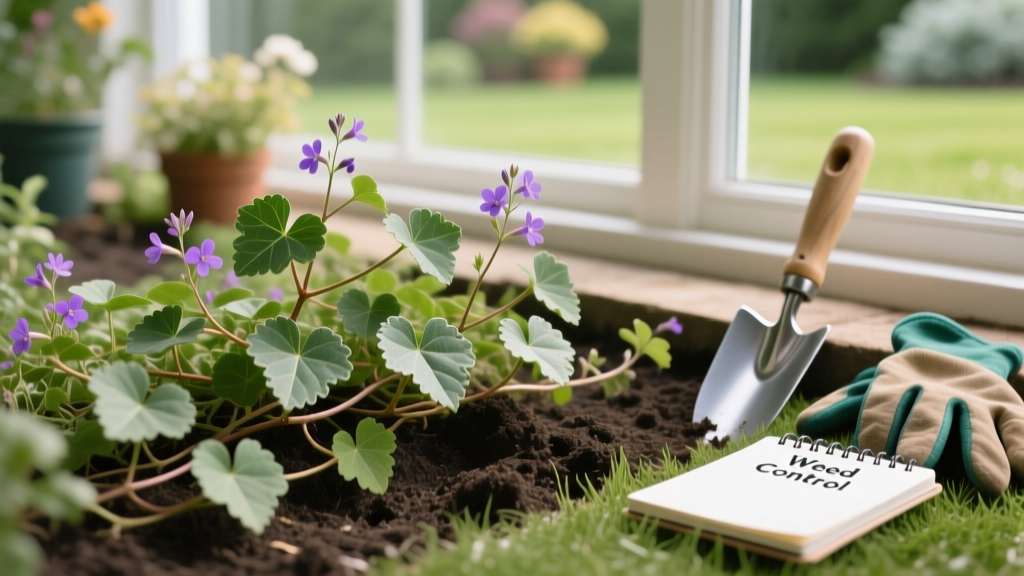
How to Identify and Eradicate Creeping Charlie Weed
Anna KowalskiPublished
What is Creeping Charlie?
Creeping Charlie (Glechoma hederacea), also known as ground ivy, creeping Jenny, or gill-over-the-ground, is an aggressive, low-growing perennial weed that plagues homeowners across North America. Originally introduced by European settlers as a medicinal herb and ground cover, it has since become one of the most frustrating invaders in residential lawns and shaded garden beds. As a member of the mint family, it boasts a distinct aromatic scent when crushed, but its aggressive spreading habits quickly turn it from a botanical curiosity into a landscaping nightmare.
Unlike annual weeds that die off with the first frost, Creeping Charlie is a hardy perennial. It thrives in moist, shaded areas where turfgrass struggles to grow, but it is highly adaptable and will readily invade sun-drenched, thinning lawns if given the opportunity. To effectively reclaim your yard, you must first understand how to identify it, how it spreads, and the most effective mechanical and chemical strategies to eradicate it.
How to Identify Creeping Charlie
Accurate identification is the crucial first step in any weed control program. Misidentifying a weed can lead to the purchase of ineffective herbicides, wasting both time and money. Creeping Charlie features several distinct characteristics that separate it from other common lawn invaders like henbit, speedwell, or common mallow.
- Leaves: The leaves are round to kidney-shaped with deeply scalloped edges. They typically grow opposite each other along the stem and range from 1/2 to 1.5 inches in diameter.
- Stems: Like most mint-family plants, the stems are distinctly square in cross-section. The stems are prostrate (creeping along the ground) and root at the nodes wherever they touch the soil.
- Flowers: In early to mid-spring, the plant produces small, tubular, purplish-blue flowers that grow in clusters of three or more in the leaf axils.
- Scent: When you mow over it or crush the leaves between your fingers, it releases a strong, pungent minty aroma.
Creeping Charlie vs. Look-Alike Weeds
Homeowners frequently confuse Creeping Charlie with other broadleaf weeds. Use the comparison chart below to ensure you are targeting the correct plant.
| Weed Species | Leaf Shape & Arrangement | Stem Type | Flower Color | Distinctive Trait |
|---|---|---|---|---|
| Creeping Charlie | Round, scalloped, opposite | Square, creeping | Purple-blue, tubular | Strong minty odor when crushed |
| Henbit | Deeply lobed, clasping stem | Square, upright | Purple-pink, tubular | Upright winter annual growth |
| Speedwell | Small, oval, toothed | Round, trailing | Tiny blue or white | No scent; very small flowers |
| Common Mallow | Rounded, deeply veined, lobed | Round, trailing | Pink/white, 5 petals | Fruit resembles a tiny cheese wheel |
Why is Creeping Charlie So Hard to Kill?
The resilience of ground ivy lies in its reproductive strategy. According to the University of Minnesota Extension, Creeping Charlie spreads via stolons (above-ground creeping stems) and rhizomes (below-ground stems). Every single node along these stems can generate new roots and shoots. If you attempt to pull the weed by hand and leave even a tiny fragment of a rooted node behind in the soil, the plant will rapidly regenerate. Furthermore, its waxy leaf cuticle can repel certain liquid herbicides, making chemical penetration difficult without the proper additives.
Step-by-Step Removal Guide
Eradicating this weed requires a multi-pronged approach. The method you choose will depend on the severity of the infestation and whether the weed is in your turfgrass or your ornamental garden beds.
1. Manual Removal (For Small Patches)
If you only have a few isolated patches, hand-pulling is viable, but it requires meticulous attention to detail. The best time to pull Creeping Charlie is after a heavy rain when the soil is soft and loose.
- Tools: Use a stand-up weeder with serrated claws (like the Fiskars Stand-Up Weeder) or a traditional dandelion digger to pry out the root nodes.
- Technique: Grasp the base of the plant and pull slowly to ensure the entire stolon network lifts from the soil. Do not yank, or the stem will snap, leaving the nodes behind.
- Disposal: Never compost pulled Creeping Charlie. The nodes can survive the composting process and reinfest your yard. Bag it and send it to municipal yard waste.
2. Chemical Control (For Lawn Infestations)
For widespread lawn invasions, selective broadleaf herbicides are necessary. The Penn State Extension notes that standard herbicides containing only 2,4-D are largely ineffective against mature ground ivy. Instead, you must look for products containing Triclopyr, often combined with Dicamba, 2,4-D, and MCPP.
- Top Product Picks: Look for concentrates like Ortho WeedClear Lawn Weed Killer or professional-grade SpeedZone Broadleaf Herbicide, both of which contain Triclopyr.
- Optimal Timing: The absolute best time to spray is in early fall (when daytime temperatures are between 60°F and 75°F). During autumn, the plant is actively pulling carbohydrates down into its root system for winter storage, which effectively carries the herbicide deep into the rhizomes.
- Application Rules: Add a non-ionic surfactant to your tank mix to break the waxy leaf barrier. Do not mow for 48 hours before or after application. Expect to apply a second treatment 10 to 14 days after the first for complete control.
- Warning: Triclopyr can severely damage or kill St. Augustinegrass and Centipedegrass. If you have warm-season southern turf, consult your local extension office for safe alternatives.
3. The Borax Myth (Organic Alternatives)
For years, an internet myth has circulated claiming that a mixture of Borax (sodium borate) and water will selectively kill Creeping Charlie while leaving grass unharmed. The University of Wisconsin-Madison Extension explicitly advises against this method. While boron is toxic to ground ivy, it is also toxic to turfgrass. Repeated applications of Borax will result in boron toxicity in your soil, creating a sterile patch where neither weeds nor grass will grow for years. For organic gardeners, spot-treating with horticultural vinegar (20% acetic acid) or using a flame weeder on non-flammable surfaces are safer, albeit less selective, alternatives.
Managing Creeping Charlie in Garden Beds
When ground ivy invades mulched garden beds or vegetable patches, chemical options become highly restricted due to the risk of damaging your ornamental plants and edibles. In these areas, manual removal and smothering are your best defenses.
- Smothering: Cover the infested area with thick layers of wet cardboard or newspaper, followed by 3 to 4 inches of high-quality wood mulch. This blocks sunlight and eventually starves the weed.
- Edging: Install metal or heavy-duty plastic landscape edging sunk at least 6 inches into the ground between your lawn and garden beds to prevent stolons from creeping over from the turf.
- Pre-Emergent Note: Standard pre-emergent herbicides (like Prodiamine) used for crabgrass will not stop Creeping Charlie, as it primarily spreads vegetatively through established root networks rather than by seed.
Prevention: Cultivating a Competitive Lawn
The ultimate cure for Creeping Charlie is a dense, vigorous turf canopy that starves the weed of sunlight. Ground ivy thrives in the exact conditions that cause turfgrass to fail: compacted soil, poor drainage, and heavy shade.
- Mow High: Raise your mower deck to 3.5 or 4 inches. Taller grass develops deeper roots and shades the soil surface, preventing weed seeds and stolons from establishing.
- Core Aeration: Aerating your lawn in the fall relieves soil compaction, allowing water and nutrients to reach grass roots rather than pooling on the surface where ground ivy thrives.
- Address Shade: Thin out the lower branches of canopy trees to allow more sunlight to reach the turf. If an area receives less than 4 hours of direct sunlight daily, consider replacing the struggling grass with shade-tolerant ground covers like Pachysandra, Hostas, or ferns.
- Overseed: After successfully treating the weed with herbicides, immediately overseed the bare patches with a shade-tolerant turf blend to ensure grass fills in the void before new weeds can take root.
By combining proper identification, strategic fall herbicide applications, and long-term lawn cultural practices, you can permanently evict Creeping Charlie and restore the beauty and health of your outdoor living spaces.
