Tree Care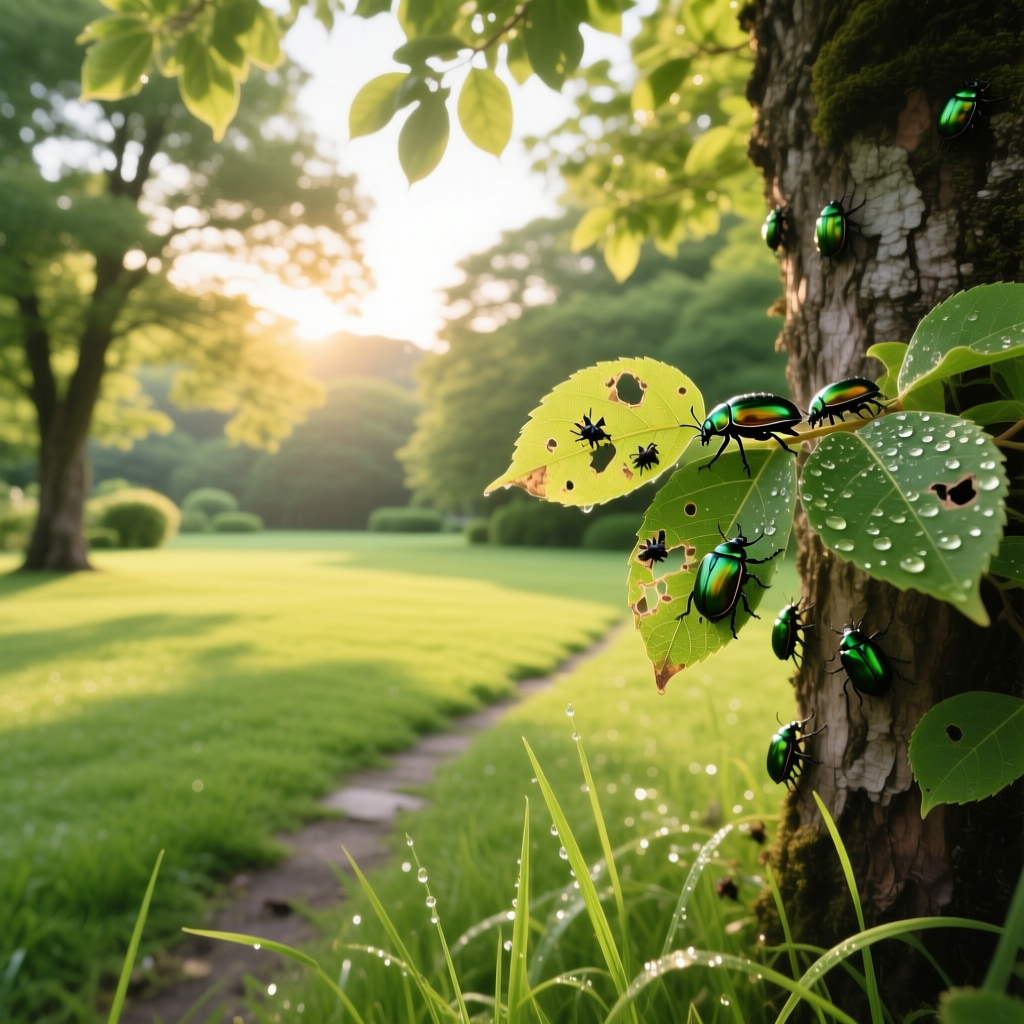
How to Identify & Manage Japanese Beetle Infestations in Trees
James MillerPublished
How to Identify & Manage Japanese Beetle Infestations in Trees
Japanese beetles (Popillia japonica) are among the most notorious and destructive landscape pests in North America. Originally introduced from Japan, these invasive insects have spread rapidly, causing severe defoliation in both residential landscapes and commercial agriculture. For homeowners and arborists, a Japanese beetle infestation can turn a lush, vibrant canopy into a skeletal, lace-like shadow of its former self in a matter of weeks. Understanding how to identify these pests, comprehend their life cycle, and implement effective management strategies is crucial for preserving the health and beauty of your trees.
While the damage to foliage is the most visible sign of an infestation, the threat extends below ground as well. The larval stage of the Japanese beetle, commonly known as grubs, feeds aggressively on grassroots, leading to severe turf deterioration. A comprehensive approach to Japanese beetle management must address both the adult beetles ravaging your trees and the grubs damaging your lawn. In this extensive guide, we will explore the essential tree care fundamentals required to protect your landscape, from early identification to long-term preventative strategies.
How to Identify Japanese Beetles & Their Damage
Accurate identification is the first step in any successful integrated pest management (IPM) program. Japanese beetles are relatively easy to identify once you know what to look for, both in their adult form and by the distinct damage they leave behind on your trees and shrubs.
Identifying the Adult Beetle
Adult Japanese beetles are striking insects, measuring about half an inch in length. They feature a brilliant, metallic green head and thorax, contrasted by copper-brown wing covers (elytra). One of the most definitive identifying characteristics is the presence of small, white tufts of hair along the sides and rear of their abdomen. These beetles are typically most active during the warm, sunny days of early to mid-summer, often congregating in large numbers on the sun-exposed leaves of their preferred host trees.
Recognizing Skeletonized Foliage
The feeding behavior of adult Japanese beetles creates a highly specific type of damage known as skeletonization. Unlike caterpillars or other leaf-chewing insects that consume the entire leaf, Japanese beetles feed on the soft tissue between the leaf veins. This leaves behind a delicate, lace-like network of veins that eventually turns brown and drops off. Severe infestations can completely defoliate a tree, forcing it to expend vital energy reserves to push out a second flush of growth late in the season, which weakens the tree and makes it vulnerable to secondary pests and diseases.
Spotting the Grubs
Beneath the soil, Japanese beetle grubs are identifiable by their classic C-shaped posture, creamy white bodies, and brown heads. They possess three pairs of legs near the head and a distinct raster pattern (a grid of tiny bristles) on their underside, which entomologists use to differentiate them from other scarab beetle grubs. While you will not find grubs on your trees, spotting them in your lawn is a clear indicator that adult beetles will emerge in your landscape the following summer.
Understanding the Japanese Beetle Life Cycle
To effectively manage Japanese beetles, it is essential to understand their annual life cycle. Timing your interventions to coincide with the most vulnerable stages of the pest's development will yield the best results and minimize the need for broad-spectrum chemical treatments.
- Overwintering (Late Fall to Early Spring): As soil temperatures drop, grubs burrow deep below the frost line to overwinter. During this dormant phase, they do not feed and are largely inaccessible to surface treatments.
- Spring Pupation (Mid-Spring): As the soil warms, grubs migrate upward to feed on grassroots for a brief period before entering the pupal stage. They transform into adults just beneath the soil surface.
- Adult Emergence & Feeding (Early to Mid-Summer): Adults emerge from the soil, usually starting in late spring or early summer depending on your climate zone. They immediately seek out host trees and shrubs to feed and mate. The first beetles to emerge release aggregation pheromones, which attract massive swarms of other beetles to the same host plants.
- Egg Laying (Mid to Late Summer): After mating, females fly to grassy areas, burrow into the soil, and lay clusters of eggs. A single female can lay up to 60 eggs over her lifespan. These eggs hatch in late summer, initiating the next generation of root-feeding grubs.
By tracking this cycle, you can target grubs in the late summer when they are small and actively feeding near the surface, or target adults early in the summer before they have a chance to lay eggs and cause exponential damage to your trees.
Effective Management & Treatment Strategies
Managing Japanese beetles requires a multi-faceted approach. Relying solely on one method is rarely sufficient, especially in areas where these pests are heavily established. Combining cultural, biological, and chemical controls provides the most robust defense for your trees.
Cultural & Physical Controls
For small trees or light infestations, physical removal is highly effective. Japanese beetles are notoriously sluggish in the early morning when temperatures are cooler. By placing a bucket of soapy water beneath an infested branch and gently shaking it, you can dislodge dozens of beetles at once. The soap breaks the surface tension of the water, ensuring the beetles sink and drown. Additionally, using fine mesh row covers over highly susceptible, smaller ornamental trees during the peak emergence period can physically block the insects from reaching the foliage.
Biological Controls
Nature offers several powerful allies in the fight against Japanese beetles. Milky spore disease (Paenibacillus popilliae) is a naturally occurring bacterium that specifically targets Japanese beetle grubs. When applied to the soil, it infects the grubs, eventually killing them and releasing billions of new spores into the environment. While it can take a few seasons to establish, milky spore provides long-term, sustainable grub control. Beneficial nematodes (Heterorhabditis bacteriophora) are microscopic worms that hunt grubs in the soil. Applying nematodes in late summer when grubs are actively feeding is an excellent, eco-friendly way to reduce the following year's adult population.
Chemical Treatments
When infestations are severe and threaten the structural health of a mature tree, chemical interventions may be necessary. For organic gardeners, sprays containing Neem oil or Spinosad can deter feeding and disrupt the beetles' life cycle without leaving highly toxic residues. These must be applied frequently and directly to the foliage. For longer-lasting protection, systemic insecticides containing Imidacloprid or Dinotefuran can be applied as a soil drench in the spring. The tree absorbs the chemical through its roots and distributes it to the leaves, killing beetles as they feed. However, systemic chemicals must be used with extreme caution; never apply them to trees that are currently blooming or are known to attract pollinators, as these products can be highly toxic to bees.
Preventative Measures & Seasonal Tree Care Tips
Prevention is always more cost-effective and less labor-intensive than eradication. A proactive approach to tree care can significantly reduce the impact of Japanese beetles on your landscape.
Selecting Resistant Tree Species
If you live in an area with heavy Japanese beetle pressure, the best defense is to avoid planting their favorite foods. Highly susceptible trees include American Linden, Birch, Elm, Japanese Maple, Crabapple, and Rose. Instead, opt for resistant species when designing your landscape. Trees that Japanese beetles generally avoid include Ash, Boxwood, Dogwood, Holly, Magnolia, Oak, Pine, Spruce, and Red Maple. For more ideas on building a resilient canopy, explore our guide to selecting the best shade trees for your yard.
Maintaining Tree Vigor
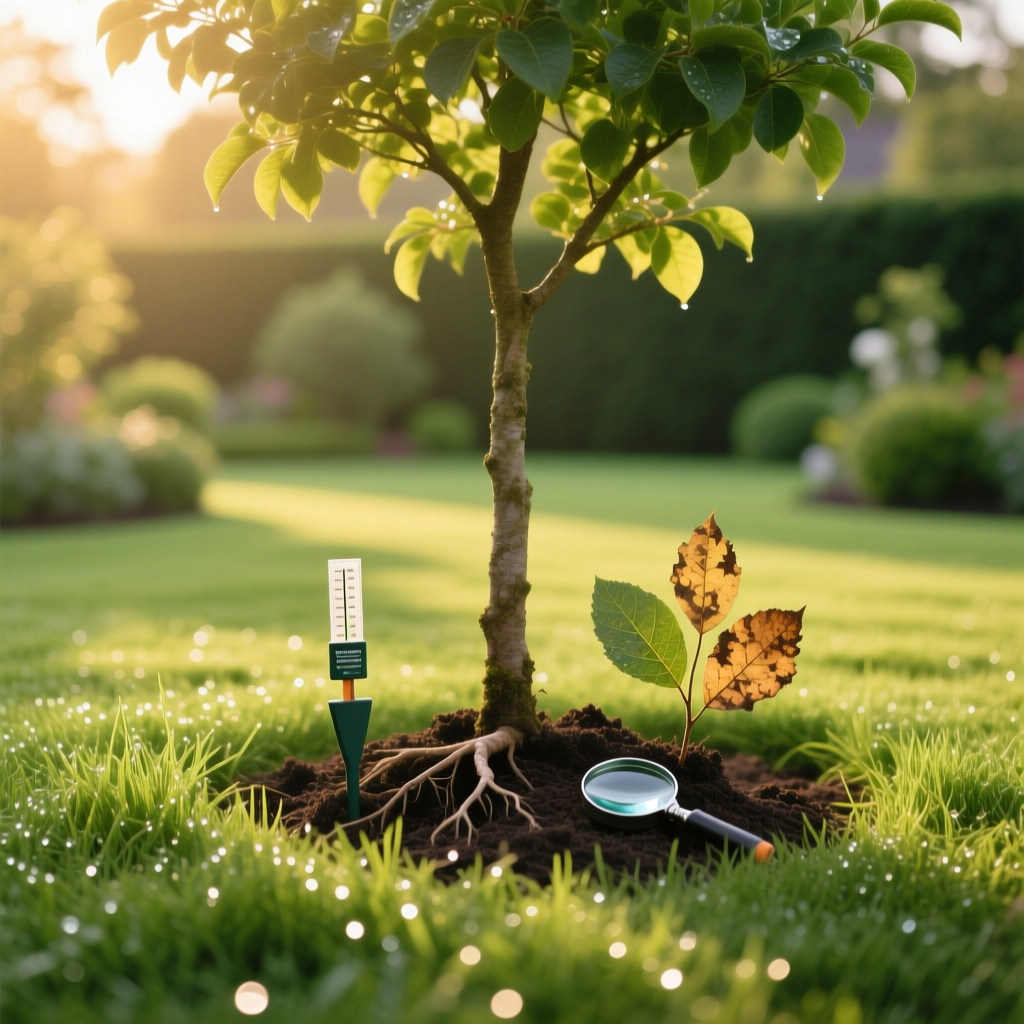
Japanese beetles are attracted to stressed trees. When a tree is suffering from drought, poor soil nutrition, or physical damage, it emits specific volatile organic compounds (VOCs) that act as a beacon to foraging beetles. Maintaining optimal tree health is a powerful deterrent. Ensure your trees receive deep, infrequent watering during dry spells, and apply a layer of organic mulch around the root zone to retain moisture and regulate soil temperature. Regular inspections and proper pruning techniques will improve air circulation and remove dead or diseased wood, keeping your trees vigorous and less attractive to pests.
A Note on Pheromone Traps
Many homeowners purchase Japanese beetle traps featuring floral lures and sex pheromones. While these traps catch thousands of beetles, entomologists generally advise against using them near your prized trees. The pheromones are so potent that they often attract far more beetles to your property than they actually catch, resulting in increased collateral damage to the plants situated between the trap and the property line. If you must use traps, place them at the far edges of your property, well away from your most valuable trees and garden beds.
Protecting Your Lawn from Japanese Beetle Grubs
You cannot effectively manage Japanese beetles on your trees without addressing the grubs in your lawn. The adult beetles that defoliate your trees emerge directly from the turfgrass below. Furthermore, the grubs themselves are highly destructive to lawns, severing grassroots and causing large, irregular patches of dead, brown grass that can be rolled back like a carpet.
Heavy grub infestations also attract secondary pests. Animals such as skunks, raccoons, and crows will tear up your lawn, digging for the protein-rich grubs and causing immense physical damage to your turf. Implementing a targeted lawn grub control program in late summer or early fall is critical. By eliminating the grubs before they overwinter, you protect your turf's root system and drastically reduce the number of adult beetles that will emerge to attack your trees the following year. If your turf has already suffered severe damage from grub feeding or animal foraging, our guide on repairing damaged lawns will help you restore your grass to its former glory.
Frequently Asked Questions (FAQ)
What trees do Japanese beetles attack the most?
Japanese beetles are generalist feeders and have been documented eating over 300 species of plants. However, they show a strong preference for certain trees and shrubs. Their absolute favorites include American Linden (Basswood), Birch, Elm, Japanese Maple, Crabapple, Cherry, Plum, Rose, and Grapevines. If you have these species in your landscape, you must monitor them closely starting in early summer and be prepared to implement management strategies the moment the first beetles appear.
Will Japanese beetles kill my tree?
In most cases, a single season of Japanese beetle defoliation will not kill a mature, healthy tree. However, the damage is far from harmless. When a tree loses its leaves in mid-summer, it is forced to use stored energy reserves to produce a second flush of foliage. This severely weakens the tree, stunts its growth, and leaves it highly susceptible to winter injury, drought stress, and secondary invaders like borers or canker diseases. If a tree suffers severe defoliation for three or more consecutive years, the cumulative stress can indeed lead to the tree's decline and eventual death.
Do Japanese beetle traps actually work?
Japanese beetle traps are highly effective at catching beetles, but they are often counterproductive for landscape protection. The floral and pheromone lures attract beetles from a wide radius, drawing them into your yard from neighboring properties. Because the beetles often stop to feed on your trees and shrubs before they locate the trap, placing a trap near your garden usually results in more damage, not less. If you choose to use them, place them at the very perimeter of your property, far away from the trees you are trying to protect.
How can I get rid of Japanese beetle grubs in my lawn?
The most effective time to treat for Japanese beetle grubs is in late summer or early fall, shortly after the eggs have hatched and the grubs are small and actively feeding near the soil surface. Biological controls like beneficial nematodes or milky spore are excellent long-term solutions. For immediate curative control, chemical grub preventatives or fast-acting insecticides labeled for turf grubs can be applied. Always water the treatment into the soil immediately after application to ensure it reaches the root zone where the grubs are feeding.
Are there natural predators for Japanese beetles?
Yes, nature provides several biological controls that help keep Japanese beetle populations in check. Birds such as starlings, grackles, and robins consume large quantities of both adult beetles and grubs. In the soil, ground beetles, ants, and parasitic wasps prey on the eggs and young grubs. Additionally, the Tiphia wasp, a non-stinging parasitic wasp introduced specifically for Japanese beetle control, lays its eggs on the grubs, eventually killing them. Encouraging a diverse, wildlife-friendly landscape by reducing broad-spectrum pesticide use will help support these beneficial predator populations.
By staying vigilant, understanding the life cycle of Popillia japonica, and combining cultural, biological, and targeted chemical controls, you can successfully protect your trees and lawn from the devastating impacts of Japanese beetles. Consistent monitoring and proactive tree care practices are your best defenses in maintaining a healthy, vibrant, and resilient landscape for years to come.