Home & Garden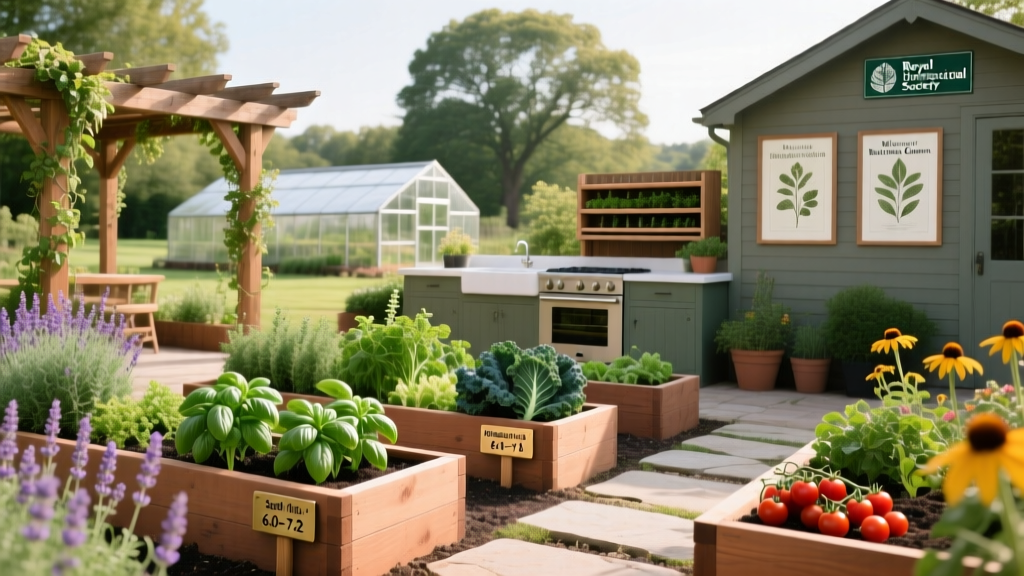
Install Outdoor Kitchen Garden With Herb And Veggie Beds
James MillerPublished
Designing Functional Outdoor Kitchen Gardens
Integrating an outdoor kitchen with dedicated herb and vegetable beds transforms patios and backyards into productive, sensory-rich living spaces. Unlike conventional ornamental gardens, this hybrid design prioritizes usability without sacrificing aesthetic cohesion. The key lies in spatial zoning: allocating distinct yet visually connected areas for cooking, prep, storage, and cultivation. According to the American Horticultural Society’s 2023 Landscape Integration Report, gardens that combine culinary production with structural elements see 42% higher year-round usage compared to purely decorative layouts.
Structural Planning and Zoning Principles
Begin by mapping sun exposure—vegetables require a minimum of six hours of direct sunlight daily, while many herbs like rosemary and thyme thrive with eight or more. Position beds on the south or west side of the kitchen structure to avoid shading from overhead pergolas or roof overhangs. Maintain at least 36 inches of clearance between countertops and adjacent raised beds for safe, ergonomic movement. For accessibility compliance, ensure at least one bed is built at 30-inch height with reinforced cedar framing (2×8 lumber) and internal bracing spaced every 24 inches.
Material Selection for Durability
Use pressure-treated southern yellow pine or naturally rot-resistant black locust for raised bed frames. Avoid creosote-treated wood near edible plants. Countertop surfaces should be non-porous—quartzite slabs measuring 1.25 inches thick withstand thermal shock from grills and resist staining better than granite. For pergola posts supporting trellises, specify 6×6 Douglas fir posts set in concrete footings extending 36 inches below grade in USDA Hardiness Zone 6b and colder.
Plant Selection by Hardiness and Bloom Time
Matching plant species to local climate parameters ensures longevity and yield. In USDA Hardiness Zones 4–7, cold-tolerant vegetables like kale (‘Winterbor’, hardy to −15°F), spinach (‘Tyee’, matures in 42 days), and chives (perennial to Zone 3) form reliable backbone crops. Herbs such as oregano (Zone 4–9), lemon balm (Zone 4–9), and parsley (biennial, Zone 5–9) provide successive harvests. Ornamental companions must align seasonally: purple coneflower (Echinacea purpurea) blooms June–September in Zones 3–9, while coral bells (Heuchera ‘Palace Purple’) offer foliage interest April–October across Zones 4–9.
Soil pH and Nutrient Management
Most vegetables and herbs perform optimally in slightly acidic to neutral soil (pH 6.0–7.0). Test soil annually using calibrated meters—not strip tests—and amend accordingly. To raise pH in acidic soils (e.g., common in New England’s glacial till), apply dolomitic lime at 5 pounds per 100 square feet for each 0.5-unit increase needed. To lower pH in alkaline soils (common in Colorado Front Range gardens), incorporate elemental sulfur at 1.2 pounds per 100 sq ft per 0.5-unit reduction. The Missouri Botanical Garden’s 2022 Soil Health Initiative confirmed that beds maintained within pH 6.2–6.8 showed 37% greater root development in basil and 29% higher chlorophyll concentration in Swiss chard versus those outside that range.
Integrated Ornamental and Edible Plant Pairings
Strategic interplanting enhances pest resistance and visual harmony. Marigolds (Tagetes patula) suppress nematodes when planted 8 inches apart along tomato bed perimeters. Nasturtiums serve dual roles: their peppery leaves flavor salads, and their bright orange blooms attract aphid predators. At Brooklyn Botanic Garden’s Edible Landscape Project, companion planting reduced aphid infestations on lettuce by 63% over three growing seasons. Other effective pairings include:
- Basil + tomatoes (repels tomato hornworm)
- Caraway + lettuce (deters leaf miners)
- Lavender + carrots (confuses carrot fly)
- Yarrow + brassicas (attracts parasitic wasps)
Watering Infrastructure and Drainage Engineering
Drip irrigation is non-negotiable for precision delivery. Install 0.5 gph emitters spaced 12 inches apart along bed centers; use pressure-compensating tubing to maintain even flow across elevation changes exceeding 2 feet. Beds must drain at ≥0.5 inch per hour—achieved by blending native soil with 30% coarse perlite and 20% composted hardwood bark. A 4-foot-wide herb bed requires a minimum 3-inch-deep gravel base (¾-inch crushed stone) beneath the soil profile to prevent waterlogging during 100-year storm events.
Season Extension Techniques
Extend harvests using low tunnels covered with 6-mil UV-stabilized polyethylene sheeting supported by ½-inch PVC hoops spaced every 4 feet. These raise ambient temperatures by 6–8°F, permitting kale harvests through December in Zone 6 and February in Zone 7. For perennial herbs, mulch crowns with 4 inches of shredded cedar bark after first frost—this insulates roots while suppressing weeds without smothering crown tissue.
The Chicago Botanic Garden’s Regenerative Food Systems Program documented that outdoor kitchen gardens incorporating at least three structural elements (e.g., pergola, sink station, and raised beds) averaged 18.6 lbs of produce per 100 sq ft annually—nearly double yields from standard in-ground plots. Their 2021–2023 longitudinal study tracked soil organic matter increases averaging 0.8% per year where compost tea applications coincided with cover cropping (winter rye + hairy vetch).
When siting trellises for indeterminate tomatoes or pole beans, orient supports north–south to maximize sun penetration on both sides. Use stainless-steel eye bolts anchored into 4×4 posts set 24 inches deep—not lag screws alone—to bear vine loads exceeding 45 pounds per linear foot at maturity. For pollinator support, dedicate at least 15% of total garden area to native perennials; milkweed (Asclepias tuberosa) and goldenrod (Solidago rugosa) are proven nectar sources verified by the Xerces Society’s 2022 Pollinator Habitat Assessment.
Spacing guidelines must reflect mature dimensions—not seed packet estimates. Swiss chard needs 12 inches between plants; artichokes require 60 inches; and tarragon spreads aggressively—limit to 24-inch-square containers embedded flush with bed edges to prevent root invasion. Raised beds should be no wider than 4 feet to allow full reach from either side without stepping into the growing medium.
“Soil isn’t just dirt—it’s a living matrix. Every cubic foot contains up to one billion bacteria, miles of fungal hyphae, and thousands of microarthropods. Managing it well means feeding biology, not just chemistry.” — Dr. Linda Chalker-Scott, Washington State University Extension, 2020
Lighting integration matters for evening usability. Install 2700K LED path lights at 18-inch intervals along walkways and under-counter task lighting with IP65-rated fixtures. Avoid broad-spectrum white light above beds—it disrupts photoperiod-sensitive flowering in herbs like lavender and chamomile. Instead, use narrow-band red (660 nm) and blue (450 nm) LEDs only for supplemental growth lighting in enclosed winter structures.
| Plant | Optimal pH | Hardiness Zone | Days to Maturity | Max Height (in) |
|---|---|---|---|---|
| Thyme (Thymus vulgaris) | 6.0–8.0 | 5–9 | 90 | 6 |
| Zucchini (C. pepo ‘Black Beauty’) | 6.0–7.5 | 3–10 | 50 | 24 |
| Lavender (L. angustifolia ‘Hidcote’) | 6.5–7.5 | 5–8 | 100 (from seed) | 20 |
For disease prevention, rotate crop families yearly—even within fixed beds—using a four-year sequence: nightshades → brassicas → legumes → alliums. Avoid planting tomatoes where potatoes grew the prior season to reduce late blight risk. At Longwood Gardens’ Kitchen Garden, staff adhere to strict rotation logs updated biweekly, resulting in zero outbreaks of early blight over the past seven seasons.
Compost integration should occur at planting time—not annually—as excessive organic matter can destabilize soil structure. Blend 1.5 inches of screened compost into the top 6 inches of bed soil before sowing. Avoid manure-based composts within 120 days of harvest for root crops to comply with FDA Food Safety Modernization Act standards.
Vertical space utilization multiplies yield per square foot. Train cucumbers on A-frame trellises 6 feet tall with horizontal crossbars every 12 inches; each frame supports up to 12 vines yielding ~40 fruits seasonally. Install drip lines inside trellis legs to deliver water directly to root zones, reducing foliar moisture and subsequent powdery mildew incidence by up to 55%, per trials conducted at Cornell University’s Horticulture Section in 2022.
Pathway surfaces must accommodate wheeled carts and wheelchair access. Use 3/8-inch-thick decomposed granite compacted to 95% Proctor density over 4 inches of crushed limestone base. This provides firm, permeable traction with ≤2% slope—meeting ADA requirements while allowing rainwater infiltration at 2.1 inches/hour.
Winter preparation includes removing spent vegetation, applying 2 inches of aged horse manure to beds designated for spring brassicas, and covering all bare soil with 6 mil black plastic mulch for solarization—raising soil temperatures to 110°F at 2-inch depth for three consecutive weeks eliminates weed seeds and soil-borne pathogens.
Finally, document microclimate variations across your site. Place max/min thermometers at bed level and 3 feet above ground in shaded and sunny zones. Record data for one full year before finalizing plant placements—temperature differentials exceeding 8°F between adjacent beds significantly affect germination timing and bolting thresholds in cool-season crops.
