Home & Garden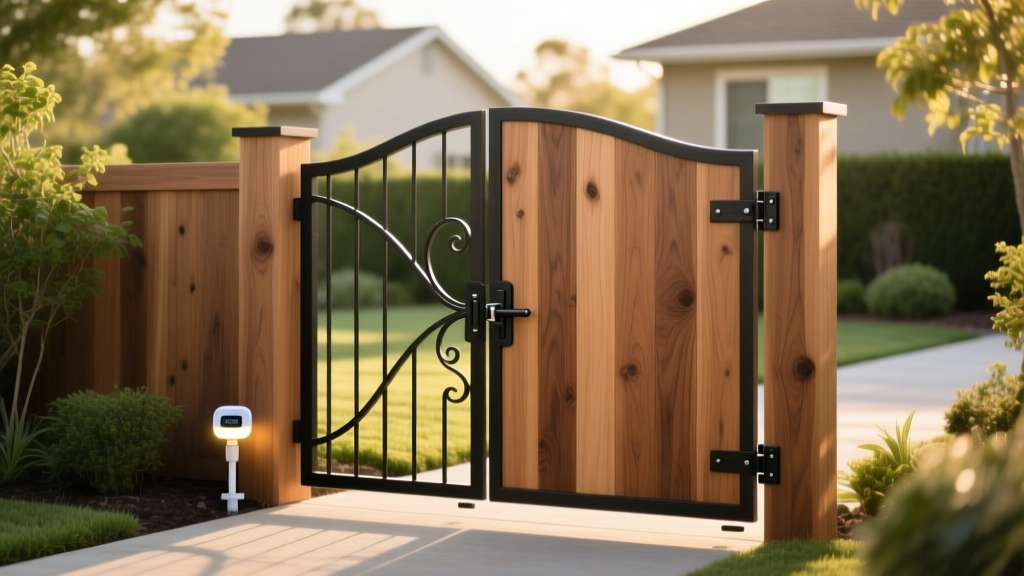
2026 Irrigation Planning: Cedar vs Wrought Iron Gates
James MillerPublished
The Intersection of Hardscaping and Irrigation in 2026
When designing a modern landscape, homeowners often treat the garden gate as a purely architectural or security element. However, from the perspective of an irrigation specialist, your gate's material and hardware dictate how you must zone your sprinkler system, route underground piping, and integrate smart home water management. In 2026, the debate between cedar and wrought iron garden gates is no longer just about aesthetics; it is fundamentally about water exposure, durability, and smart sensor compatibility. Whether you are installing a classic Western Red Cedar privacy gate or an ornamental wrought iron entryway, understanding how these materials interact with sprinkler overspray and smart irrigation controllers is critical for long-term landscape success.
This comprehensive guide explores the unique irrigation challenges posed by cedar and wrought iron gates, the necessity of self-closing hinges for smart zone pausing, and the best practices for routing irrigation lines beneath gate thresholds without compromising structural integrity.
Material Vulnerabilities: Cedar vs. Wrought Iron
Every irrigation system creates a microclimate. When a garden gate sits within or adjacent to an irrigation zone, it is subjected to constant moisture, humidity, and mineral deposits. The two most popular gate materials react to this environment in vastly different ways.
Cedar Gates: The Threat of Rot and Warping
Cedar is naturally resistant to decay and insects due to its inherent oils, making it a premium choice for garden structures. However, constant exposure to sprinkler overspray disrupts the wood's moisture equilibrium. Traditional spray nozzles produce a fine mist that clings to the porous surface of cedar, leading to algae growth, black mold, and eventual dimensional warping. If the bottom rail of a cedar gate is routinely soaked by low-lying sprinkler heads or poor drainage, the wood will wick moisture, leading to premature rot at the base. To protect cedar, irrigation designs in 2026 mandate the use of large-droplet nozzles and strict arc adjustments to ensure zero direct water contact with the wood.
Wrought Iron Gates: Oxidation and Hard Water Staining
Wrought iron offers unparalleled elegance and security, but it is highly susceptible to oxidation. While modern 2026 powder-coating techniques have vastly improved rust resistance, any micro-scratch in the finish combined with daily sprinkler overspray will trigger galvanic corrosion. Furthermore, municipal and well water often contain high levels of calcium and magnesium. When sprinkler water hits wrought iron and evaporates, it leaves behind stubborn, chalky white hard water stains that are nearly impossible to remove without damaging the gate's protective coating. According to the EPA WaterSense Outdoor Irrigation Guidelines, minimizing overspray is not only a water conservation imperative but also a crucial step in protecting adjacent hardscaping and metal fixtures from mineral buildup.
Sprinkler Head Placement and Nozzle Selection
To irrigate the lush plantings surrounding your garden gate without destroying the gate itself, precision is paramount. The days of using standard 90-degree spray nozzles near hardscape boundaries are over.
- Multi-Stream Rotators: Upgrading to multi-stream rotator nozzles (such as the latest MP Rotator models) is essential near gates. These nozzles deliver water in heavy, distinct streams that resist wind drift and eliminate the fine mist that clings to cedar and wrought iron.
- Check-Valve Sprinkler Heads: If a sprinkler head is located at the base of a gate post on a slight slope, low-head drainage can cause water to pool against the wood or iron after the system shuts off. Utilizing sprinkler bodies with built-in check valves prevents this post-cycle leaking.
- Perimeter Drip Irrigation: For foundation plantings near wrought iron gates, subsurface drip irrigation or inline drip tubing covered by mulch is the gold standard. This delivers water directly to the root zone, completely eliminating airborne moisture and protecting the iron from rust and hard water spots.
The Role of Self-Closing Hinges in Smart Irrigation Zoning
In 2026, smart irrigation controllers like the Rachio 4 and Hunter Hydrawise are deeply integrated into the broader smart home ecosystem via the Matter protocol. A major safety and efficiency feature of these systems is the ability to pause specific irrigation zones if a gate is left open, preventing guests, children, or pets from being unexpectedly soaked. This is achieved using magnetic contact sensors mounted on the gate and the adjacent post.
However, this smart technology has a fatal flaw: it relies on the gate being closed. If a guest forgets to shut the gate, the irrigation zone remains paused indefinitely, leading to underwatered plants and skewed smart-schedule analytics. This is where heavy-duty self-closing hinges become an irrigation necessity, not just a convenience.
Installing a tension-adjustable self-closing hinge (such as the D&D Technologies LokkLatch or Mighty Mule automatic gate closers) guarantees that the gate always returns to the closed position. This ensures the magnetic sensor aligns perfectly every time, allowing the smart irrigation controller to safely resume the watering schedule. The University of Minnesota Extension emphasizes that consistent, uninterrupted watering schedules are vital for deep root growth; a self-closing hinge ensures your smart system isn't manually overridden by human error.
Comparison Chart: Gate Materials and Irrigation Impact
| Feature | Cedar Wood Gate | Wrought Iron Gate |
|---|---|---|
| Primary Water Threat | Wood rot, algae, warping, base wicking | Oxidation (rust), hard water mineral stains |
| Recommended Irrigation | Multi-stream rotators, drip lines, strict arc limits | Subsurface drip, inline tubing, zero overspray |
| Smart Sensor Mounting | Easy (wood screws); requires weather-sealed wiring | Moderate (requires drilling metal or using heavy-duty epoxy clamps) |
| Self-Closing Hinge Need | High (prevents wind from warping hinges and breaking sensor alignment) | Critical (heavy gates swing hard; hydraulic closers recommended) |
| Maintenance Requirement | Annual sealing/staining to repel irrigation moisture | Bi-annual wiping to remove hard water deposits and check powder-coat |
Routing Irrigation Lines Under Gate Thresholds
One of the most common mistakes in landscape design is running irrigation PVC pipes directly under a garden gate's threshold without proper sleeving. Gate posts experience significant physical stress every time the gate is opened, closed, or slammed by the wind. Over time, this kinetic energy transfers into the concrete footing and the surrounding soil, which can easily shear or crack rigid PVC irrigation pipes.
To prevent catastrophic leaks under your garden gate, follow these 2026 installation standards:
- Use a Schedule 80 PVC Sleeve: Never run primary irrigation lines bare under a gate threshold. Bury a Schedule 80 PVC sleeve (minimum 2-inch diameter) beneath the concrete footing or compacted soil of the gate entrance.
- Flexible PEX or Polyethylene Transfer: Run your irrigation line through the sleeve using flexible PEX or high-density polyethylene (HDPE) tubing. The flexibility absorbs the vibration and shifting caused by the gate's movement and self-closing hinge slam.
- Seal the Ends: Use expanding waterproof foam or silicone seals at the ends of the sleeve to prevent water, soil, and landscaping debris from clogging the conduit, which could trap moisture against the base of your cedar or wrought iron posts.
Seasonal Maintenance for Gate-Adjacent Irrigation
Maintaining the harmony between your garden gate and your irrigation system requires seasonal attention. In the spring, manually run each zone and observe the spray patterns. Wind conditions change, and a nozzle that cleared the cedar gate in April might blow directly onto it in June. Adjust the arc and radius screws on your rotators accordingly.
For wrought iron gates, inspect the base of the posts where they meet the soil or concrete. Ensure that drip emitters have not been kicked or moved by landscaping equipment, as localized pooling will rapidly rust the iron from the bottom up. Finally, test your smart home integration. Open the gate, trigger a manual irrigation cycle via your smartphone, and verify that the zone successfully pauses. Close the gate, listen for the self-closing hinge to engage the latch, and confirm that the magnetic sensor signals the controller to resume watering. By treating your garden gate as an integral component of your irrigation infrastructure, you ensure both your landscape and your hardscaping thrive for decades to come.
