Home & Garden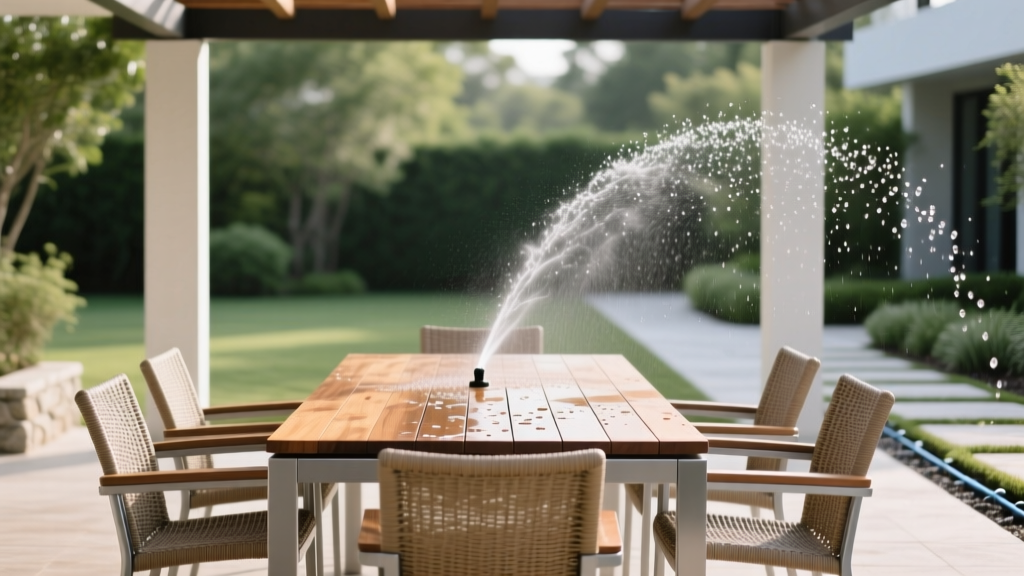
Teak vs Aluminum vs Resin Wicker: Irrigation Impact 2026
Anna KowalskiPublished
The Hidden Cost of Sprinkler Overspray on Patio Furniture
As we navigate the outdoor living trends of 2026, the boundary between indoor comfort and backyard landscaping has completely dissolved. Homeowners are investing thousands in premium patio setups, seamlessly blending garden-to-table dining areas with lush, irrigated lawns. However, a silent adversary often threatens these expensive investments: the automatic sprinkler system. While maintaining a pristine, energy-efficient landscape is a top priority, irrigation overspray and ambient moisture from high-frequency watering schedules can wreak havoc on outdoor furnishings.
When designing your landscape architecture or upgrading your smart irrigation system this year, it is crucial to understand how constant exposure to treated municipal water, hard well water, and high ambient humidity affects different patio materials. In this comprehensive guide, we break down the durability of teak, cast aluminum, and resin wicker when subjected to the realities of modern lawn irrigation, and provide actionable smart-home zoning strategies to protect your outdoor oasis.
Material Breakdown: How Irrigation Moisture Affects Patio Sets
Not all outdoor furniture is created equal, and the water expelled by your sprinkler heads carries minerals, chlorine, and sometimes fertilizers that interact uniquely with different surfaces. Here is how the big three materials hold up against the daily deluge.
Teak: The Natural Water-Resistant Champion
Teak remains the gold standard for outdoor furniture in 2026, primarily due to its dense grain and high concentration of natural oils and silica. When a standard rotary sprinkler hits a teak dining table, the water naturally beads up and rolls off, preventing deep moisture penetration. According to research on wood durability and moisture dynamics from the USDA Forest Products Laboratory, teak's natural extractives act as a built-in fungicide, making it highly resistant to the mold and mildew that often thrive in damp, irrigated environments.
However, teak is not entirely immune to irrigation side effects. If your sprinkler system relies on reclaimed water or hard municipal water, the constant evaporation of overspray can leave behind a chalky residue of calcium and magnesium. Over time, this mineral buildup can dull the wood's natural honey-brown patina, accelerating the weathering process to a silvery-gray much faster than natural sunlight alone would. Furthermore, if teak furniture is placed in a low-lying irrigation zone where puddling occurs, the constant wicking of moisture from the feet of the furniture can lead to localized rot.
Cast Aluminum: Rust-Proof but Vulnerable to Hard Water Stains
Powder-coated cast aluminum has dominated the mid-to-high-end outdoor furniture market over the last few years due to its lightweight nature and absolute immunity to rust. Unlike wrought iron, which will rapidly oxidize and stain your patio pavers if exposed to daily sprinkler hits, aluminum frames remain structurally sound even in high-moisture irrigation zones.
The vulnerability of aluminum lies not in the metal itself, but in the powder coating and the aesthetic finish. Sprinkler systems that pull from hard water sources will deposit microscopic layers of limescale onto aluminum frames every time the wind shifts the spray pattern. By the end of the summer season, this limescale bakes into the powder coating under the UV rays, creating a permanent, cloudy etching that is nearly impossible to buff out. Additionally, if the powder coating is chipped by moving chairs or debris blown by string trimmers, the exposed aluminum can oxidize into a white, powdery substance when constantly bombarded by irrigation water.
Resin Wicker: UV-Resistant but Traps Irrigation Moisture
High-Density Polyethylene (HDPE) resin wicker is a staple for deep-seating lounge sets in 2026. It is engineered to withstand heavy rainfall and intense UV radiation without cracking or fading. From a structural standpoint, HDPE wicker is completely waterproof; the synthetic strands will not rot, swell, or degrade when hit by sprinkler overspray.
The true danger to resin wicker in an irrigated landscape is its texture. The woven pattern creates thousands of tiny crevices and overlapping layers that trap moisture. When a sprinkler zone runs in the early morning, the water gets caught in the weaves. If the furniture is situated in a shaded pergola or under a dense tree canopy where sunlight cannot quickly evaporate the trapped water, these damp crevices become a breeding ground for black mold and mildew. While the wicker itself survives, the mold can quickly transfer to your expensive outdoor cushions, leading to premature fabric degradation and unpleasant odors.
2026 Durability Comparison Chart: Irrigation Exposure
To help you decide which material best suits your specific landscape layout and sprinkler coverage, review the comparison table below.
| Material | Water Resistance | Hard Water / Mineral Reaction | Mold & Mildew Risk | Ideal Irrigation Proximity |
|---|---|---|---|---|
| Grade-A Teak | Excellent (Naturally Oiled) | Moderate (Surface residue buildup) | Very Low | 5+ feet from spray heads |
| Cast Aluminum | Excellent (Non-corrosive) | High (Etching of powder coat) | Low | 10+ feet or drip-zone only |
| HDPE Resin Wicker | Excellent (Synthetic) | Low (Easily rinsed) | High (Traps water in weaves) | Outside of wind-drift zones |
Smart Irrigation Zoning to Protect Your Outdoor Living Space
The best way to protect your patio furniture in 2026 is to integrate your landscape design with your smart home irrigation controller. Modern systems like the Rachio 4 or Hunter Pro-HC offer granular control over water distribution, allowing you to create a harmonious environment where your lawn thrives without sacrificing your patio set. Here are the most effective strategies for irrigation management around hardscapes:
1. Implement 'No-Spray' Buffer Zones
When mapping your sprinkler zones, treat your patio, deck, and outdoor kitchen as 'No-Spray' buffer zones. Adjust the arc and radius of your rotary nozzles so they stop exactly 2 to 3 feet short of the hardscape edge. According to best practices outlined by EPA WaterSense, preventing water from hitting impervious surfaces like concrete and wood decking not only protects your furniture but also prevents runoff into local storm drains, conserving thousands of gallons of water annually.
2. Upgrade to Low-Drift MP Rotators
Traditional spray heads atomize water into a fine mist that is easily caught by a light breeze, carrying mineral-heavy water directly onto your resin wicker and aluminum frames. Upgrading your perimeter zones to multi-stream rotators (such as Hunter MP Rotators) delivers water in heavier, distinct streams. These heavier droplets are far more resistant to wind drift, ensuring the water reaches the turf and garden beds rather than drifting onto your teak dining table.
3. Utilize Smart Wind-Skip and Weather Intelligence
Modern smart controllers in 2026 are equipped with hyper-local weather tracking. Ensure that your 'Wind Skip' feature is enabled and set to pause irrigation when wind speeds exceed 10 to 12 mph. This simple software toggle prevents the erratic spraying that typically blindsides patio furniture during breezy spring and autumn mornings.
4. Convert Perimeter Beds to Drip Irrigation
If your patio is surrounded by lush tropical plants, potted arrangements, or dense flower beds, abandon overhead spray heads entirely. Convert these perimeter zones to subsurface drip irrigation or inline drip rings. The Irrigation Association consistently highlights drip irrigation as the most efficient watering method, delivering moisture directly to the root zone with zero overspray, zero wind drift, and zero risk to your adjacent outdoor furnishings.
Maintenance Tips for Furniture in High-Moisture Zones
Even with the most meticulously designed smart irrigation system, ambient humidity and occasional splash-back are inevitable. To maximize the lifespan of your outdoor investments, adopt these seasonal maintenance routines:
- For Teak: If your furniture sits near an irrigation zone, wash it bi-monthly with a mild soap and a soft-bristle brush to remove hard water deposits before they bake into the grain. Apply a high-quality teak sealer in early spring to reinforce the wood's natural moisture barrier.
- For Aluminum: Wipe down frames with a 50/50 mixture of distilled white vinegar and water once a month to dissolve calcium and chlorine buildup from municipal sprinkler water. Avoid abrasive pads that can scratch the powder coating.
- For Resin Wicker: Use a leaf blower on a low setting to force trapped irrigation water out of the woven crevices immediately after a heavy watering cycle. Elevate the furniture on casters or risers to ensure air can circulate beneath the frame, preventing ground-level moisture from wicking upward.
Pro Landscaper Tip: Never place outdoor furniture directly over a hidden valve box or low-head drain. These areas are prone to weeping and localized flooding, which will keep the legs of your furniture perpetually damp and accelerate degradation regardless of the material.
Conclusion: Designing for Harmony
The debate between teak, aluminum, and resin wicker ultimately comes down to how you manage your landscape's hydration. In 2026, a beautiful yard is a smart yard. By understanding the unique vulnerabilities of your patio materials and leveraging advanced smart irrigation zoning, you can enjoy a vibrant, perfectly watered lawn without compromising the integrity of your outdoor living space. Assess your sprinkler head placement today, embrace drip technology near hardscapes, and ensure your garden-to-table oasis remains pristine for decades to come.
