
Home & Garden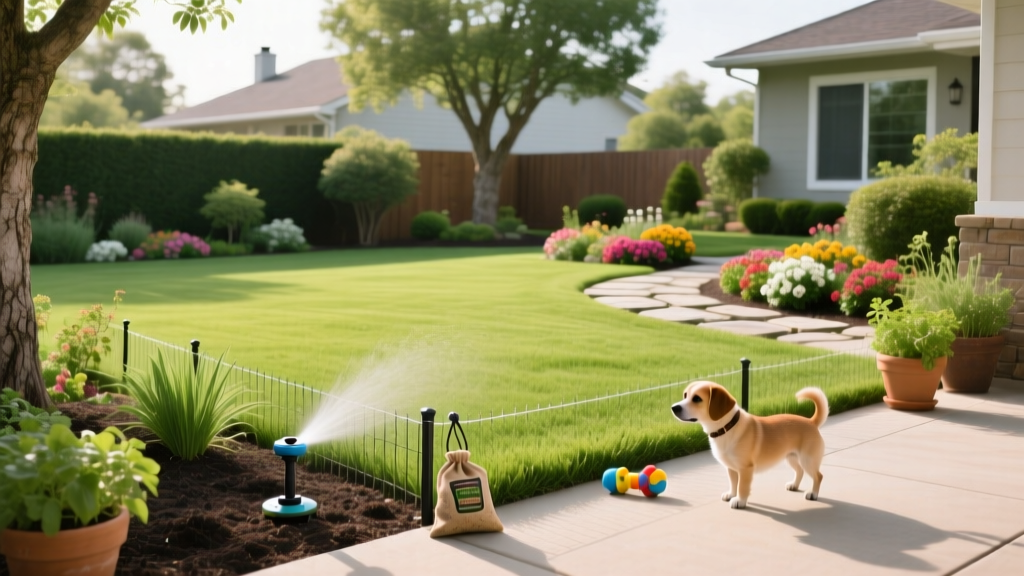
How Can I Keep Dogs Out of My Yard? 7 Proven Deterrents
Understanding Why Dogs Invade Your Lawn
Before deploying deterrents, you must understand the biological drivers bringing neighborhood and stray dogs onto your property. Dogs do not wander randomly; they follow scent trails, prey drives, and territorial marking instincts. According to the University of Minnesota Extension, canine urine contains highly concentrated urea. When this urea hydrolyzes in the soil, it creates a massive nitrogen spike that chemically burns turfgrass roots, leaving distinct yellow rings with green halos. Furthermore, digging behavior is often triggered by the scent of burrowing rodents or the desire to reach cooler soil layers beneath the thatch.
To permanently answer the question of how to keep dogs out of your yard, you must implement a multi-layered defense strategy that targets their primary senses: sight, sound, and smell. Relying on a single method, such as a basic fence or a generic repellent, will inevitably fail as dogs habituate to static deterrents.
Layer 1: Physical and Visual Barriers
A standard wooden privacy fence is insufficient if you have determined diggers or athletic jumpers in the neighborhood. You must engineer your perimeter to address specific canine physical capabilities.
The 18-Inch L-Footer Technique for Diggers
If dogs are tunneling under your fence, burying chicken wire is a critical mistake. Chicken wire is too flimsy and will rust or tear under the weight of a digging 60-pound Labrador. Instead, use 16-gauge galvanized hardware cloth with a 1/2-inch mesh.
- Excavate a trench 6 inches deep and 12 inches wide along the interior base of your fence line.
- Attach the hardware cloth to the bottom 12 inches of the fence using heavy-duty galvanized staples.
- Bend the remaining 18 inches of the mesh outward at a 90-degree angle to form an 'L' shape.
- Lay the outward-facing mesh flat on the ground and cover it with 2 inches of topsoil and mulch.
When a dog attempts to dig at the fence line, their paws hit the rigid steel mesh. Because the mesh extends outward, they cannot dig past it, and they will quickly abandon the effort.
Botanical Barriers: Dense, Thorny Perimeters
For areas where a physical fence is prohibited by HOA rules, plant dense, unpalatable shrubs. Rosa rugosa (Rugosa Rose) and Berberis thunbergii (Japanese Barberry) create an impenetrable, thorny wall that dogs will not push through. Plant them 18 inches apart to form a continuous hedge that reaches 3 to 4 feet in height within two growing seasons.
Layer 2: Active Deterrents and Startle Tactics
Static barriers stop physical entry, but active deterrents condition dogs to avoid your yard entirely through negative reinforcement. The most effective active deterrents utilize sudden environmental changes that trigger a dog's flight response without causing physical harm.
Motion-Activated Sprinklers: The Gold Standard
Water is the single most effective, humane deterrent for canine intruders. The sudden noise, physical sensation, and visual flash of a water jet trigger an immediate retreat. The Orbit Yard Enforcer (Model 62100) remains the industry benchmark in 2026, retailing for approximately $85. It utilizes a passive infrared (PIR) sensor that detects animal body heat and movement up to 70 feet away, delivering a sharp, 5-second burst of water. It requires three AAA batteries and connects directly to a standard 3/4-inch garden hose.
Pro Tip: To prevent dogs from learning the sensor's blind spots, relocate your motion sprinkler every 48 hours. Alternate between 'Day' mode (motion only) and 'Night' mode (motion + infrared) to maximize battery life and detection accuracy.
Deterrent Comparison Matrix
| Deterrent Type | Initial Cost | Maintenance Level | Effectiveness vs. Strays | Habituation Risk |
|---|---|---|---|---|
| Motion Sprinkler (Orbit 62100) | $85 - $110 | Low (Battery swap) | Very High | Low |
| Ultrasonic Repellents | $30 - $50 | Medium (Solar panel cleaning) | Low to Medium | High |
| Liquid Scent Repellents | $20 - $35 / gallon | High (Reapply after rain) | Medium | Medium |
| L-Footer Hardware Cloth | $2 - $4 / linear ft | None | High (Digging only) | None |
Layer 3: Olfactory Deterrents and Scent Masking
Dogs possess up to 300 million olfactory receptors, compared to a human's 6 million. You can leverage this hyper-sensitive sense of smell to make your yard highly unappealing. However, you must separate internet myths from scientifically backed repellents.
What Actually Works: Putrescent Egg and Garlic Oils
Commercial repellents relying on putrescent whole egg solids and garlic oils mimic the scent of decaying organic matter and predator markers. Liquid Fence Dog & Cat Repellent (Model 13016) is highly effective. Priced around $25 per gallon, it utilizes a 0.02% concentration of putrescent egg solids. Apply it using a pump sprayer along the perimeter of your property and directly on non-edible ornamental plants. Reapplication is strictly required every 3 to 4 weeks, or immediately after a heavy rainfall exceeding 0.5 inches.
CRITICAL WARNING: Never Use Mothballs Outdoors
A persistent and dangerous internet myth suggests burying mothballs in the yard to repel dogs. Mothballs contain naphthalene or paradichlorobenzene, both of which are highly toxic to dogs, wildlife, and children. As the Environmental Protection Agency (EPA) explicitly states, using mothballs off-label (outside of sealed containers for clothes moths) is illegal and hazardous. Furthermore, the ASPCA Animal Poison Control frequently treats dogs for severe gastrointestinal and neurological toxicity after ingesting outdoor mothballs. Stick to EPA-registered, pet-safe liquid repellents.
A persistent and dangerous internet myth suggests burying mothballs in the yard to repel dogs. Mothballs contain naphthalene or paradichlorobenzene, both of which are highly toxic to dogs, wildlife, and children. As the Environmental Protection Agency (EPA) explicitly states, using mothballs off-label (outside of sealed containers for clothes moths) is illegal and hazardous. Furthermore, the ASPCA Animal Poison Control frequently treats dogs for severe gastrointestinal and neurological toxicity after ingesting outdoor mothballs. Stick to EPA-registered, pet-safe liquid repellents.
Debunking Cayenne Pepper and Vinegar
While cayenne pepper irritates a dog's nasal passages, it can cause severe corneal damage if the dog rubs its paws on its eyes. It is not a humane or safe long-term solution. White vinegar evaporates too quickly in outdoor UV conditions to serve as a reliable perimeter defense, requiring daily application to maintain efficacy.
Layer 4: Lawn Care and Attractant Removal
Deterrents will fail if your yard offers a high-value reward. You must eliminate the biological attractants that draw dogs in the first place.
- Secure Compost and Food Waste: Dogs are scavengers. Ensure your outdoor compost bin is fully enclosed with a locking lid. Open compost piles emitting the scent of decaying meat or dairy will easily override the fear of a motion sprinkler.
- Eradicate Burrowing Rodents: If your lawn is infested with moles, voles, or ground squirrels, terrier breeds will dig up your turf to hunt them. Implement a targeted pest control program using castor oil-based mole repellents or professional trapping to remove the prey drive attractant.
- Mask Existing Scent Marks: If a neighborhood dog has already marked a specific tree or fence post, other dogs will return to over-mark it. Wash the area thoroughly with an enzymatic cleaner designed for outdoor use (such as Nature's Miracle Outdoor) to break down the uric acid crystals, then apply your Liquid Fence repellent to the dry surface.
Step-by-Step Implementation Plan
To achieve total yard security, follow this phased rollout to condition neighborhood dogs to avoid your property.
- Days 1-3 (Clean and Mask): Remove all food sources, secure trash cans, and wash existing urine marks with enzymatic cleaners. Install the 18-inch L-footer hardware cloth along known digging zones.
- Days 4-7 (Active Startle): Deploy the Orbit Yard Enforcer motion sprinkler in the primary entry zones. Set it to 'Night' mode initially, as most stray roaming occurs between dusk and dawn. Ensure the PIR sensor is angled slightly downward to catch smaller breeds.
- Week 2 (Olfactory Perimeter): Once the dogs have experienced the sprinkler and begun avoiding the center of the yard, spray the Liquid Fence repellent along the entire exterior perimeter. This creates a 'scent wall' that stops them before they even reach the fence line.
- Month 1 and Beyond (Maintenance): Transition the sprinkler to 'Day' mode for random deterrence. Reapply the liquid repellent on a strict 21-day cycle. Monitor the hardware cloth for any soil displacement and top up with mulch as needed.
Frequently Asked Questions
Will ultrasonic dog repellents work through a wooden fence?
No. High-frequency ultrasonic sound waves cannot penetrate solid physical barriers like wood, brick, or dense vinyl fencing. They are easily blocked by leaves and shrubs as well. Ultrasonic devices are only effective in wide-open, unobstructed sightlines, making motion-activated sprinklers a vastly superior choice for fenced yards.
How do I stop my neighbor's dog from jumping my 4-foot fence?
If a dog is physically clearing a 4-foot fence, you must increase the vertical height or alter the approach angle. Install PVC pipe coyote rollers along the top of the fence. These rollers spin freely when a dog attempts to grab the top edge with its front paws, denying them the leverage needed to pull their body weight over the barrier. Alternatively, attach a 2-foot section of angled lattice to the top of the fence, leaning inward at a 45-degree angle toward the neighbor's property.