Lawn Care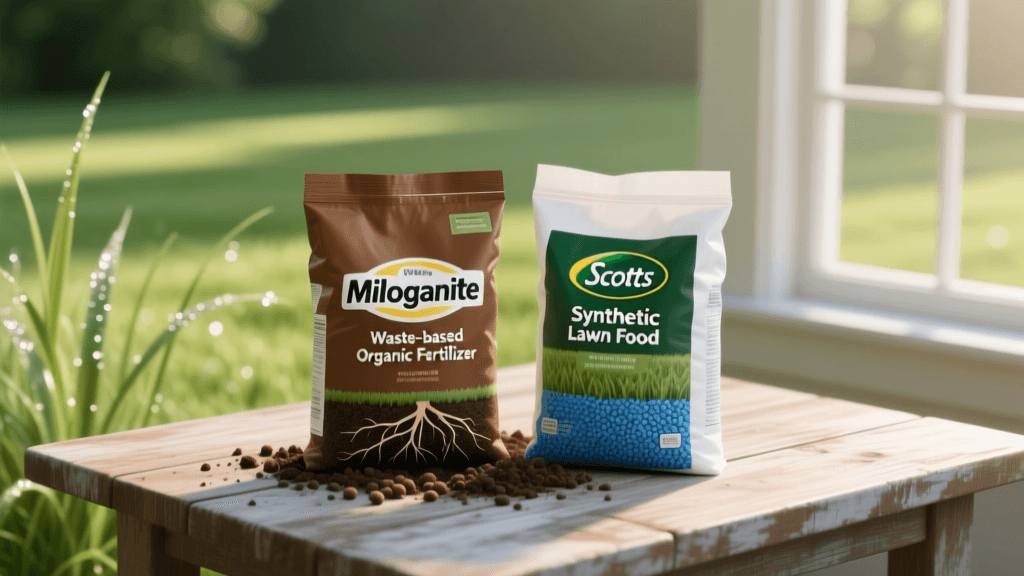
Milorganite vs Scotts Turf Builder: Best Fertilizer
The Great Fertilizer Debate: Organic vs. Synthetic
Every spring and fall, homeowners face a critical decision that dictates the health, color, and resilience of their turf for the entire season: which fertilizer to use. The debate almost always narrows down to two heavyweights in the lawn care industry. On one side, we have Milorganite, the legendary slow-release organic biosolid fertilizer. On the other, Scotts Turf Builder, the fast-acting synthetic powerhouse. Choosing between them is not just a matter of preference; it is a decision that impacts your soil microbiome, local waterways, application schedule, and overall budget.
In this comprehensive product review and comparison, we will break down the NPK (Nitrogen, Phosphorus, Potassium) profiles, application rates, environmental impacts, and cost-effectiveness of both products. Whether you are managing a sprawling cool-season fescue lawn or a warm-season Bermuda grass yard, understanding the mechanics of these two fertilizers will help you cultivate a thicker, greener, and more drought-tolerant lawn.
Deep Dive: Milorganite Organic Nitrogen Fertilizer
Milorganite has been a staple in American lawn care since 1926. Produced by the Milwaukee Metropolitan Sewerage District, it is a biosolid fertilizer created by heat-drying the microbes that digest organic matter in wastewater. The result is a 6-4-0 NPK fertilizer that is rich in organic matter and essential micronutrients.
Key Features and Benefits
- Slow-Release Nitrogen: Milorganite provides a steady, slow release of nitrogen over 8 to 10 weeks. This prevents the rapid, weak growth spurts associated with synthetic fertilizers and drastically reduces the risk of fertilizer burn, even in the heat of summer.
- Iron Content: It contains 4% non-staining iron, which promotes a deep, dark blue-green color without the excessive top-growth that requires frequent mowing.
- Soil Building: Because it is composed of organic matter, Milorganite feeds the soil microbiome. Earthworms and beneficial bacteria thrive on it, improving soil structure, aeration, and moisture retention over time.
- Pet and Kid Safe: Unlike many synthetic chemicals, Milorganite contains no pesticides or herbicides. It is safe for pets and children to walk on immediately after application.
Drawbacks
The primary drawback of Milorganite is its low nitrogen concentration. A standard 36 lb bag covers only 2,500 square feet, meaning you must purchase and spread significantly more product by weight compared to synthetic alternatives. Additionally, because it relies on microbial activity to break down and release nutrients, it is less effective in cold soils (below 55°F) when microbes are dormant.
Deep Dive: Scotts Turf Builder Lawn Fertilizer
Scotts Turf Builder is arguably the most recognized synthetic lawn fertilizer on the market. Formulated with Scott's proprietary All-In-One Particles, it is designed to deliver an immediate and aggressive dose of nutrients directly to the grass blades and root zone.
Key Features and Benefits
- High Nitrogen Concentration: The standard Turf Builder formula boasts a 32-0-4 NPK ratio. This massive dose of nitrogen triggers rapid cell division, resulting in a visibly greener and thicker lawn within days.
- Fast-Acting Results: Synthetic nitrogen is water-soluble and immediately available to the plant. If your lawn is suffering from severe chlorosis (yellowing) or stress, Scotts provides an emergency rescue green-up.
- Cost-Effective Coverage: Because of its high concentration, a single 12.5 lb bag covers up to 5,000 square feet. This makes it highly economical for large properties.
- Consistent Granule Size: The uniform particle size ensures an even spread when using a rotary or drop spreader, minimizing the risk of striping if applied correctly.
Drawbacks
The fast-release nature of Scotts Turf Builder is a double-edged sword. Over-application, overlapping spreader passes, or failure to water the product in properly can result in severe fertilizer burn, killing the turf. Furthermore, the high salt index of synthetic fertilizers can degrade soil structure and harm beneficial microbial life if used exclusively over many years without organic amendments.
Head-to-Head Comparison Chart
| Feature | Milorganite | Scotts Turf Builder |
|---|---|---|
| NPK Ratio | 6-4-0 | 32-0-4 |
| Nitrogen Type | Organic / Slow-Release | Synthetic / Fast-Release |
| Coverage per Bag | 2,500 sq ft (36 lb bag) | 5,000 sq ft (12.5 lb bag) |
| Average Cost per 1k sq ft | $7.50 - $9.00 | $4.50 - $6.00 |
| Burn Risk | Very Low | Moderate to High |
| Iron Content | 4% (Non-staining) | Varies (Often 0% in standard) |
| Pet Safe Immediately? | Yes | No (Wait until dry/watered in) |
| Soil Microbiome Impact | Feeds and builds microbes | Can deplete microbes over time |
Soil Health, Microbes, and Environmental Impact
The long-term health of your lawn is inextricably linked to the biological activity beneath the surface. According to research highlighted by the University of Minnesota Extension, relying solely on highly soluble synthetic fertilizers can lead to a decline in soil organic matter and microbial diversity. When you apply Scotts Turf Builder, you are essentially spoon-feeding the grass. While the grass looks great temporarily, the soil food web is bypassed. Over time, this can lead to compacted soils, increased thatch buildup, and a lawn that is highly dependent on chemical inputs to survive.
Milorganite, conversely, acts as a soil conditioner. The organic carbon in the biosolids serves as a food source for soil bacteria and fungi. These microbes break down the organic nitrogen into a plant-available form, creating a natural, self-regulating nutrient cycle. Furthermore, from an environmental perspective, the slow-release nature of Milorganite significantly reduces the risk of nitrogen leaching into local waterways, a common issue with synthetic fertilizers during heavy spring rains, as noted by Penn State Extension in their guidelines on protecting water quality.
Cost Analysis and Application Strategy
When budgeting for your annual lawn care, it is vital to look beyond the price tag on the bag and calculate the cost per 1,000 square feet. A 36 lb bag of Milorganite typically retails for around $20.00, covering 2,500 square feet. This equates to roughly $8.00 per 1,000 square feet per application. A 12.5 lb bag of Scotts Turf Builder retails for about $25.00 but covers 5,000 square feet, bringing the cost down to $5.00 per 1,000 square feet.
While Scotts is cheaper per application, its fast-release nature means the nutrient flush is short-lived. You may find yourself needing to apply Scotts every 6 to 8 weeks during the growing season to maintain color, whereas Milorganite's 10-week release window requires fewer annual applications. Furthermore, UMass Extension recommends that homeowners consider the hidden costs of soil remediation; lawns treated exclusively with synthetics often require expensive annual core aeration and compost top-dressing to combat soil compaction and thatch, costs that can be mitigated by using organic amendments.
Final Verdict: The Hybrid Approach
So, which is the best lawn fertilizer? The truth is that the most successful lawn care professionals rarely rely on just one. The optimal strategy for a thick, resilient, and dark green lawn is a hybrid fertilization schedule that leverages the strengths of both products while mitigating their weaknesses.
Spring: The Quick Green-Up
In early spring, soil temperatures are often too cold for the microbes required to break down Milorganite. This is the perfect time to apply a lighter dose of Scotts Turf Builder. The synthetic nitrogen will bypass the dormant microbes and provide the grass with the immediate energy needed to break dormancy, outcompete early spring weeds, and recover from winter stress.
Late Spring and Summer: The Soil Builder
As soil temperatures rise above 60°F and the summer heat sets in, switch exclusively to Milorganite. Applying synthetic high-nitrogen fertilizers during the heat of summer stresses cool-season grasses and promotes disease. Milorganite's slow-release formula and iron content will keep the lawn deeply colored and fortified without forcing excessive, water-hungry growth. Plus, you won't have to worry about burning the lawn during a July heatwave.
Fall: The Winterizer
Early fall is another excellent window for Milorganite to build root mass and store organic nutrients in the soil over the winter. However, a late-fall winterizer application of a synthetic fertilizer can be beneficial for cool-season grasses to store quick carbohydrates before the first freeze.
By combining the rapid, targeted nutrition of Scotts Turf Builder with the long-term, soil-building benefits of Milorganite, you achieve the best of both worlds: a lawn that looks spectacular today and remains biologically healthy for decades to come.