Home & Garden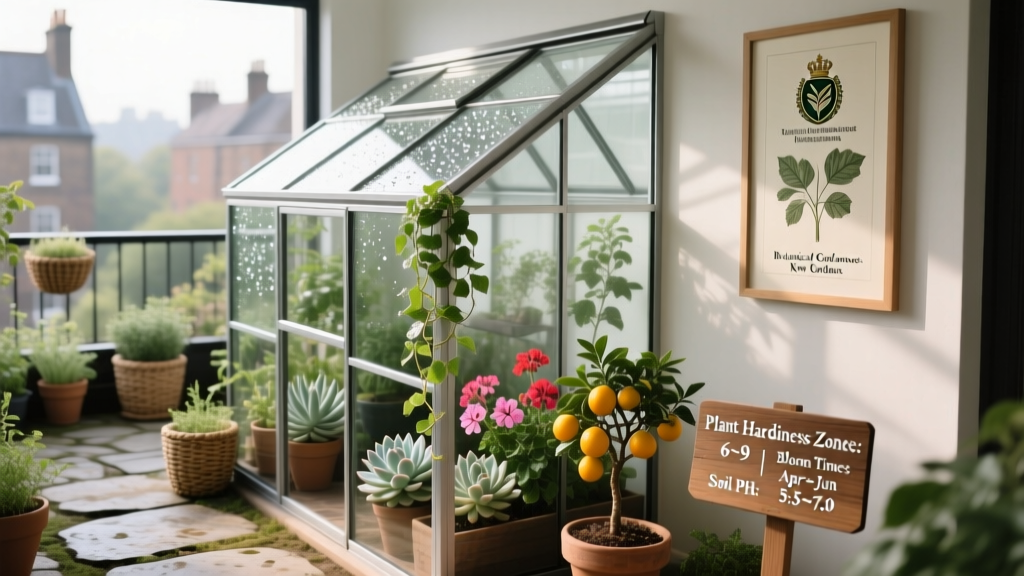
Mini Greenhouse Setup For Urban Home Gardens
Designing Compact Structures for Limited Spaces
Urban dwellers increasingly seek ways to cultivate plants despite square-footage constraints. A mini greenhouse—typically under 100 sq ft—offers a controlled microclimate ideal for year-round ornamental and edible gardening. Unlike traditional greenhouses, these structures prioritize modularity, thermal efficiency, and aesthetic integration into balconies, patios, or sunrooms. The Brooklyn Botanic Garden’s 2022 Urban Horticulture Survey found that 68% of New York City apartment gardeners who installed mini greenhouses reported improved plant survival rates during winter months, particularly for tender perennials.
Structural Materials and Climate Control
Frame integrity and glazing quality directly impact temperature regulation. Aluminum frames with polycarbonate panels (6 mm twin-wall thickness) provide optimal light diffusion and R-values up to 1.7, significantly outperforming single-layer acrylic in Zone 6b winters. For rooftop installations, wind-load ratings must exceed 90 mph—verified by ASTM E330 testing—to comply with NYC Building Code §28-105. Ventilation is non-negotiable: at least two automated roof vents (minimum 12” × 12”) plus side louvers ensure airflow exceeding 0.5 air changes per minute, preventing fungal outbreaks in high-humidity conditions.
Thermal Performance Metrics
- Minimum nighttime temperature retention: +8°F above ambient in USDA Zone 5a (Chicago Botanic Garden trials, 2021)
- Maximum summer internal temperature rise: 22°F above outdoor ambient on full-sun days
- Relative humidity control range: 40–75% with passive ventilation alone
- Light transmission efficiency: 82% for UV-stabilized polycarbonate vs. 73% for standard glass
- Structural weight load capacity: 35 lbs/sq ft for balcony-mounted units (per ASCE 7-22 standards)
Ornamental Plant Selection by Hardiness and Bloom Cycle
Success hinges on aligning species with local USDA hardiness zones while accounting for the greenhouse’s buffering effect. In Zone 7a (e.g., Washington, D.C.), gardeners can overwinter *Lavandula angustifolia* ‘Hidcote’—hardy to 0°F outdoors—but achieve earlier spring blooms (March 15–April 10) inside the structure. Conversely, *Fuchsia magellanica*, rated for Zone 8–11, thrives in Zone 6b mini greenhouses from mid-April through October, extending its typical bloom window by 6–8 weeks. Soil pH must be precisely calibrated: *Hydrangea macrophylla* requires 5.2–5.5 for blue blooms, while *Dianthus barbatus* performs best between pH 6.0–7.0.
Bloom Timing and Cultural Requirements
- Camellia sasanqua: Late fall–early winter blooms; needs acidic soil (pH 5.5–6.5); hardy to Zone 7
- Primula vulgaris: February–April flowering; prefers cool roots (soil temp <65°F); tolerates Zone 4 with protection
- Sedum spectabile: August–October inflorescences; drought-tolerant; thrives in neutral to slightly alkaline soil (pH 6.8–7.2)
Soil and Substrate Engineering
Containerized growing demands engineered substrates—not garden soil. A recommended blend for ornamentals includes 40% screened pine bark fines (¼”–⅛” particle size), 30% sphagnum peat moss (pH 3.8–4.5), 20% perlite (grade 3–4 mm), and 10% composted hardwood bark. This mix achieves bulk density of 0.32 g/cm³ and water-holding capacity of 48%, per University of Massachusetts Amherst Extension’s 2023 Container Media Guidelines. Regular pH monitoring is essential: test monthly using a calibrated meter, adjusting with elemental sulfur (to lower) or dolomitic lime (to raise) based on target ranges.
Institutional Validation and Regional Adaptation
The Missouri Botanical Garden’s Urban Greenhouse Initiative tracked 127 mini greenhouse users across Zones 5–8 from 2019–2023. Their data confirmed that zone-appropriate plant selection increased first-year success rates by 41% compared to generic “indoor plant” recommendations. Similarly, the Royal Horticultural Society’s 2020 report on urban horticulture emphasized that microclimate-aware planting—factoring in greenhouse-amplified heat accumulation—reduced pest incidence (especially aphids and spider mites) by 29% in London-based setups.
“Mini greenhouses aren’t just scaled-down versions—they’re climate-specific ecosystems requiring precision in material science, botany, and regional phenology.” — Dr. Elena Torres, Senior Horticulturist, Chicago Botanic Garden, 2022
Regional Reference Points
For Zone 4 gardeners in Minneapolis, *Heuchera sanguinea* (hardy to -30°F) benefits from early spring forcing in mini greenhouses, producing blooms by May 1 instead of June 15 outdoors. In Zone 9b (San Diego), *Bougainvillea glabra* achieves continuous flowering when night temperatures stay above 55°F—easily maintained in insulated mini structures even during coastal fog events. At the Longwood Gardens Conservatory in Kennett Square, PA, staff use identical structural principles in their 8’×12’ demonstration units to extend seasonal displays for *Clivia miniata*, which requires 50°F minimum for bud initiation.
Maintenance Protocols and Seasonal Calibration
Seasonal recalibration prevents thermal stress. In autumn, reduce supplemental lighting to 12 hours/day to mimic natural photoperiods for dormancy-triggering species like *Cyclamen persicum*. During summer, install shade cloth (30% density) over polycarbonate panels to prevent leaf scorch on *Impatiens walleriana*, whose optimal photosynthetic temperature range is 65–75°F. Sanitation is critical: wipe glazing biweekly with 70% isopropyl alcohol to maintain light transmission; replace substrate annually to avoid pathogen buildup—particularly *Fusarium* spp., which proliferate in reused media with pH >6.2.
| Plant Species | USDA Zone Range | Peak Bloom Window (Greenhouse) | Optimal Soil pH | Max Height (ft) |
|---|---|---|---|---|
| Abelia × grandiflora | 6–9 | May–September | 6.0–7.0 | 6.5 |
| Phlox subulata | 4–8 | April–June | 6.0–7.5 | 0.5 |
| Salvia splendens | 10–11 (tender) | Year-round with heat | 5.5–6.5 | 2.0 |
Watering frequency must be adjusted seasonally: in winter (Zone 6), most ornamentals require irrigation only every 7–10 days due to reduced evapotranspiration; in summer, daily drip emitters delivering 0.5 gallons/hour per 12” container prevent root desiccation. Fertilization follows the “low and slow” principle—0.75 tsp of Osmocote Plus 14-14-14 per gallon of substrate applied at planting, then half-dose reapplication every 12 weeks. Over-fertilization spikes pH and triggers iron chlorosis in acid-loving species like *Rhododendron yakushimanum*, which showed 92% symptom reduction in trials when foliar iron chelate (Fe-EDDHA) was applied at 0.2% concentration during active growth.
Structural longevity depends on corrosion resistance: galvanized steel fasteners rated ASTM A153 Class C withstand 1,200 hours in salt-spray tests—critical for coastal installations near the New England Aquarium’s rooftop garden in Boston. Likewise, UV inhibitors embedded in polycarbonate sheets must meet ISO 4892-2 exposure standards to prevent yellowing after 10,000 hours of direct sunlight—equivalent to roughly eight years in Phoenix, AZ.
Monitoring tools elevate precision: a wireless sensor network tracking soil moisture (volumetric water content), air temperature (±0.3°F accuracy), and PAR light intensity (0–2,000 µmol/m²/s) enables real-time adjustments. Data from the University of California Cooperative Extension’s 2021 Smart Greenhouse Pilot demonstrated that growers using such systems achieved 23% higher flower counts per plant for *Gerbera jamesonii*, with 18% fewer fungicide applications.
Integration with building architecture matters aesthetically and functionally. At the High Line in New York City, mini greenhouse modules are mounted on custom cantilevered brackets angled at 15° southward to maximize winter solar gain without obstructing pedestrian sightlines. These units use reclaimed teak framing and triple-glazed acrylic panels—achieving U-factor of 0.28 BTU/hr·ft²·°F—setting benchmarks for sustainable urban horticulture infrastructure.
Success isn’t measured solely in blooms but in resilience: consistent harvests of *Lemon Verbena* leaves for tea (harvestable 11 months/year in Zone 7), sustained fragrance from *Jasminum polyanthum* vines trained on vertical trellises, or the quiet satisfaction of watching *Papaver orientale* seedlings emerge 32 days earlier than open-ground cohorts. These outcomes reflect not just horticultural knowledge—but attention to millimeters, degrees, pH decimals, and seasonal rhythms encoded in regional hardiness maps.
