Home & Garden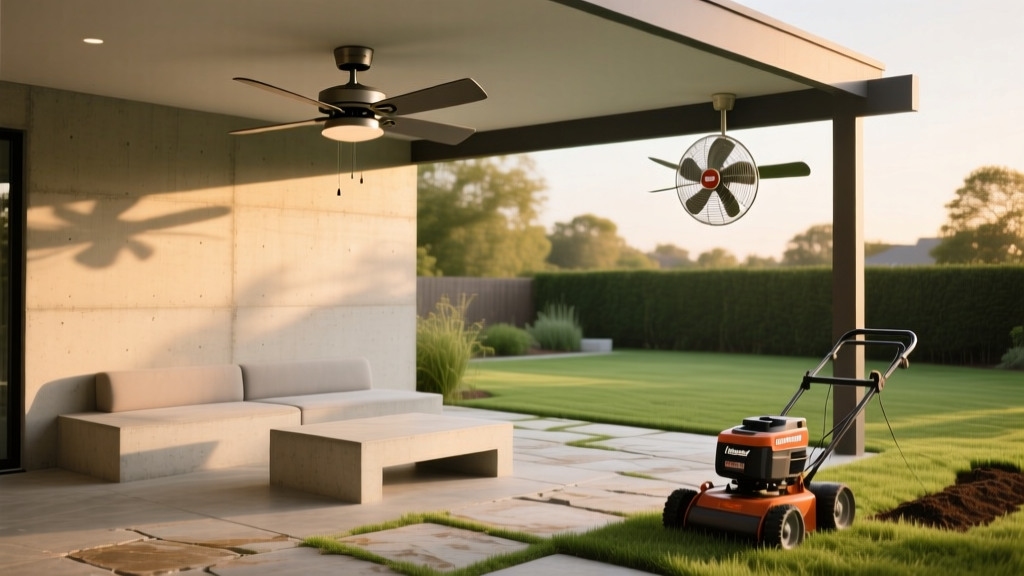
Minka-Aire vs Hunter Outdoor Fans: 2026 Patio Guide
David ParkPublished
The 2026 Outdoor Living Renaissance: Patios and Pristine Lawns
In 2026, the boundary between indoor comfort and outdoor landscaping has completely dissolved. Homeowners are no longer just planting grass; they are curating comprehensive outdoor living spaces that bridge the gap between garden-to-table dining, smart home irrigation, and high-end patio decor. Two of the most popular upgrades for covered patios and pergolas are damp-rated outdoor ceiling fans. However, for the dedicated lawn care enthusiast, installing a new ceiling fan is not just an electrical project—it is a logistical puzzle that must be carefully coordinated with your annual core aeration and overseeding schedule.
When comparing the industry giants, Minka-Aire and Hunter, the decision goes beyond mere aesthetics. The airflow dynamics, motor efficiency, and smart-home integration capabilities of these fans can directly impact the microclimate of your patio and the moisture retention of your freshly seeded lawn edges. In this comprehensive 2026 guide, we will break down the Minka-Aire vs. Hunter damp-rated fan debate while providing a strategic timeline for harmonizing your patio construction with your lawn's aeration and seeding needs.
Minka-Aire vs. Hunter: 2026 Damp-Rated Fan Specifications
Before we discuss soil plugs and seed-to-soil contact, we must understand the hardware. A 'damp-rated' fan is UL-listed for areas that are protected from direct rain but still exposed to high humidity and occasional blowing mist—such as covered patios, lanais, and pergolas. In 2026, both Minka-Aire and Hunter have refined their damp-rated lineups to feature ultra-quiet DC motors and advanced weather-resistant blade coatings.
Minka-Aire: The Modern Aerodynamic Choice
Minka-Aire has dominated the modern architectural space with fans like the 2026 Xtreme H2O Damp and the Java Damp series. Minka-Aire focuses heavily on aerodynamic blade pitching and integrated smart-home receivers. Their DC motors are exceptionally energy-efficient, often drawing less than 30 watts at high speeds while pushing massive volumes of air. For the homeowner who wants a sleek, contemporary look that complements a minimalist patio overlooking a meticulously manicured lawn, Minka-Aire is the premier choice.
Hunter: The Legacy of Durability and Airflow
Hunter remains a powerhouse in 2026, leveraging its SureSpeed Guarantee and WhisperWind motor technology. Models like the Hunter Apache and the Kennicott Damp are built like tanks, utilizing marine-grade stainless steel hardware and ABS plastic blades that resist warping in high humidity. Hunter fans are renowned for their broad, sweeping airflow patterns, which are excellent for cooling large patio areas. However, this wide airflow dispersion is a critical factor to consider when managing the moisture levels of your adjacent lawn.
| Feature | Minka-Aire (Xtreme H2O Damp) | Hunter (Apache Damp) |
|---|---|---|
| Motor Type | Energy-Star Certified DC | WhisperWind AC/DC Hybrid |
| Airflow (CFM) | 8,500 CFM (High) | 7,200 CFM (High) |
| Blade Material | Weather-Resistant ABS | Marine-Grade Composite |
| Smart Integration | Bond Bridge / Matter Compatible | Hunter SimpleConnect WiFi |
| 2026 Avg. Price | $420 - $550 | $350 - $480 |
For more information on how energy-efficient ceiling fans can reduce your overall home cooling costs, refer to the Energy Star Ceiling Fan Guidelines.
Coordinating Fan Installation with Core Aeration and Seeding
The biggest mistake homeowners make in 2026 is treating patio upgrades and lawn renovations as entirely separate projects. Core aeration involves pulling thousands of 3-inch soil plugs from your lawn to alleviate compaction, followed by overseeding to introduce new turfgrass. This is a messy, labor-intensive process. If you do not sequence your fan installation correctly, you risk damaging your new patio, ruining your electrical rough-in, or destroying your germinating grass seed.
Phase 1: Electrical Rough-In Before Aeration
If your covered patio requires new wiring for your Minka-Aire or Hunter fan, this trenching and conduit work must happen before you aerate. Running electrical lines often requires digging trenches near the patio perimeter—the exact same perimeter where your lawn meets the hardscape. If you aerate first, the heavy machinery and foot traffic required for electrical work will severely compact the freshly aerated soil, negating the benefits of the aeration process entirely.
Phase 2: Core Aeration and Overseeding
Once the electrical boxes are set and the patio is protected, it is time to aerate. Rent a walk-behind core aerator and make at least two passes over your lawn in perpendicular directions. Immediately follow this with a broadcast spreader to apply your 2026 premium tall fescue or Kentucky bluegrass seed blend. Rake the seed lightly to ensure seed-to-soil contact. During this phase, keep your patio covered with tarps. The mud and soil plugs ejected by the aerator can easily stain the composite decking or concrete where your new fan will eventually hang.
Phase 3: Fan Mounting and the Germination Window
Mount your damp-rated fan only after the heavy lawn work is complete. However, you must be incredibly mindful of the fan's airflow during the 14-to-21-day seed germination window. Newly planted grass seed requires consistent, shallow moisture. If you run your Hunter or Minka-Aire fan on high speed while sitting on the patio, the high-velocity CFM output will sweep across the patio edge and rapidly evaporate the topsoil moisture on your seeded lawn. This localized drying can cause patchy germination right at the border of your outdoor living space.
Airflow Dynamics: CFM, Seed Moisture, and Microclimates
Understanding Cubic Feet per Minute (CFM) is just as important for your lawn's microclimate as it is for your personal comfort. In 2026, landscape architects frequently cite the 'patio-edge desiccation effect.' This occurs when the concentrated downdraft of a powerful outdoor ceiling fan pushes dry air outward, stripping moisture from the top half-inch of soil where new seeds are trying to sprout.
- Minka-Aire DC Motors: Because Minka-Aire fans often feature steeper blade pitches and highly directional downdrafts, the air tends to push outward in a concentrated cone. You may need to adjust your smart irrigation sprinkler heads to provide an extra 10% water volume to the patio-edge zones to compensate for this evaporation.
- Hunter SureSpeed Airflow: Hunter's blade geometry is designed for a wider, more dispersed breeze. While this feels incredible on a humid July afternoon, it creates a broader zone of evaporation across the lawn. You will need to monitor the soil moisture across a wider 5-foot radius from the patio edge.
To mitigate these microclimate shifts, utilize the reverse function on your fan. In the early spring or late fall when you are seeding, running the fan in reverse (clockwise) at a low speed draws air up rather than pushing it down. This provides gentle air circulation to keep the patio comfortable without blasting your delicate new grass seedlings with drying winds.
Smart Home Integration for Irrigation and Airflow
The true magic of 2026 outdoor living lies in the integration of your patio hardware with your lawn care routines. Both Minka-Aire (via Bond or Matter protocols) and Hunter (via SimpleConnect) can be linked to your central smart home hub, allowing them to communicate directly with smart irrigation controllers like Rachio or Hunter's own Hydrawise system.
By setting up automated routines, you can protect your lawn investment effortlessly. For example, you can create a 'Seeding Season' automation: when your smart irrigation system activates the perimeter zones to water the new grass seed, the smart hub automatically turns off the outdoor ceiling fan. This prevents the fan from evaporating the water before it can penetrate the soil profile. According to the EPA WaterSense Landscaping Guidelines, optimizing the synergy between your outdoor airflow and your irrigation schedule can reduce outdoor water waste by up to 20%, ensuring your new lawn establishes deeply and efficiently.
Maintenance for the 2026 Outdoor Enthusiast
Even damp-rated fans require seasonal maintenance, which should be scheduled alongside your lawn care calendar. In the late fall, after your final mowing and before the first frost, wipe down the ABS or composite blades of your Minka-Aire or Hunter fan with a mild degreaser. Pollen, dust, and lawn clippings kicked up by your mower will accumulate on the blade edges, causing the motor to work harder and reducing airflow efficiency. Check the silicone seals around the motor housing to ensure that winter moisture will not penetrate the internal wiring. If you live in a region with harsh winters, consider installing a custom breathable canvas fan cover to protect the fixture from ice and snow drift.
Final Verdict: Bridging the Patio and the Lawn
Choosing between Minka-Aire and Hunter in 2026 ultimately comes down to your aesthetic preference and your specific lawn layout. If you have a modern, minimalist patio and want hyper-efficient, smart-home-ready airflow that can be precisely managed to protect your lawn edges, Minka-Aire is the superior choice. If you prefer a traditional, robust fan that moves a massive, sweeping volume of air across a large family gathering space, Hunter remains an unbeatable legacy brand.
However, the true mark of a master homeowner is not just the brand of fan they choose, but how they integrate that installation into the broader ecosystem of their property. By carefully timing your electrical rough-in before your core aeration, protecting your hardscape during overseeding, and leveraging smart-home automations to balance fan airflow with irrigation, you ensure that both your patio oasis and your pristine, golf-course-quality lawn thrive in perfect harmony for years to come.
