Lawn Care
Month-by-Month Lawn Care Schedule for Cool-Season Grasses
Understanding Cool-Season Grasses
Cool-season grasses, such as Kentucky bluegrass, perennial ryegrass, and tall fescue, thrive in regions with cold winters and moderate summers. Their peak growing seasons occur during the cool temperatures of spring and fall, while they often slow down or enter dormancy during the heat of summer. To maintain a lush, resilient lawn, you must align your maintenance tasks with their natural biological cycles. According to turfgrass experts at the University of Minnesota Extension, timing your fertilization, aeration, and weed control to match these growth spurts is the secret to a championship-caliber lawn. This comprehensive month-by-month schedule will guide you through every essential task required to keep your cool-season turf healthy year-round.
Spring Lawn Care Schedule (March – May)
March: Cleanup and Soil Assessment
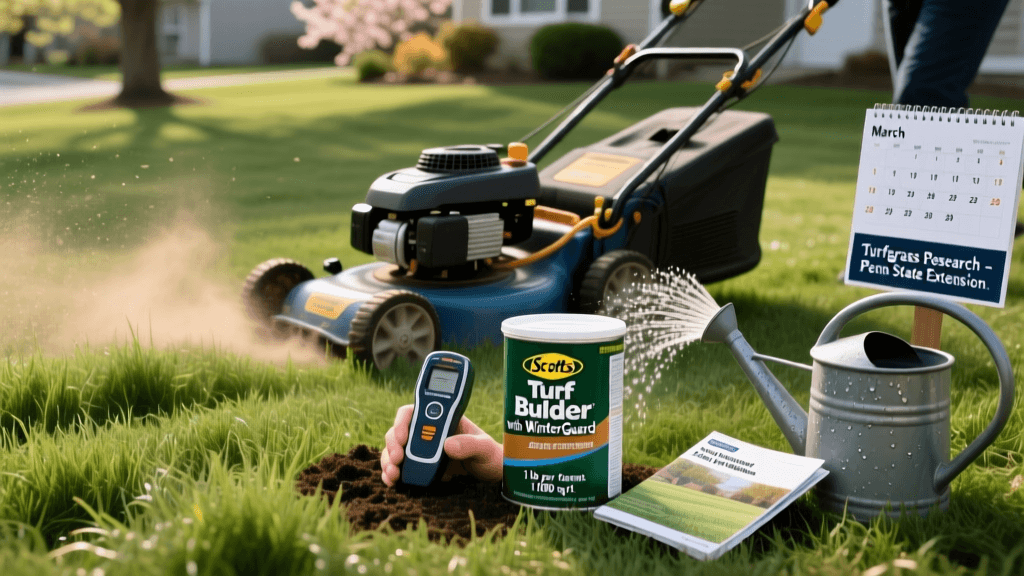
As the snow melts and the ground begins to thaw, your first task is to assess the winter damage. Gently rake your lawn to remove dead grass, leaves, and debris. This process, often called 'de-thatching' or spring raking, improves air circulation and helps prevent snow mold. March is also the ideal time to conduct a soil test. Cool-season grasses prefer a soil pH between 6.0 and 7.0. If your test reveals acidic soil, apply pelletized limestone now so it has time to alter the soil chemistry before the peak growing season.
April: Pre-Emergent Weed Control and First Mow
April is all about prevention. Crabgrass is a notorious summer annual weed that germinates when soil temperatures consistently reach 50°F to 55°F. Apply a pre-emergent herbicide containing prodiamine or dithiopyr before the forsythia bushes finish blooming. Once your grass reaches about 3.5 inches, it is time for the first mow. Set your mower deck to 2.5 or 3 inches. Never remove more than one-third of the grass blade in a single mowing, as this stresses the plant and exposes the soil to weed seeds.
May: Light Fertilization and Broadleaf Weed Control
As the lawn enters its peak spring growth phase, it will benefit from a light application of fertilizer. Apply a slow-release nitrogen fertilizer at a rate of 0.5 to 1.0 pound of nitrogen per 1,000 square feet. May is also the time to spot-treat broadleaf weeds like dandelions and clover. Use a selective post-emergent herbicide containing 2,4-D or dicamba, applying it on a calm, cool day to prevent drift to your garden beds.
Summer Lawn Care Schedule (June – August)
June: Mowing Height Adjustment and Grub Prevention
Summer heat is stressful for cool-season grasses. To protect the root system and shade the soil from the hot sun, raise your mower deck to 3.5 or 4 inches. Taller grass retains moisture better and outcompetes weeds. Late June is the optimal window to apply a preventative grub control product containing imidacloprid or chlorantraniliprole. Grubs feed on grassroots and can cause severe damage by late summer if left unchecked.
July: Deep Watering and Disease Monitoring
July often brings drought conditions. Cool-season lawns require about 1 to 1.5 inches of water per week, including rainfall. The EPA WaterSense program recommends watering deeply and infrequently—ideally once or twice a week in the early morning—to encourage deep root growth and minimize evaporation. Place an empty tuna can in your sprinkler zone to measure exactly how much water you are applying. Keep an eye out for fungal diseases like brown patch, which thrive in hot, humid conditions. If you notice circular brown patches, apply a preventative fungicide and avoid watering in the evenings.
August: Late Summer Assessment and Preparation
Avoid heavy fertilization in August, as pushing new growth during peak heat will stress the lawn. Instead, focus on monitoring for drought stress. If the grass footprints remain visible long after you walk on it, the lawn is wilting and needs immediate irrigation. Begin planning your fall renovation projects, such as ordering seed and scheduling core aeration.
Fall Lawn Care Schedule (September – November)
September: Core Aeration and Overseeding
Fall is the most critical season for cool-season lawn care. The University of Minnesota Turfgrass Science program emphasizes that early fall is the absolute best time for major lawn renovations. Rent a core aerator to pull 2-to-3-inch soil plugs from your lawn, alleviating compaction and allowing oxygen, water, and nutrients to reach the root zone. Immediately after aerating, overseed bare or thin patches with a high-quality tall fescue or Kentucky bluegrass blend at a rate of 3 to 5 pounds per 1,000 square feet. Keep the seed consistently moist until it germinates.
October: Heavy Fertilization and Leaf Management
October is the time for your heaviest fertilizer application of the year. Apply a high-nitrogen winterizer fertilizer (such as a 32-0-10 blend) at a rate of 1.0 to 1.5 pounds of nitrogen per 1,000 square feet. This application feeds the roots and stores carbohydrates for the winter, leading to a rapid, vibrant green-up the following spring. As leaves begin to fall, mulch them with your mower. Finely chopped leaves decompose quickly and return valuable organic matter to the soil. Do not let thick layers of whole leaves smother the turf.
November: Final Mow and Winterization
For your final mow of the season, gradually lower the mower deck to about 2 inches. Cutting the grass shorter before winter sets in helps prevent snow mold and discourages voles and mice from nesting in tall turf. Blow out your irrigation system to prevent frozen, burst pipes, and drain your garden hoses.
Winter Lawn Care Schedule (December – February)
December – February: Dormancy and Equipment Maintenance
Your lawn is dormant, but your work as a homeowner is not entirely over. Minimize foot traffic on frozen or snow-covered grass to prevent crown damage and snow mold compaction. Use the winter downtime to perform maintenance on your equipment. Drain old gas from your mower, change the oil, replace the spark plug, and most importantly, sharpen or replace the mower blades. A dull blade tears the grass, leaving it vulnerable to disease in the spring. Finally, review your lawn care journal, note which areas struggled the previous year, and adjust your strategy for the upcoming spring.
Month-by-Month Quick Reference Chart
| Month | Primary Focus | Key Action | Pro Tip |
|---|---|---|---|
| March | Cleanup & Testing | Rake debris; conduct soil test | Apply lime if pH is below 6.0 |
| April | Weed Prevention | Apply pre-emergent herbicide | Watch for blooming forsythia |
| May | Spring Feeding | Light fertilizer; spot-treat weeds | Use slow-release nitrogen |
| June | Pest Control | Apply grub preventative | Raise mower to 3.5+ inches |
| July | Irrigation | Water 1 to 1.5 inches per week | Water early morning (4-8 AM) |
| August | Monitoring | Check for drought and disease | Avoid heavy fertilization |
| September | Renovation | Core aerate and overseed | Keep new seed constantly moist |
| October | Root Building | Apply heavy fall fertilizer | Mulch fallen leaves into turf |
| November | Winter Prep | Final mow; blow out irrigation | Cut grass down to 2 inches |
| Dec-Feb | Maintenance | Sharpen mower blades; plan ahead | Limit traffic on frozen grass |
Conclusion
Maintaining a cool-season lawn is a year-round commitment that rewards you with a thick, vibrant, and weed-resistant turf. By following this structured schedule, you work in harmony with the natural growth cycles of your grass rather than against them. Remember that local microclimates and specific grass cultivars may require slight adjustments to this timeline. Always observe your lawn closely, adapt to the weather patterns in your specific region, and rely on soil test data to make informed decisions about fertilization and amendments.