Lawn Care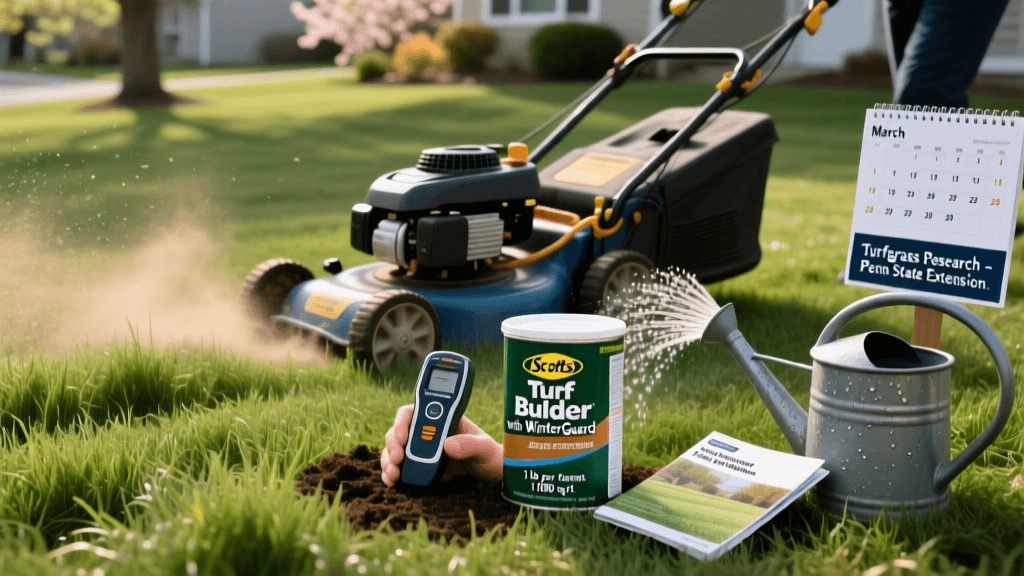
Step By Step Guide To Mow High For Heat Stress
Why Mowing High Is Your Lawn’s Best Defense Against Summer Heat
When temperatures soar above 85°F and humidity climbs, turfgrass enters physiological stress—reducing photosynthesis, slowing root growth, and increasing susceptibility to disease and drought. Research from the University of Minnesota Turfgrass Science Program confirms that raising mowing height by just 0.5 inch during peak summer months (June–August) can reduce canopy temperature by up to 12°F compared to low-mowed plots (Horgan et al., 2021). This thermal buffer is not merely cosmetic: it preserves leaf surface area for carbohydrate production, shades the soil to suppress crabgrass germination, and encourages deeper rooting. For cool-season grasses like Kentucky bluegrass (Poa pratensis) and tall fescue (Festuca arundinacea), maintaining a minimum height of 3.5 inches in summer is non-negotiable. Warm-season species—including zoysiagrass (Zoysia japonica) and bermudagrass (Cynodon dactylon)—also benefit from elevated cuts: 2.0–2.5 inches for hybrid bermudagrass (e.g., ‘Tifway 419’) and 2.5–3.0 inches for common zoysiagrass cultivars such as ‘Meyer’.
Grass-Specific Mowing Heights and Timing Protocols
Optimal mowing height varies significantly by species, climate zone, and seasonal pressure. The Purdue University Extension recommends adjusting heights based on growth stage and environmental demand—not calendar dates alone. For example, Kentucky bluegrass lawns in Indianapolis should be maintained at 2.5–3.0 inches from April through May, then raised to 3.5 inches beginning June 1 and held through August 15. In contrast, tall fescue in Raleigh, North Carolina—a transition zone location—requires consistent 3.5–4.0 inch cuts year-round due to its coarse texture and deep root architecture.
Recommended Mowing Heights by Species and Season
- Kentucky bluegrass: 2.5–3.0 inches (spring/fall), 3.5 inches (summer)
- Tall fescue: 3.0–3.5 inches (spring/summer), 2.75 inches (late fall)
- Zoysiagrass: 1.5 inches (early spring green-up), 2.5–3.0 inches (June–August)
- Bermudagrass (hybrid): 0.75–1.0 inch (active growth), 1.5–2.0 inches (heat-stressed periods)
- St. Augustinegrass: 2.5–3.5 inches (year-round in Gulf Coast regions)
Crucially, never remove more than one-third of the leaf blade in a single mowing event. Removing 50% or more—common when lawns are neglected for >10 days—triggers shock responses: lateral tillering suppression, increased thatch accumulation, and nitrogen leaching. At 85°F air temperature, Kentucky bluegrass grows approximately 0.12 inches per day; therefore, mowing every 5–6 days at 3.5 inches ensures only ~0.6 inches is removed—well within the one-third threshold.
Fertilizer Strategy to Support High-Cut Resilience
Fertilization must align with mowing height adjustments. High-cut lawns demand more nitrogen to sustain leaf expansion and chlorophyll synthesis—but timing and formulation are critical. Avoid quick-release urea-based products during heat waves, as they increase burn risk and volatilization losses. Instead, apply slow-release nitrogen sources such as sulfur-coated urea (SCU) or polymer-coated urea (PCU) at 0.5–0.75 lb N per 1,000 sq ft. The Penn State Extension advises applying SCU (e.g., Scotts Turf Builder WinterGuard, 22-0-14) in late May at 0.6 lb N/1,000 sq ft, followed by a second application of PCU (Lesco Professional Starter Fertilizer, 18-24-12) at 0.5 lb N/1,000 sq ft in mid-July—only if soil moisture is adequate.
Soil Test–Driven Nutrient Adjustments
Pre-summer soil testing is essential. A 2022 Rutgers Cooperative Extension field trial across 120 New Jersey lawns found that 68% of high-cut tall fescue plots with soil pH <5.8 exhibited iron chlorosis despite adequate nitrogen—corrected only after lime application at 50 lbs/1,000 sq ft. Likewise, potassium deficiency (soil K < 90 ppm) reduced drought tolerance by 40% in Kentucky bluegrass under controlled heat stress (University of Wisconsin–Madison, 2020).
Watering Practices That Complement Elevated Mowing
Mowing high reduces evapotranspiration by 18–22% compared to low-cut plots (USDA-ARS, 2019), but irrigation remains vital during extended dry spells. Water deeply and infrequently: deliver 1.0–1.25 inches per session, applied between 4:00–8:00 a.m. to minimize fungal development. Use a calibrated rain gauge or tuna can to verify output—most rotary sprinklers require 45–60 minutes to deliver 1 inch; oscillating types need 90–120 minutes. For tall fescue in central Ohio, irrigate only when footprints remain visible >30 minutes after walking across the lawn—a reliable visual indicator of wilt stress.
“Raising mowing height is the single most cost-effective cultural practice for improving summer survival of cool-season grasses. It costs nothing but attention—and pays dividends in reduced water use, fewer pesticide applications, and greater carbon sequestration.” — Dr. Eric Watkins, Professor of Turfgrass Science, University of Minnesota, 2021
Equipment and Technique Essentials
Sharp blades are mandatory. Dull mower blades tear rather than cut, creating ragged edges that desiccate rapidly and invite pathogen entry. Sharpen rotary mower blades every 8–10 hours of use—or weekly during peak summer mowing. For reel mowers, adjust bedknife clearance to 0.003–0.005 inches using feeler gauges. Confirm calibration with a straightedge and light test: no visible gap should exist between reel and bedknife along the full length.
Use mulching mowers exclusively for high-cut lawns. Clippings returned to the surface decompose rapidly, supplying up to 25% of annual nitrogen needs and increasing soil organic matter by 0.12% annually in loam soils (Purdue Extension Bulletin AY-314-W, 2022). Never bag clippings unless the lawn is severely overgrown or diseased—such as during active brown patch (Rhizoctonia solani) outbreaks.
Monitoring and Troubleshooting Common Issues
Track performance using objective metrics. Measure pre- and post-mow heights with a ruler placed vertically into the canopy—take five random readings per 1,000 sq ft and average. Monitor soil moisture at 4-inch depth with a screwdriver probe: resistance beyond 3 inches indicates deficit. Record daily maximum temperatures and cumulative growing degree days (GDD) using your local National Weather Service station; when GDD base 50°F exceeds 1,200, initiate high-cut protocols immediately.
Common missteps include cutting too high too quickly (causing scalping during adjustment) and ignoring shade microclimates. Under mature oak canopies in Austin, Texas, St. Augustinegrass may require 4.0 inches to compensate for 75% light reduction—yet adjacent full-sun areas thrive at 3.0 inches. Always calibrate mower decks on level pavement before each season using a digital level app or bubble level.
| Parameter | Target Value | Measurement Tool | Frequency |
|---|---|---|---|
| Mowing height (tall fescue) | 3.5 inches | Steel ruler + canopy compression | Before each mowing |
| Irrigation depth | 1.25 inches/session | Calibrated rain gauge | Per irrigation event |
| Soil pH | 6.2–6.8 | Laboratory analysis (MSU Soil Test Lab) | Every 2 years |
| Blade sharpness | No visible nicks or bends | Visual + paper-cut test | Weekly during summer |
| Clipping length | ≤1.5 inches (when mulched) | Ruler on fresh clippings | After first mow post-height adjustment |
Finally, document all interventions: date, height, fertilizer product and rate, irrigation duration, and observed stress symptoms. This log enables precise correlation between practices and outcomes—transforming anecdotal care into evidence-based stewardship. Whether managing a residential lawn in Madison, Wisconsin, or a municipal park in Charlotte, North Carolina, mowing high is not an option—it’s the foundation of resilient, ecologically functional turf.