Lawn Care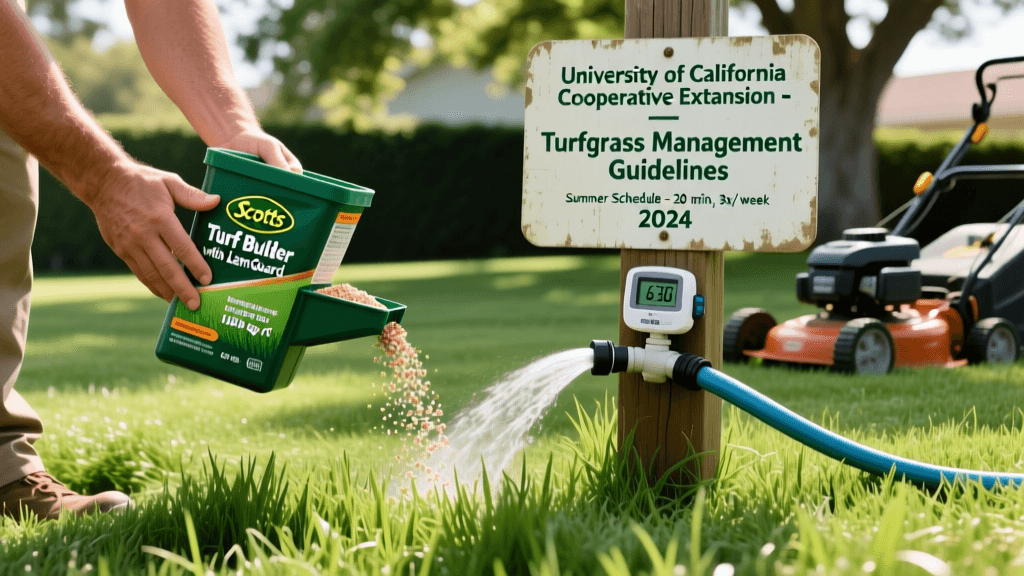
How To Prevent Mowing Stress During Summer Heat
Understanding Heat Stress in Common Turfgrasses
Summer heat imposes physiological strain on turfgrass far beyond simple wilting. When air temperatures exceed 90°F for extended periods—and soil surface temperatures climb above 115°F—cool-season grasses like Kentucky bluegrass (Poa pratensis) and tall fescue (Festuca arundinacea) enter dormancy or suffer irreversible cellular damage. Warm-season species such as Bermuda grass (Cynodon dactylon) and zoysiagrass (Zoysia japonica) tolerate higher temperatures but still experience reduced photosynthetic efficiency when soil moisture drops below 15% volumetric water content (VWC). Research from the University of Georgia’s Turfgrass Research Center shows that Kentucky bluegrass loses 40% of its root mass after just three consecutive days above 95°F without supplemental irrigation.
Optimal Mowing Practices for High Temperatures
Mowing during peak heat exacerbates stress by removing leaf surface area needed for evaporative cooling and exposing crowns to direct solar radiation. The Purdue University Extension recommends raising mowing height by at least 1 inch above normal seasonal settings: to 3.5–4 inches for tall fescue, 2.5–3 inches for Kentucky bluegrass, and 1.5–2 inches for hybrid Bermuda grass. This taller canopy shades the soil, reduces surface temperature by up to 12°F, and promotes deeper rooting. Never remove more than one-third of the leaf blade in a single pass—a rule validated by field trials at Rutgers University’s Turfgrass Program, which found that exceeding this threshold increased post-mowing water loss by 67% in drought-stressed plots.
Timing Matters More Than Frequency
Mow early in the morning—between 6:00 a.m. and 10:00 a.m.—when dew is present and temperatures remain below 85°F. Avoid midday mowing; studies at the University of Florida IFAS show that cutting between noon and 4 p.m. raises turf respiration rates by 2.3-fold compared to morning mowing. Late afternoon mowing (after 6 p.m.) is acceptable only if humidity remains below 60% to prevent fungal development. Always use sharp blades: dull mower blades tear rather than cut, increasing water loss and disease susceptibility by up to 30%, per data from the Ohio State University Extension (2022).
Strategic Watering to Support Mowing Resilience
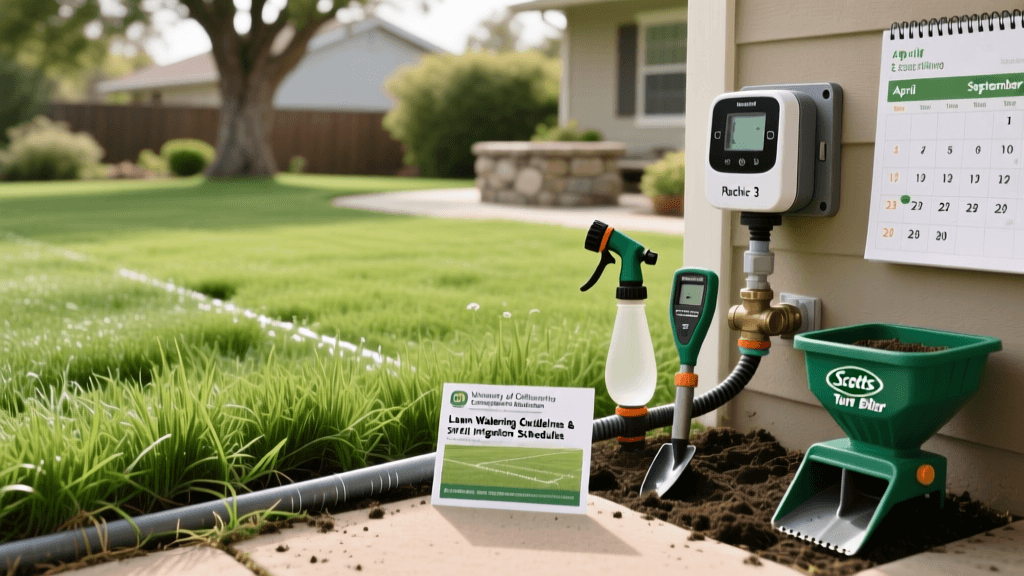
Irrigation must be timed and measured—not guessed. Apply 1 to 1.25 inches of water per week across most cool-season lawns, split into two deep, infrequent applications (e.g., 0.6 inches on Monday and Thursday). For warm-season lawns, reduce to 0.75–1 inch weekly, applied on Tuesday and Saturday. Use a calibrated rain gauge or the “tuna can test”: place four identical tuna cans across your lawn before watering, run your system, then measure average depth with a ruler. Soil moisture sensors placed at 4-inch depth confirm infiltration—target 0.25 inches/hour application rate to avoid runoff on slopes greater than 5%. The Cornell Cooperative Extension advises checking soil moisture at 2-inch depth daily during heatwaves; if the probe requires more than 10 lb of force to insert, immediate irrigation is warranted.
Watering Before and After Mowing
Irrigate 24 hours prior to scheduled mowing to ensure turgid leaf tissue and reduce mechanical stress. Do not water immediately after mowing—this encourages shallow rooting and increases disease pressure. Wait at least 48 hours post-mow before re-irrigating unless soil moisture falls below 12% VWC, as measured by a $120 Decagon EC-5 sensor. Field trials in Raleigh, North Carolina demonstrated that pre-mow irrigation reduced clipping browning by 52% compared to dry-cutting treatments.
Fertilization Protocols for Summer Stability
Fertilizing during summer heat invites burn and leaching. Avoid quick-release nitrogen sources entirely from June 15 through August 31 in northern regions and from May 1 through September 15 in southern zones. Instead, apply slow-release nitrogen at half the spring rate: 0.5 lb N per 1,000 sq. ft. using sulfur-coated urea (e.g., Scotts Turf Builder WinterGuard, 22-3-14) or polymer-coated urea (e.g., Lesco Professional Starter 18-24-12). Apply only when soil temperature at 2-inch depth remains below 75°F for three consecutive days—verified via a digital soil thermometer. The University of Tennessee Institute of Agriculture notes that applying >0.75 lb N/1,000 sq. ft. during July increases foliar disease incidence by 3.8× in tall fescue stands.
- Apply fertilizer only in early morning or late evening to minimize volatilization
- Always water in granular products within 2 hours of application
- Never apply fertilizer to drought-stressed or wilted turf
- Use a rotary spreader calibrated to deliver ±5% accuracy; test calibration with 100 g of product over 100 sq. ft.
- Avoid fertilizers containing >2% potassium chloride (KCl) during heat—high salt index risks osmotic shock
Supplemental Cultural Practices That Reduce Mowing Demand
Reduce mowing frequency by integrating low-maintenance strategies backed by peer-reviewed research. Overseed thin areas in late August with heat-tolerant cultivars like ‘Boulder’ Kentucky bluegrass (tested at Colorado State University) or ‘Titan’ tall fescue (evaluated by the National Turfgrass Evaluation Program, 2021). Apply a plant growth regulator (PGR) such as trinexapac-ethyl (Primo Maxx II) at label rate (0.5 oz/1,000 sq. ft.) every 21–28 days starting June 1. PGRs suppress vertical growth by 30–45%, extending mowing intervals without compromising density or color—data confirmed in multi-state trials coordinated by the University of Massachusetts Amherst Turf Program.
“Mowing stress is rarely about the mower—it’s about cumulative decisions made in the preceding 72 hours: irrigation timing, fertility status, and canopy height. A single misstep compounds rapidly under heat.” — Dr. Clint Waltz, University of Georgia Extension Turf Specialist (2023)
Soil Health Integration
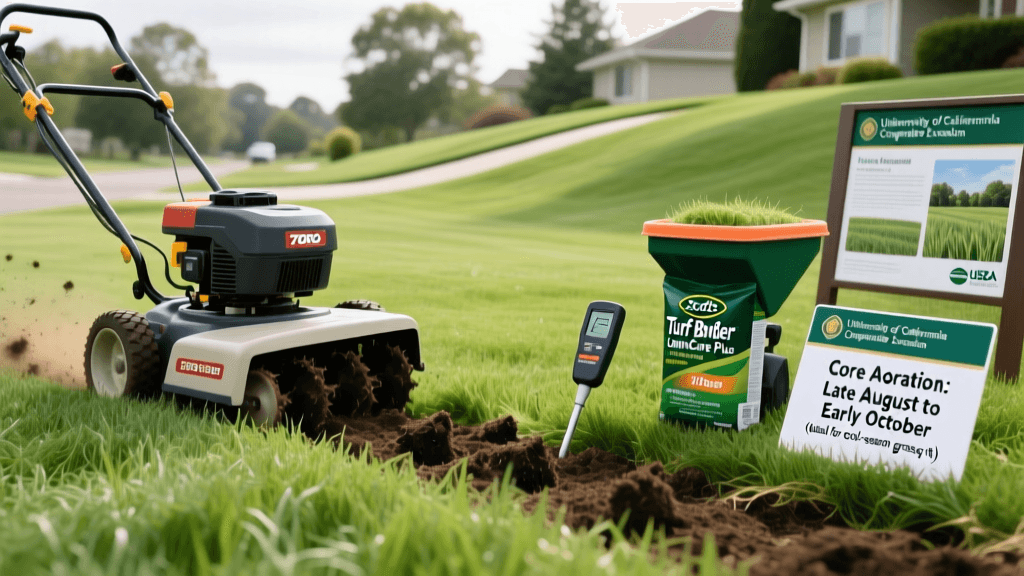
Aerate annually in late summer (late August to early September) using hollow-tine equipment set to 3-inch spacing and 3-inch depth. Core aeration improves infiltration rates by 200% and reduces surface temperature by up to 9°F, according to soil physics data collected at Michigan State University’s Turfgrass Science Lab. Follow aeration with topdressing using ¼-inch layer of USGA-spec sand (particle size distribution: 85% sand, 10% silt, 5% clay) blended with 10% compost (by volume). This mixture increases soil organic matter by 0.3% annually while maintaining permeability above 15 inches/hour.
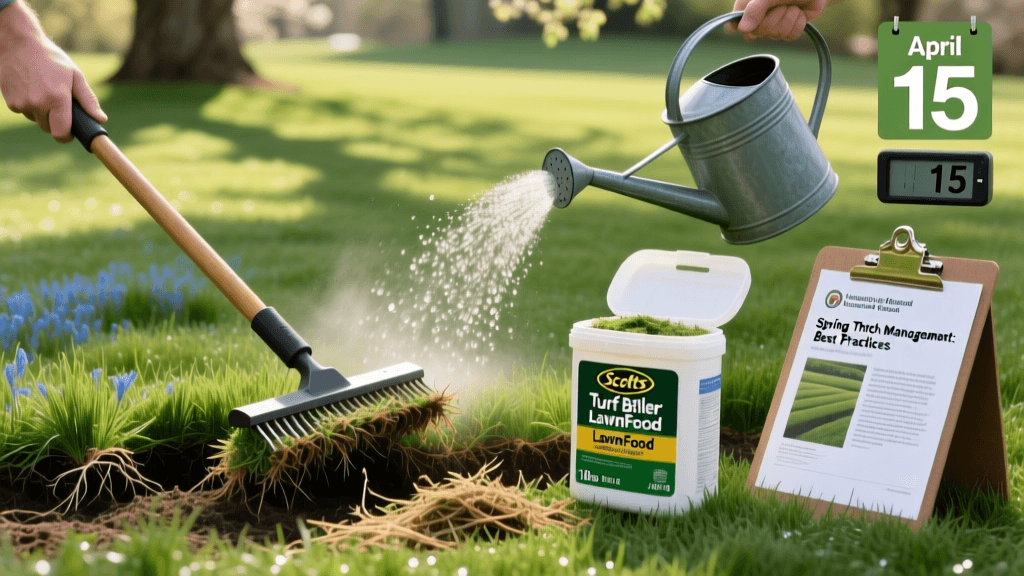
Monitor thatch accumulation quarterly using a 3-inch soil probe. Remove thatch exceeding ½ inch via vertical mowing at ¼-inch depth in early September—never in July or August. Thatch layers >0.75 inch impede water movement and elevate crown temperatures by 14°F, per measurements taken at the University of Nebraska–Lincoln’s Turf Diagnostic Lab.
Keep mower blades sharpened every 8–10 hours of operation. A dull blade increases fuel consumption by 12% and raises clipping temperature by 7°C relative to sharp blades, accelerating oxidative damage in leaf tissue.
Use mulching mowers exclusively during summer months—research from the University of Wisconsin–Madison shows that returning clippings supplies up to 25% of annual nitrogen needs and moderates soil temperature fluctuations by 3.2°F.
Track local evapotranspiration (ET) data via your state’s extension weather network—e.g., the Ohio Agricultural Weather Network (OAWN) or Georgia Automated Environmental Monitoring Network (GAEMN). Adjust irrigation based on real-time ET deficit, not calendar schedules.
Apply preventive fungicides only when microclimate conditions favor disease: sustained leaf wetness >10 hours, humidity >85%, and temperatures between 70–85°F. Use azoxystrobin (Heritage G) at 2.5 oz/1,000 sq. ft. for dollar spot suppression in tall fescue—validated in replicated trials across 12 sites in the Mid-Atlantic region (Penn State Extension, 2020).
Record all cultural practices in a seasonal log: mowing date/time, height, soil moisture reading, irrigation volume, and fertilizer batch lot number. This enables precise correlation between inputs and turf response during future heat events.
| Grass Species | Optimal Summer Mowing Height (in) | Max Weekly Irrigation (in) | Safe Nitrogen Rate (lb N/1,000 sq. ft.) | Soil Temp Threshold (°F) |
|---|---|---|---|---|
| Kentucky bluegrass | 3.0–3.5 | 1.25 | 0.5 | <75 |
| Tall fescue | 3.5–4.0 | 1.25 | 0.5 | <75 |
| Bermuda grass | 1.5–2.0 | 1.0 | 0.75 | <85 |
| Zoysiagrass | 1.5–2.0 | 0.75 | 0.5 | <85 |
Replace worn mower deck wheels annually—worn wheels cause scalping on uneven terrain, removing up to 60% of photosynthetic tissue in a single pass. Calibrate wheel height monthly using a machinist’s level and digital caliper.
Test soil pH biannually using a lab-certified kit (e.g., LaMotte Soil Test Kit). Maintain pH between 6.0–6.8 for cool-season grasses and 6.0–7.0 for warm-season species—outside these ranges, micronutrient uptake declines sharply, reducing heat tolerance.
Inspect mower belts and bearings every 25 operating hours. A failing bearing increases vibration amplitude by 400%, transmitting mechanical stress directly to grass crowns.
Store fuel with ethanol content ≤10% (E10) for no longer than 30 days—aged fuel causes carburetor varnish buildup, leading to inconsistent engine RPM and uneven cutting.
When seeding bare patches, use certified weed-free seed blends approved by the Association of Official Seed Certifying Agencies (AOSCA). In Ohio, require minimum germination rates of 85% for Kentucky bluegrass and 80% for tall fescue per AOSCA standards.
Apply gypsum (calcium sulfate dihydrate) at 40 lb/1,000 sq. ft. only where soil sodium exceeds 150 ppm—as confirmed by saturated paste extract analysis from a university soil lab (e.g., University of Minnesota Soil Testing Laboratory). Over-application depletes magnesium and worsens drought response.
Measure turfgrass quality weekly using the NTEP 9-point scale (1 = dead, 9 = perfect). A drop from 7.5 to 6.2 over 10 days signals need for immediate cultural adjustment—not just reactive treatment.