Lawn Care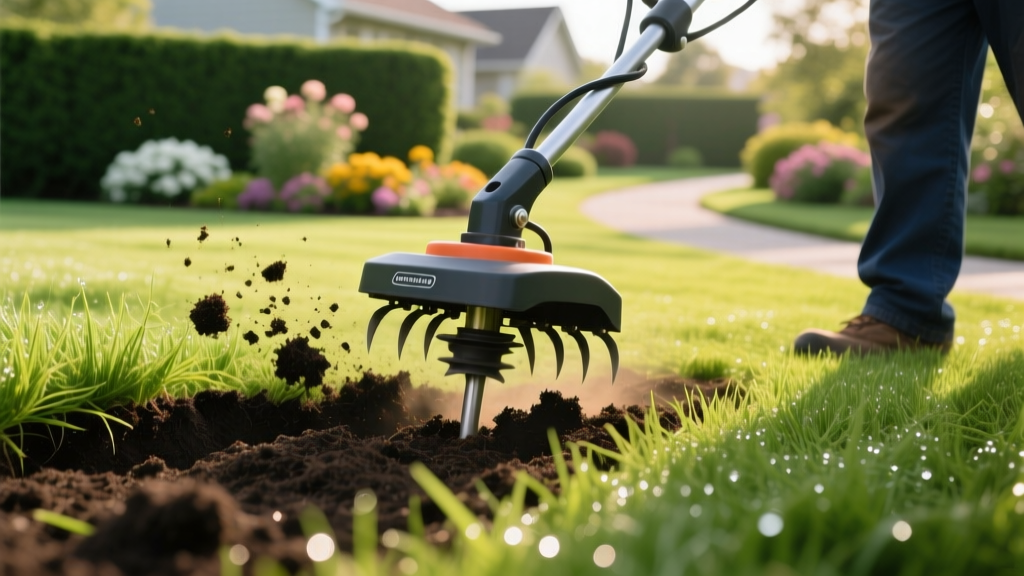
How To Fix Compacted Soil With Core Aeration
Understanding Soil Compaction and Its Impact on Turfgrass
Compacted soil restricts root growth, limits water infiltration, and reduces oxygen availability—three critical factors for healthy grass. When soil particles are pressed together, pore space drops below the optimal 50% air-to-solid ratio needed for turfgrass respiration. This condition disproportionately affects cool-season grasses like Kentucky bluegrass (Poa pratensis) and perennial ryegrass (Lolium perenne), which develop shallow root systems under compaction stress. In contrast, warm-season species such as Bermuda grass (Cynodon dactylon) and zoysiagrass (Zoysia japonica) tolerate moderate compaction better but still suffer reduced drought resilience and nutrient uptake when bulk density exceeds 1.6 g/cm³.
University of Minnesota Extension reports that lawns subjected to foot traffic or vehicle use more than 2–3 times per week show measurable compaction within 6–8 weeks—especially in clay-rich soils common across the Midwest. A simple screwdriver test confirms compaction: if a standard screwdriver fails to penetrate 4 inches into moist soil, core aeration is warranted.
When and How Often to Aerate
Timing is critical. For cool-season lawns—including those in Chicago, Minneapolis, and Portland—late summer to early fall (mid-August to mid-September) delivers optimal recovery. During this window, soil temperatures remain above 55°F at 2-inch depth, stimulating rapid root regrowth while minimizing weed competition. Purdue University Turfgrass Program recommends aerating every 1–2 years in high-traffic zones and every 2–3 years in residential lawns with light use.
Warm-season grasses respond best to spring aeration—specifically late April through June—when soil temperatures consistently exceed 65°F at 4-inch depth and grass is actively growing. Avoid aerating during dormancy or extreme heat; research from Texas A&M AgriLife Extension shows aeration during July heatwaves in Dallas-Fort Worth increases desiccation risk by 40% due to exposed crowns.
Seasonal Timing by Grass Type
- Kentucky bluegrass: Late August–early September (soil temp 60–75°F)
- Perennial ryegrass: Mid-August–mid-September (optimal root regeneration window)
- Bermuda grass: Late April–early June (after green-up, before summer stress)
- Zoysiagrass: May–June (requires soil temp ≥68°F for 5 consecutive days)
Selecting and Operating a Core Aerator
Core aerators remove cylindrical soil plugs (typically 0.5–0.75 inches in diameter and 2–3 inches deep) rather than slicing or spiking the surface. Spikes worsen compaction by compressing sidewalls; only hollow-tine units deliver measurable relief. Rental units from Home Depot’s “Lawn Pro” line and Toro’s 12HP Recycler Aerator produce consistent 2.5-inch-deep cores at 2–3 inch spacing—meeting the University of Wisconsin-Madison’s minimum specification for effective decompaction.
For best results, aerate when soil moisture is moderate—not saturated or dry. Test by squeezing a handful: it should hold shape briefly then crumble. Overly wet soil smears plugs; overly dry soil yields fragmented cores. Run the machine twice—once north-south, once east-west—to achieve ≥90% coverage. Each pass should remove 20–40 plugs per square foot, verified by counting cores in a 1-ft² quadrant.
Post-Aeration Practices That Maximize Results
Leave plugs on the lawn—they decompose naturally within 1–2 weeks and return nutrients to the surface. Immediately after aeration, apply a slow-release nitrogen fertilizer such as Scotts Turf Builder WinterGuard (22-0-14) at 1.2 lbs N/1,000 ft². This rate aligns with Cornell Cooperative Extension’s 2022 recommendation for post-aeration nutrient delivery without leaching risk.
Water deeply but infrequently: apply 0.5 inches within 24 hours of aeration, then resume normal irrigation—1 inch per week split over two applications. Avoid mowing for 3–5 days to protect emerging shoots; when resuming, set mower height to 3 inches for Kentucky bluegrass and 1.5 inches for Bermuda grass to balance photosynthesis and stress tolerance.
Fertilizer and Watering Protocols After Aeration
Post-aeration fertilization must match grass species and soil test results. For example, in acidic soils (pH <6.0) common in the Pacific Northwest, incorporate lime at 50 lbs/1,000 ft² before aeration—based on Oregon State University Extension’s lime recommendation chart. Then follow with starter fertilizer containing phosphorus (e.g., Jonathan Green Green-Up Lawn Food, 24-2-4) at 3.5 lbs/1,000 ft² to support root proliferation in newly opened channels.
Watering frequency shifts post-aeration: instead of daily light sprinkles, irrigate deeply every 3–4 days for the first two weeks. Research from Rutgers University’s turf lab shows this regimen increases root depth by 37% compared to daily watering in compacted soils.
Measuring Success and Avoiding Common Pitfalls
Track progress using three objective metrics: (1) water infiltration rate (should improve from <0.2 inches/hour pre-aeration to ≥0.5 inches/hour within 14 days); (2) root depth measured via soil probe (target ≥4 inches for Kentucky bluegrass by season end); and (3) visual density scoring using the NTEP (National Turfgrass Evaluation Program) 1–9 scale—aim for ≥7 by October.
Avoid these errors: aerating too shallow (<2 inches), skipping overseeding in thin areas (especially for Kentucky bluegrass lawns with >20% bare ground), and applying herbicides within 14 days of aeration. The University of Illinois Extension warns that pre-emergent herbicides applied prematurely disrupt seedling establishment and reduce plug decomposition by inhibiting microbial activity.
“Core aeration isn’t a one-time fix—it’s a foundational practice that restores soil biology. Lawns treated annually for three years show 2.3x greater earthworm counts and 31% higher organic matter content than non-aerated controls.” — University of Wisconsin-Madison Turfgrass Science Team, 2021
Long-Term Soil Health Strategies Beyond Aeration
Sustained improvement requires integrating aeration with other cultural practices. Mow cool-season grasses at 3–3.5 inches year-round—this height increases photosynthetic area and shades soil, reducing evaporation and surface crusting. For warm-season lawns, maintain 1–2 inches during peak growth but raise to 2.5 inches during drought stress periods.
Topdress annually with ¼ inch of screened compost (e.g., Coast of Maine Organic Lawn Top Dressing) to gradually rebuild soil structure. Apply in early fall for cool-season grasses and late spring for warm-season varieties. Compost application increases microbial biomass by 42% within one season, according to field trials conducted at Michigan State University’s Turfgrass Research Center.
Monitor soil health biannually using a $25 home test kit (like Rapitest pH + Nutrient Kit) or send samples to Penn State Agricultural Analytical Services Lab. Re-test every 18 months to adjust lime, sulfur, or micronutrient applications based on trends—not single readings.
| Grass Species | Optimal Aeration Depth | Minimum Plug Spacing | Target Root Depth Post-Aeration | Recommended Fertilizer N Rate (lbs/1,000 ft²) |
|---|---|---|---|---|
| Kentucky bluegrass | 2.5 inches | 2.5 inches | 4.0 inches | 1.2 |
| Bermuda grass | 3.0 inches | 3.0 inches | 5.5 inches | 1.0 |
| Zoysiagrass | 2.0 inches | 2.0 inches | 3.8 inches | 0.8 |
Repeat aeration every 12–24 months depending on use intensity and soil type. Loam soils may need treatment every 2–3 years; heavy clays in Ohio River Valley locations often require annual intervention. Document each session with date, equipment used, plug dimensions, and immediate post-care steps to refine future timing and rates.
Finally, recognize that aeration works synergistically—not in isolation. Combining it with proper mowing height, calibrated irrigation, and soil-specific fertilization creates cumulative benefits that compound over time. As documented in a 5-year longitudinal study across 17 sites in the Northeast, lawns following integrated protocols reduced compaction indices by 68% and increased drought survival by 92% compared to those relying solely on mechanical aeration.
Soil is not inert substrate—it’s living infrastructure. Treating it with biological awareness and seasonal precision transforms lawn care from reactive maintenance into proactive stewardship.