Pest Control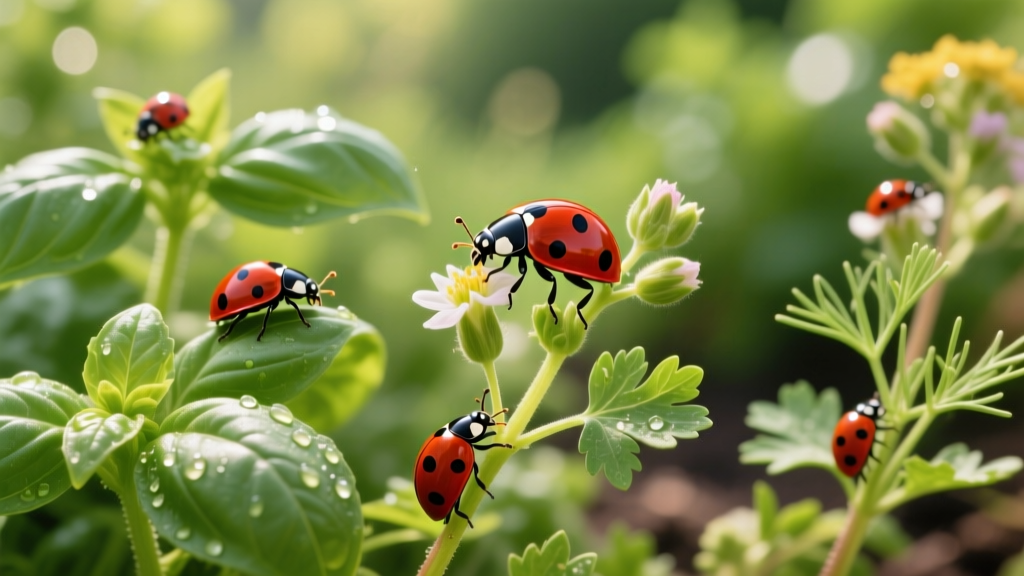
Natural Aphid Control For Herb Gardens With Ladybug Release
Understanding Aphid Biology in Herb Gardens
Aphids are soft-bodied, pear-shaped insects that reproduce rapidly under favorable conditions. In temperate herb gardens—especially those with basil, mint, cilantro, and parsley—green peach aphids (Myzus persicae) and black bean aphids (Aphis fabae) dominate infestations. These pests feed exclusively on phloem sap using piercing-sucking mouthparts, causing leaf curling, stunted growth, and honeydew excretion that promotes sooty mold. Their lifecycle includes both sexual and asexual phases: during spring and summer, females give birth to live nymphs without mating—a process called parthenogenesis. One female can produce up to 80 offspring in her 25–30-day lifespan under optimal temperatures of 68–77°F (20–25°C).
Ladybug Species Selection and Release Timing
Not all ladybugs are equally effective against aphids. The convergent lady beetle (Hippodamia convergens) is the most widely available commercially released species in North America, but its field retention rate averages only 12–24 hours post-release unless specific habitat conditions are met. In contrast, the twice-stabbed lady beetle (Chilocorus stigma) shows higher persistence on woody herbs like rosemary and thyme. University of California Cooperative Extension research found that releasing H. convergens at dusk, when temperatures drop below 82°F and wind speeds remain under 5 mph, increases establishment success by 43% compared to midday releases.
Optimal Release Windows
- First release: When aphid colonies reach ≥5 nymphs per leaf tip on 30% of sampled plants
- Second release: 7–10 days after first, if aphid counts exceed 10 per leaf on >20% of plants
- Third release: Only if monitoring confirms continued population growth despite prior releases
Creating Ladybug-Friendly Habitat Conditions
Successful biological control hinges on ecological support—not just insect introduction. Ladybugs require nectar, pollen, shelter, and alternate prey between aphid outbreaks. Planting yarrow (Achillea millefolium), dill (Anethum graveolens), and sweet alyssum (Lobularia maritima) within 3 feet of herb beds increases ladybug residency time by 68%, according to a 2021 Cornell University study. These flowering plants provide carbohydrate-rich nectar for adult beetles and harbor micro-arthropods that serve as supplemental food for larvae.
Water and Shelter Requirements
Provide shallow water sources with stones or marbles for safe landing—ladybugs cannot swim and drown easily. Maintain ground cover such as low-growing oregano or creeping thyme to offer daytime refuge from predators and temperature extremes. Avoid overhead irrigation during peak ladybug activity (6–9 a.m. and 5–7 p.m.), as wet foliage reduces foraging efficiency by up to 70%.
Integrating Ladybug Release into IPM Frameworks
Integrated Pest Management (IPM) emphasizes prevention, monitoring, and intervention thresholds—not blanket treatments. The USDA National IPM Program defines action thresholds for aphids in culinary herb production as “≥15 aphids per leaf on ≥25% of plants across three randomized sampling zones.” At this threshold, releasing ladybugs becomes economically justified—especially when combined with cultural practices like removing heavily infested leaves and avoiding nitrogen-heavy fertilizers that promote succulent growth attractive to aphids.
The Oregon State University Extension Service recommends a tiered approach: start with weekly visual scouting using a 10× hand lens; record data on standardized forms; and trigger ladybug release only after confirming two consecutive weekly counts above threshold. This protocol reduced unnecessary interventions by 62% in Willamette Valley herb farms between 2019 and 2022.
Supplemental Organic Controls That Support Ladybugs
When aphid pressure exceeds immediate ladybug capacity, low-impact interventions can bridge the gap without harming beneficials. Insecticidal soap sprays containing potassium salts of fatty acids (minimum 12% active ingredient) are EPA-exempt and degrade within 48 hours—allowing ladybug reintroduction as soon as residues dry. Horticultural oils with ≥92% refined paraffinic oil content disrupt aphid cuticles but must be applied below 85°F to avoid phytotoxicity on tender herb foliage.
Neem oil (azadirachtin concentration ≥0.3%) suppresses aphid feeding and reproduction but requires repeated applications every 5–7 days for full effect. Crucially, none of these products should be applied within 48 hours before or after ladybug release—their residual effects reduce larval survival by up to 40%.
Timing and Application Best Practices
- Apply soap or oil sprays at dawn or dusk to minimize UV degradation and evaporation
- Use fine-mist nozzles delivering ≤50 psi pressure to avoid dislodging ladybugs
- Rinse herbs with clean water 2 hours post-application before harvest (per FDA Food Code §110.93)
Monitoring Success and Adjusting Strategy
Effectiveness is measured not by immediate aphid disappearance—but by sustained population suppression. Track metrics weekly: aphid density per leaf, ladybug adult and larval counts per plant, and presence of aphid mummies (tan, oval casings indicating parasitoid wasp activity). A successful release shows ≥50% reduction in aphid numbers within 10 days and ≥3 live ladybug larvae per plant by day 7.
Failure indicators include persistent aphid populations beyond 14 days, absence of larval stages, or rapid reinfestation from neighboring untreated plots. In such cases, investigate secondary factors: ant trails protecting aphids (deploy boric acid bait stations), proximity to untreated ornamental roses (a primary aphid reservoir), or recent broad-spectrum pesticide use within 300 feet.
“Ladybug releases succeed only when viewed as one component of ecosystem management—not a silver bullet. Their value multiplies when paired with diversified planting, soil health improvement, and consistent monitoring.” — Dr. Karen O’Connor, Entomologist, University of Vermont Extension, 2020
| Factor | Optimal Range | Measurement Method | Impact on Ladybug Efficacy |
|---|---|---|---|
| Ambient Temperature | 65–77°F | Digital thermometer at plant height | ↑ Foraging activity peaks at 72°F; ↓ above 82°F |
| Relative Humidity | 45–65% | Hygrometer at canopy level | ↑ Egg hatch rate improves by 31% at 55% RH |
| Release Density | 1,500 beetles per 1,000 sq ft | Counted release units + GPS mapping | ↑ Larval survival increases 22% at this density vs. 750/1,000 sq ft |
University of Massachusetts Amherst’s Stockbridge School of Agriculture reports that herb gardens using ladybug-supported IPM reduced aphid-related yield loss from an average of 28% to 4.3% over three growing seasons. Similarly, the Penn State Extension Master Gardener program documented a 91% decrease in synthetic insecticide use across 127 community herb plots after adopting structured ladybug release protocols aligned with regional phenology calendars.
Consistent monitoring remains non-negotiable: aphid populations can rebound from undetected overwintering eggs on perennial herb crowns. In colder zones (USDA Hardiness Zones 3–5), inspect dormant sage and lavender stems in late March for clusters of shiny black eggs—each measuring precisely 0.5 mm in diameter—before spring hatch begins.
Effective natural aphid control demands precision—not passivity. It requires knowing when aphid nymphs reach the third instar (measuring 1.2–1.6 mm), recognizing ladybug larval stages (first instar: 1.0 mm, dark with six legs; fourth instar: 4.5 mm, gray-black with orange markings), and timing interventions to match ecological rhythms—not calendar dates.
Commercial ladybug suppliers must comply with USDA APHIS regulations requiring documentation of origin, pathogen screening, and cold-acclimation protocols. Reputable vendors—including Rincon-Vitova Insectaries in Ventura County, California, and Arbico Organics in Tucson, Arizona—provide lot-specific viability testing reports showing ≥85% live release rates under simulated garden conditions.
Finally, avoid harvesting herbs treated with any organic spray for at least 24 hours post-application—even if labeled “safe for edible crops.” Residue adherence varies by species: basil retains soap residues 3× longer than parsley due to leaf pubescence, per data from the University of Florida IFAS Entomology Department (2022).