Lawn Care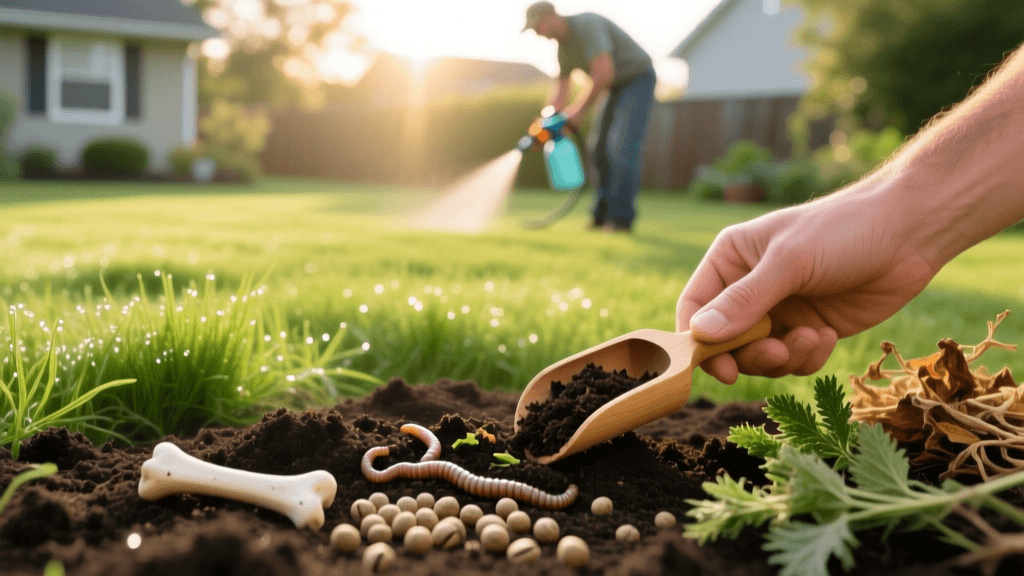
Sustainable Organic Lawn Fertilization And Soil Care
The Shift to Sustainable Lawn Care
For decades, the standard approach to lawn maintenance relied heavily on synthetic, petroleum-based fertilizers and chemical pesticides. While these products offer a quick flush of green, they often degrade the long-term health of the soil, harm local watersheds through nutrient runoff, and disrupt the delicate soil food web. Transitioning to eco-friendly organic lawn fertilization is not just a trend; it is a fundamental shift toward building a resilient, self-sustaining ecosystem in your backyard.
Organic lawn care focuses on feeding the soil rather than force-feeding the plant. By prioritizing soil biology, organic matter accumulation, and natural nutrient cycling, you can cultivate a deep-rooted, drought-tolerant lawn that naturally resists weeds, pests, and diseases. According to Rutgers University Cooperative Extension, organic lawn management significantly reduces environmental pollution while promoting a healthier turfgrass ecosystem over time.
Understanding the Soil Food Web
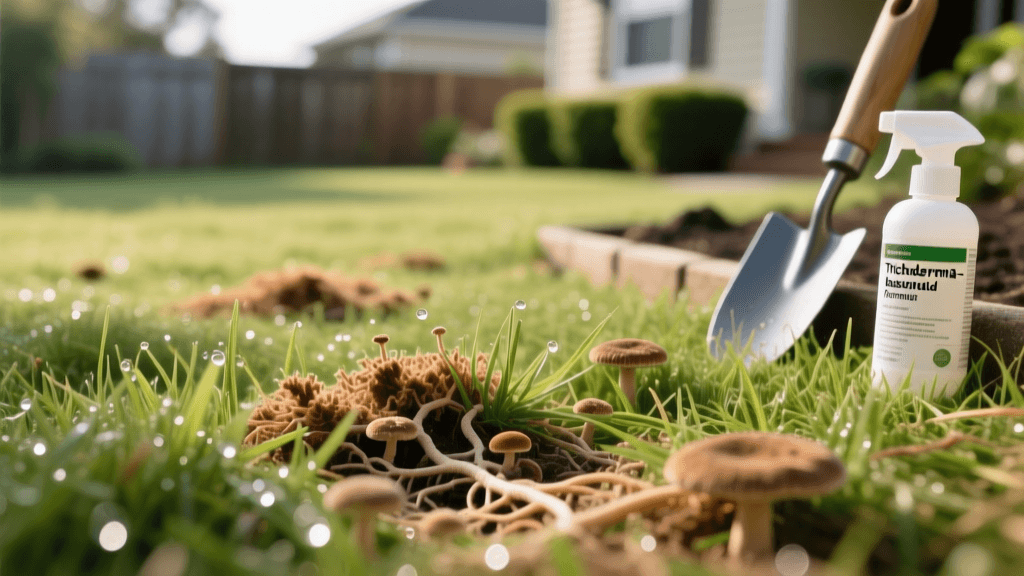
Before applying any organic amendments, it is crucial to understand the soil food web. In a chemically treated lawn, the soil is essentially sterile dirt acting as a sponge for synthetic salts. In an organic lawn, the soil is a living matrix teeming with bacteria, fungi, protozoa, and beneficial nematodes.
When you apply organic fertilizers like compost, alfalfa meal, or kelp, you are providing complex carbon and nutrient sources for these microorganisms. The microbes break down these materials and exude nutrients in a form that grass roots can easily absorb. Furthermore, symbiotic mycorrhizal fungi attach to grass roots, extending their reach and helping them mine water and phosphorus from deep within the soil profile. This biological partnership is the cornerstone of sustainable lawn care.
Step 1: Comprehensive Soil Testing
You cannot manage what you do not measure. Before purchasing organic amendments, send a soil sample to a reputable university extension or private agronomic lab. Do not rely on cheap, over-the-counter NPK test kits. You need a comprehensive test that measures:
- pH Level: Most turfgrasses thrive between 6.2 and 6.8. If your soil is too acidic, apply pelletized limestone. If it is too alkaline, use elemental sulfur.
- Organic Matter (OM) Percentage: Aim for a minimum of 3% to 5% organic matter. This is your soil's nutrient and water-holding reservoir.
- Cation Exchange Capacity (CEC): This indicates your soil's ability to hold onto nutrients. Clay soils have high CEC; sandy soils have low CEC and require more frequent, lighter organic feedings.
- Base Saturation: Look at the ratios of calcium, magnesium, and potassium to ensure proper soil structure and flocculation.
The University of Minnesota Extension emphasizes that adjusting soil pH and building organic matter are the most critical first steps before any organic fertilization program can succeed.
Step 2: Selecting OMRI-Listed Fertilizers
When shopping for products, look for the OMRI (Organic Materials Review Institute) seal to ensure the product is free from synthetic chemicals and heavy metal contaminants. Below is a comparison of the most effective organic lawn amendments, their nutrient profiles, and practical application details.
| Organic Product | N-P-K Ratio | Release Rate | Best Application & Timing | Approx. Cost per 1,000 sq ft |
|---|---|---|---|---|
| Composted Poultry Manure | 4-3-3 | Slow (2-6 weeks) | Early Fall & Spring. Great for overall soil building. | $12 - $18 |
| Corn Gluten Meal | 9-0-0 | Moderate (1-3 weeks) | Early Spring. Acts as a natural pre-emergent weed inhibitor. | $25 - $35 |
| Liquid Kelp / Seaweed | 0-0-1 | Immediate (Foliar/Soil) | Mid-Summer. Provides trace minerals and drought/heat stress relief. | $8 - $12 |
| Alfalfa Meal | 3-1-2 | Moderate (2-4 weeks) | Spring/Fall. Contains triacontanol, a natural growth hormone. | $15 - $20 |
Step 3: Core Aeration and Compost Topdressing
Fertilizer alone cannot fix compacted soil. If your lawn receives heavy foot traffic or has a high clay content, water and organic nutrients will simply run off the surface. Core aeration removes small plugs of soil, relieving compaction and allowing oxygen to reach the root zone.
Immediately following aeration, apply a compost topdressing. This is the single most effective practice for building soil organic matter.
- Measurement: Apply a 1/4 to 1/3 inch layer of finely screened, high-quality organic compost. This equates to roughly 1 cubic yard of compost per 1,000 square feet.
- Method: Use a leveling rake or the back of a push broom to work the compost down into the aeration holes and the turf canopy.
- Timing: Early fall for cool-season grasses (Kentucky Bluegrass, Fescues) and late spring for warm-season grasses (Bermuda, Zoysia).
As outlined by the Environmental Protection Agency (EPA), adding compost to turf not only suppresses plant pathogens but also drastically improves the soil's water retention capacity, reducing irrigation needs by up to 30% during peak summer months.
Step 4: Brewing Aerated Compost Tea (ACT)
For an extra biological boost, consider brewing Aerated Compost Tea. ACT extracts beneficial microbes from solid compost into a liquid suspension that can be sprayed directly onto the lawn. This inoculates the soil and turf canopy with predatory nematodes and beneficial bacteria that outcompete fungal pathogens like dollar spot and brown patch.
Simple ACT Recipe:
- Fill a 5-gallon bucket with non-chlorinated water (let tap water sit for 24 hours to off-gas chlorine).
- Add 2 cups of high-quality vermicompost (worm castings) in a porous mesh bag.
- Add 1 tablespoon of unsulfured blackstrap molasses to feed the bacterial bloom.
- Attach an aquarium air pump and bubble vigorously for 24 to 36 hours.
- Apply immediately as a soil drench using a watering can or a backpack sprayer with the nozzle filter removed.
Step 5: Eco-Friendly Weed and Pest Management
A thick, organically managed lawn is the best defense against weeds. However, when intervention is needed, sustainable methods are highly effective.
- Weed Control: Instead of synthetic herbicides like 2,4-D, use Corn Gluten Meal in early spring (when soil temperatures hit 55°F) to inhibit crabgrass and dandelion seeds from germinating. For broadleaf weeds, horticultural vinegar (20% acetic acid) or iron-based herbicides (FeHEDTA) offer targeted, eco-friendly burn-down without lingering soil toxicity.
- Grub Control: Skip the neonicotinoids. Apply beneficial nematodes (Heterorhabditis bacteriophora) in late summer when grubs are young and actively feeding near the surface. Nematodes are microscopic worms that seek out and destroy grubs naturally, leaving earthworms and pollinators completely unharmed.
- Overseeding with Endophytes: When overseeding bare patches, choose turf-type tall fescues or perennial ryegrasses enhanced with natural endophytes. These beneficial fungi live inside the grass blades and produce alkaloids that naturally repel surface-feeding insects like chinch bugs and sod webworms.
The Economics of Organic Lawn Care
A common misconception is that organic lawn care is prohibitively expensive. While the upfront cost of OMRI-listed fertilizers and compost topdressing may be 20% to 40% higher than synthetic alternatives, the long-term economics tell a different story. By building soil organic matter, your lawn's water-holding capacity increases, significantly lowering your summer water bills. Furthermore, a biologically active soil naturally suppresses pests and diseases, eliminating the need for costly chemical curative treatments. Over a three-to-five-year transition period, the cost of maintaining an organic lawn often equalizes with, or drops below, the cost of a synthetic chemical program, all while providing a safer environment for children, pets, and local wildlife.