Home & Garden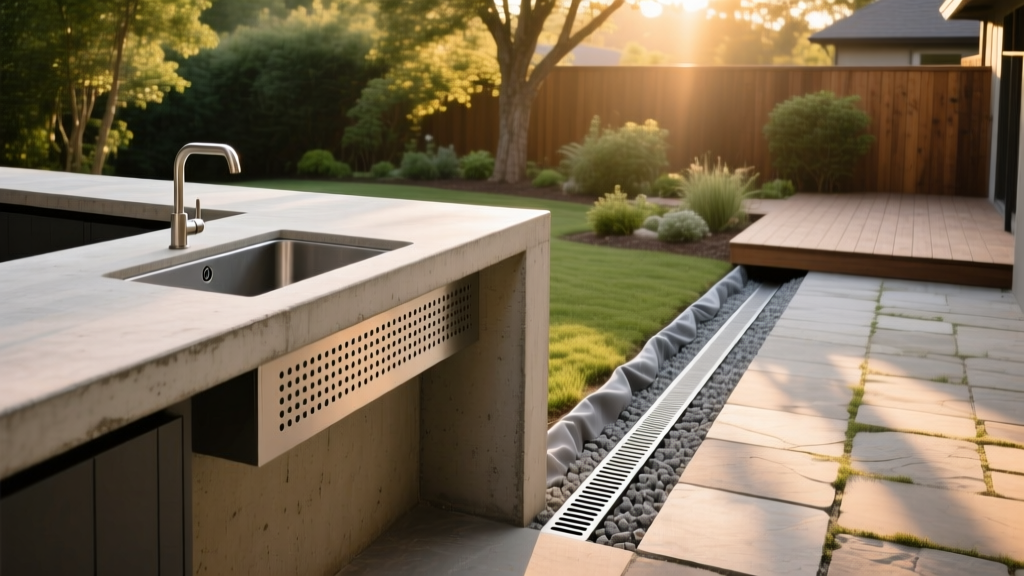
2026 Guide: French Drain for Outdoor Bar Cart Sinks
Emily WatsonPublished
The 2026 Outdoor Bar Cart: Weatherproof Storage and Integrated Sinks
The landscape of outdoor entertaining has evolved dramatically. In 2026, the standard rolling metal cart has been replaced by heavy-duty, weatherproof outdoor bar stations. Modern homeowners are investing in high-density polyethylene (HDPE) and marine-grade polymer bar carts that feature lockable, weatherproof storage for expensive spirits, delicate glassware, and bartending tools. More importantly, these premium setups now routinely include integrated drop-in stainless steel sinks. Having a dedicated sink right where you are mixing cocktails, rinsing fresh fruit, and dumping melted ice is the ultimate luxury for garden-to-table hosting and weekend patio gatherings.
However, introducing a plumbing fixture to your outdoor living space introduces a significant logistical challenge: wastewater management. When you are hosting a party, an outdoor bar sink generates a surprising volume of gray water. From dumping buckets of ice to rinsing shakers and washing hands, the water has to go somewhere. Simply letting it drain onto your lawn or patio pavers is a recipe for disaster, leading to soil erosion, muddy entertaining areas, mosquito breeding grounds, and potential damage to your home's foundation.
The Gray Water Challenge: Why a French Drain is Essential
Gray water from an outdoor bar sink typically contains organic matter (fruit pulp, melted ice, splash from drinks) but lacks the heavy biological load of bathroom wastewater. While it is relatively clean, discharging it directly onto the surface of your yard violates many local landscaping best practices and can devastate your turfgrass. According to the Environmental Protection Agency's guidelines on subsurface drainage and dry wells, managing point-source runoff below the surface is critical for preventing soil saturation, reducing erosion, and protecting local waterways from nutrient runoff.
This is where a dedicated French drain system comes into play. Unlike a traditional dry well that simply holds water in a single pit, a French drain utilizes a perforated pipe surrounded by gravel to distribute the gray water over a wider subsurface area. This allows the soil's natural microbiome to filter the water safely back into the water table. By installing a French drain specifically routed from your outdoor bar cart's sink P-trap, you ensure that your patio remains dry, your lawn remains healthy, and your outdoor kitchen setup remains fully functional throughout the 2026 entertaining season.
Planning Your Bar Cart French Drain System
Before you pick up a shovel, proper planning is essential. A French drain for a bar sink does not need to be as massive as one designed to protect a house foundation from a hillside spring, but it does require precise grading. You will need to identify a drainage path that moves water away from your patio, outdoor kitchen island, and your home's foundation.
According to InterNACHI's standards on French drain installation, a minimum slope of 1 percent (a 1-inch drop for every 8 feet of pipe) is required to ensure gravity moves the water efficiently through the perforated pipe. You must also consider the soil composition in your yard. Clay-heavy soils drain slowly and will require a longer trench or a wider gravel bed to accommodate the sudden influx of water when a bucket of ice is dumped into the bar sink. Sandy soils, conversely, will percolate water rapidly, allowing for a more compact drain footprint.
Step-by-Step Installation Guide
Installing a French drain for your outdoor bar cart sink is a highly rewarding DIY project that can be completed in a single weekend. Here is the step-by-step process to ensure a professional-grade result.
Step 1: Digging the Trench
Begin by marking your trench line using landscaping spray paint. The trench should start directly beneath the planned location of your bar cart sink and extend to a safe discharge area or a designated permeable zone in your garden. For a standard outdoor bar sink, dig a trench that is 12 to 18 inches deep and 6 to 8 inches wide. Ensure you maintain that critical 1 percent downward slope throughout the entire length of the trench. Use a line level to verify the grade before proceeding.
Step 2: Lining the Trench with Landscape Fabric
Once the trench is dug and graded, line the entire trench with a high-quality, non-woven geotextile landscape fabric. This fabric is the unsung hero of the French drain; it prevents fine soil particles and silt from migrating into the gravel and clogging the perforated pipe over time. Leave at least 6 inches of excess fabric hanging over the edges of the trench so you can wrap it over the top of the gravel later, creating a complete protective envelope.
Step 3: Adding the Gravel Base and Perforated Pipe
Pour a 2-inch base layer of 3/4-inch washed crushed stone into the trench. Avoid using pea gravel, as its rounded edges do not interlock and can shift, altering the slope of your pipe. Next, lay a 4-inch SDR 35 or Schedule 40 perforated PVC pipe on top of the gravel base. Ensure the perforations (holes) are facing downward. This counterintuitive placement actually allows water to enter the pipe from the bottom up, preventing sediment from washing directly into the holes and causing clogs.
Step 4: Connecting the Sink P-Trap
Your outdoor bar cart sink must be equipped with a standard P-trap to prevent sewer gases and outdoor odors from traveling back up the drain. Connect a solid piece of PVC pipe from the P-trap outlet to the perforated French drain pipe. Use a PVC wye or a simple coupling to join the solid sink drain line to the perforated distribution line. Seal all connections with exterior-grade PVC primer and cement to prevent leaks beneath the patio surface.
Step 5: Backfilling and Concealing
Cover the perforated pipe with another 4 to 6 inches of 3/4-inch washed stone. Fold the excess landscape fabric over the top of the gravel, overlapping the seams to create a sealed bundle. Finally, cover the wrapped drain with a few inches of native topsoil and lay sod or decorative river rock over the top to seamlessly blend the drainage system into your 2026 landscape design.
2026 Material Cost Breakdown
Budgeting for outdoor plumbing and drainage projects requires an understanding of current material costs. Below is an estimated breakdown for a standard 20-foot French drain installation tailored for an outdoor bar sink setup in 2026.
| Material | Quantity Needed | Estimated 2026 Cost |
|---|---|---|
| 4-inch Perforated PVC Pipe (10ft sections) | 2 sections | $35.00 |
| Solid PVC Pipe & Fittings (P-Trap, Couplings) | 1 kit | $28.00 |
| Non-Woven Geotextile Landscape Fabric | 1 roll (50 sq ft) | $45.00 |
| 3/4-inch Washed Crushed Stone | 0.5 cubic yards | $60.00 |
| PVC Primer & Cement | 1 set | $12.00 |
| Total Estimated Material Cost | $180.00 |
Note: Labor costs are not included in this estimate, as this guide assumes a DIY installation. If you hire a professional landscaping contractor in 2026, expect to add between $400 and $800 for labor, depending on local rates and soil conditions.
Maintenance and Winterizing Your Outdoor Bar Drain
To keep your French drain functioning flawlessly, you must practice proper sink etiquette. Never pour grease, oils, or heavy dairy products down the outdoor bar sink. These substances will solidify in the P-trap and the perforated pipe, creating a waterproof barrier that will cause the drain to back up. Keep a mesh strainer in the sink basin to catch fruit pulp, cocktail garnishes, and ice chunks before they enter the plumbing system.
Winterization is equally critical, especially if you live in a climate where temperatures drop below freezing. In late autumn, before the first hard freeze, you must completely drain the P-trap and the solid PVC line connecting the sink to the French drain. Use a wet/dry shop vacuum to suck out any standing water in the trap, or install a specialized outdoor plumbing blow-out valve that allows you to clear the lines with an air compressor. While the buried French drain itself will naturally percolate any residual moisture, the solid pipes above the frost line are highly susceptible to cracking if water freezes inside them.
Conclusion
Upgrading your patio with a weatherproof outdoor bar cart and an integrated sink is one of the best investments you can make for your home's outdoor living space in 2026. However, the luxury of outdoor plumbing must be matched with responsible water management. By taking the time to install a dedicated French drain system, you protect your landscaping, preserve your hardscaping, and ensure that your garden-to-table parties flow as smoothly as the cocktails you are serving. Grab your shovel, measure your slope, and build a drainage solution that will last for decades.
