Home & Garden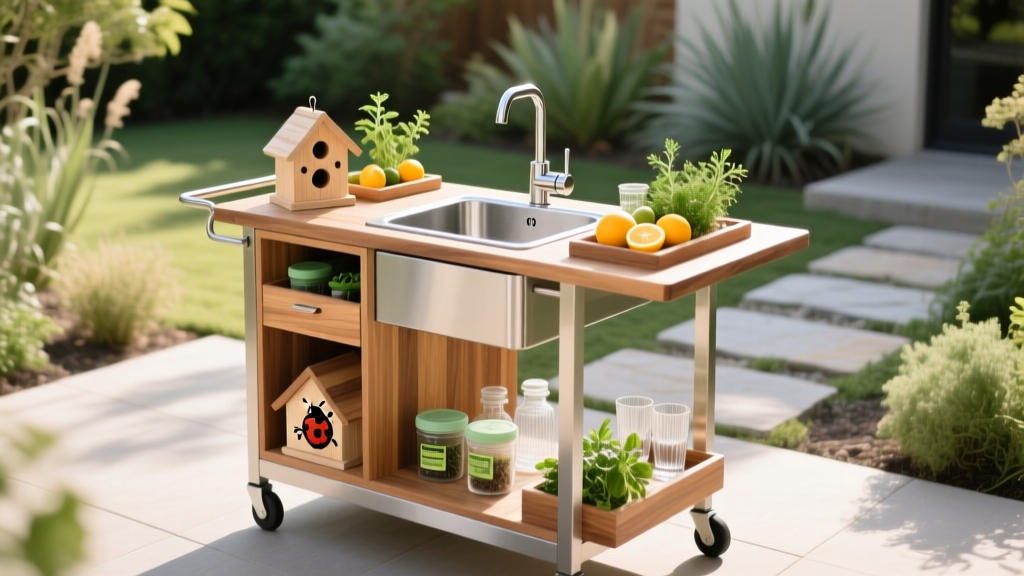
Best Outdoor Bio-Control Bar Cart & Sink Setup 2026
James MillerPublished
The Intersection of Outdoor Entertaining and Biological Pest Control
In 2026, the boundary between high-end outdoor entertaining and serious, science-backed organic gardening has completely dissolved. The modern home gardener no longer relegates pest management to a dusty shed or a dark corner of the garage. Instead, the ultimate garden-to-table lifestyle demands a mobile, sophisticated command center: an outdoor bar cart equipped with a built-in sink and weatherproof storage. While traditionally used for mixing cocktails and serving guests, a fully weatherproofed outdoor prep cart is the perfect mobile station for managing beneficial insects, mixing organic bio-pesticides, and prepping freshly harvested herbs. By integrating bio-control practices into your outdoor living space, you create a seamless workflow that protects your garden's ecosystem while elevating your backyard hospitality.
Why Weatherproof Storage and a Built-In Sink Are Non-Negotiable
Transitioning to biological pest control requires a shift in how you handle, store, and apply your garden amendments. Unlike synthetic chemicals that can sit on a shelf for years, bio-control agents are often living organisms or delicate botanical compounds that demand specific environmental conditions.
Protecting Live Bio-Control Agents from UV and Heat
Beneficial insects, such as predatory mites, lacewings, and Trichogramma wasps, are highly sensitive to temperature fluctuations and ultraviolet light. Storing insect cards or live larvae in a standard open-air bar cart will result in total mortality before they ever reach your plants. A weatherproof cart with UV-blocking, insulated cabinetry ensures that your biological agents remain viable until the exact moment of release. Furthermore, organic botanical sprays like Bacillus thuringiensis (Bt) and cold-pressed neem oil degrade rapidly when exposed to direct sunlight. According to the Environmental Protection Agency (EPA), proper storage of biopesticides is critical to maintaining their efficacy and preventing the breakdown of active microbial spores. A weatherproof, opaque storage compartment on your outdoor cart solves this problem elegantly.
The Utility of an Integrated Outdoor Sink
Handling sticky horticultural oils, insecticidal soaps, and organic emulsifiers requires immediate cleanup. An integrated outdoor sink with a dedicated garden hose hookup allows you to wash your hands, rinse application tools, and clean harvested produce without tracking sticky residues or soil into your home kitchen. The sink also serves as a vital mixing station. Emulsifying neem oil or diluting liquid kelp fertilizers requires precise water measurements and vigorous agitation, which is far easier to accomplish over a deep, weatherproof basin than on a patio table.
Top Weatherproof Bar Cart Configurations for 2026
When selecting a cart for bio-control and outdoor prep, durability is paramount. You need materials that resist rust, UV degradation, and moisture intrusion. Below is a comparison of the top outdoor cart configurations favored by organic gardeners this year.
| Cart Configuration | Material | Key Bio-Control Feature | Estimated 2026 Cost |
|---|---|---|---|
| Keter Pacific Prep Station | UV-Protected HDPE Resin | Watertight lower cabinet for nematode coolers | $350 - $450 |
| Gardener's Supply Mobile Potting Sink | Powder-Coated Steel & Acacia | Deep integrated basin for washing roots and tools | $400 - $550 |
| Custom 304 Stainless Steel Bar Cart | Marine-Grade 304 Stainless | Non-porous surfaces for sterile botanical mixing | $800 - $1,200 |
For the dedicated bio-control practitioner, the Custom 304 Stainless Steel Bar Cart is the gold standard in 2026. Stainless steel is non-porous, meaning it will not absorb the strong odors of fish emulsion or the sticky residues of horticultural oils, making it safe to transition from mixing organic pesticides to muddling garden-fresh mint for mojitos in a matter of minutes.
How to Organize Your Bio-Control Arsenal
To maximize efficiency, your outdoor bar cart should be organized into distinct zones. Treat the cart as a mobile laboratory and prep station.
- Top Drawer (The Release Zone): Store soft-bristle paintbrushes for gently relocating caterpillars, tweezers for pest removal, and a digital magnifying loupe for inspecting leaves for spider mites or aphid colonies. Keep your pheromone traps and sticky monitoring cards here.
- Middle Drawer (The Chemistry Lab): Dedicate this space to your organic liquid concentrates. Store cold-pressed neem oil, insecticidal soaps, and liquid silica. Include a set of glass measuring beakers and a battery-operated milk frother, which is a popular 2026 hack for perfectly emulsifying small batches of oil and water.
- Lower Weatherproof Cabinet (The Incubator): This is where you store a small, insulated cooler pack alongside your beneficial nematodes (such as Steinernema feltiae for fungus gnat control). The weatherproof doors shield the cooler from direct sun, extending the lifespan of the live nematodes.
- Side Hooks and Racks: Hang your 1-gallon and 2-gallon pump sprayers here. Ensure they are thoroughly rinsed after every use to prevent the nozzles from clogging with dried botanical oils.
Mixing Botanical Sprays at the Bar Cart
One of the greatest advantages of an outdoor bar cart with a sink is the ability to mix fresh botanical sprays on demand. The University of California Integrated Pest Management (UC IPM) program emphasizes that timing and proper dilution are critical when applying natural enemies and organic sprays to avoid harming beneficial insect populations. Using your cart's sink, you can draw fresh, ambient-temperature water directly from the garden hose. Cold water straight from a deep well can shock delicate microbial sprays, while water left sitting in a hot hose can kill beneficial bacteria. The sink allows you to flush the hose line first, ensuring the perfect water temperature for mixing your Bt or spinosad solutions right before application.
Garden-to-Table: Muddling Herbs That Attract Beneficials
The 'bar' aspect of the outdoor bar cart shines when you integrate it with your garden-to-table planting strategy. Many of the best herbs for crafting artisanal cocktails and mocktails are also powerhouse plants for attracting beneficial insects. The Xerces Society for Invertebrate Conservation highlights that plants in the Apiaceae (carrot) and Lamiaceae (mint) families provide essential nectar and pollen for parasitic wasps, hoverflies, and predatory beetles.
Use your outdoor sink to wash freshly harvested sprigs of dill, cilantro, fennel, and mint. Muddle these herbs directly on the cart's prep surface for summer beverages. By planting these herbs in large containers flanking your cart, you create a dual-purpose zone: a continuous supply of fresh cocktail garnishes and a permanent habitat for the very insects that protect your vegetable garden. Allow a few of the dill and cilantro plants to bolt and flower right next to the cart; the umbrella-shaped blooms are irresistible to predatory insects.
Seasonal Maintenance and Winterization
To ensure your bio-control bar cart survives the elements and remains a sanitary space for both gardening and entertaining, seasonal maintenance is required. In late autumn, drain the integrated sink lines completely to prevent freezing and cracking. Remove all liquid botanical concentrates and store them in a climate-controlled indoor environment, as freezing temperatures will ruin the emulsion of neem oil and kill live microbial spores. Wipe down all stainless steel or resin surfaces with a mild vinegar solution to remove hard water stains and organic buildup. By treating your outdoor bar cart as a vital piece of bio-control infrastructure, you bridge the gap between sustainable gardening and luxury outdoor living, ensuring your landscape thrives beautifully in 2026 and beyond.
