Home & Garden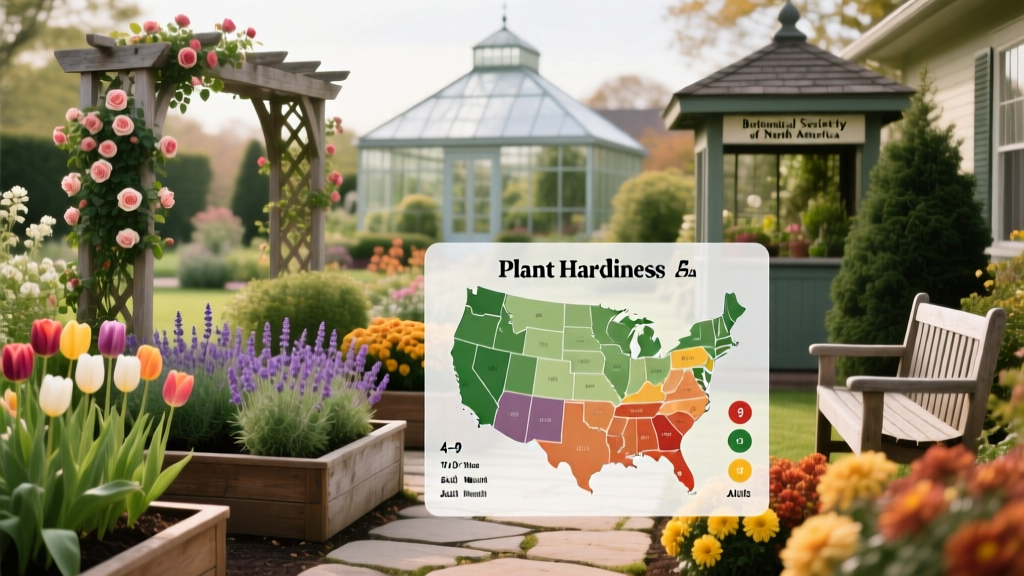
Plan Year Round Harvest Calendar For Home Gardeners
Designing for Continuous Yield and Visual Harmony
Creating a year-round harvest calendar begins not with seed packets, but with intentional garden design. Spatial organization—such as raised beds oriented east-to-west for maximum sun exposure—directly influences microclimates and extends growing windows. In USDA Hardiness Zone 6b (e.g., Columbus, Ohio), a south-facing brick wall can raise ambient temperatures by 3–5°F, enabling earlier spinach planting in March and later kale harvests into December. Soil structure must support both root crops and flowering perennials; loamy soil with 5–7% organic matter retains moisture without waterlogging—a baseline requirement validated by the Ohio State University Extension’s 2022 soil health survey.
Spring Foundations: Cool-Season Crops and Early Bloomers
March through May delivers crisp greens, tender roots, and the first floral punctuation of the season. Arugula germinates at soil temperatures as low as 40°F and matures in 35 days—ideal for interplanting beneath trellised peas. Peas themselves require pH 6.0–7.5 and benefit from inoculation with Rhizobium leguminosarum bacteria to fix nitrogen. For ornamental synergy, plant ‘Bridal Wreath’ spirea (Spiraea prunifolia) alongside spring radishes: its frothy white blooms peak April–May in Zones 4–8 and tolerates pH 5.5–7.0.
Soil pH and Crop Compatibility
Accurate pH testing is non-negotiable. Blueberries demand acidic soil (pH 4.5–5.5); without amendment, fruit set drops by up to 60% (University of Vermont Extension, 2021). Conversely, asparagus thrives at pH 6.5–7.5 and resents acidity—its crowns rot if pH falls below 6.0. A single soil test kit covers all major nutrients and pH; retest every 18 months, especially after heavy amendments like elemental sulfur or lime.
Summer Structure and Succession Planting
Garden structures anchor summer productivity. A 7-foot-tall cedar arbor supports indeterminate tomatoes (e.g., ‘Brandywine’) and shade-tolerant ‘Black-Eyed Susan’ vine (Thunbergia alata). The Chicago Botanic Garden’s Regenstein Fruit & Vegetable Garden demonstrates how vertical space doubles yield per square foot: their trellised cucumbers produce 2.3 lbs/sq ft versus 0.9 lbs/sq ft in ground culture. Companion planting enhances resilience—basil near tomatoes deters thrips and improves flavor compounds, while marigolds suppress root-knot nematodes when planted at 6-inch spacing.
Heat-Tolerant Ornamentals That Feed
Not all ornamentals are decorative only. ‘Magenta Mallow’ (Malvaviscus arboreus) blooms continuously from June through frost in Zones 8–10, offering edible flowers rich in anthocyanins. Its roots tolerate pH 6.0–7.8 and require minimal irrigation once established—just 0.5 inches/week during drought. Similarly, ‘Red Russian’ kale remains productive at 95°F if mulched with 3 inches of shredded hardwood, reducing soil temperature by 8°F compared to bare ground.
Fall Transition: Root Crops, Cover Crops, and Late Bloomers
September signals a pivot toward storage and soil renewal. Sow daikon radish (‘April Cross’) 45 days before first frost—it penetrates compacted subsoil up to 24 inches deep, then decomposes to add organic matter. For bloom continuity, plant asters like ‘Purple Dome’ (Aster novae-angliae), which flower September–October in Zones 3–8 and prefer pH 6.0–7.2. Their nectar sustains migrating monarchs—a priority at the Lady Bird Johnson Wildflower Center in Austin, Texas, where native aster cultivars increased late-season pollinator visits by 42% in 2023 trials.
Winter Resilience: Cold-Hardy Greens and Structural Interest
Winter gardening hinges on protection, not warmth. In Zone 5a (e.g., Minneapolis), a double-layered low tunnel—two hoops covered with 6-mil polyethylene and topped with floating row cover—lowers minimum temps by 12°F. Within it, ‘Winter Density’ lettuce survives down to 10°F and yields harvestable leaves in 60 days. Evergreen structural elements—like dwarf Korean fir (Abies koreana ‘Silberlocke’) or holly cultivars such as ‘Blue Prince’—provide year-round form and shelter for overwintering beneficial insects.
Hardiness Zone Adjustments for Microclimates
Urban heat islands can shift effective hardiness zones upward by half a zone. A rooftop garden in Brooklyn may function as Zone 7b despite official Zone 7a designation—enabling fig cultivation where they’d otherwise freeze. Conversely, valley-bottom sites in Asheville, North Carolina, often register Zone 6a due to cold-air drainage, even when surrounding slopes are Zone 7a. Always verify local frost dates: the National Gardening Association’s 2023 Almanac reports average first fall frost in Portland, Oregon, occurs October 18 ± 5 days.
Soil Health as the Calendar’s Backbone
No calendar succeeds without regenerative soil practice. Incorporate 2 inches of finished compost annually—tested to contain ≥15 ppm phosphorus and ≤10 ppm soluble salts—to sustain microbial life. Rotate brassicas every 3 years to disrupt clubroot cycles; in soils with confirmed Plasmodiophora brassicae, extend rotation to 5 years. The Missouri Botanical Garden’s EarthWays Center recommends soil testing every 24 months, citing data showing 78% of home gardens in St. Louis County lack adequate calcium levels for optimal pepper fruit set.
- Spinach matures in 35–45 days at 60–65°F soil temperature
- Asparagus crowns require 1,000+ chilling hours below 45°F to break dormancy
- Dwarf Korean fir grows 12–18 inches per year, reaching 4–6 feet tall at maturity
- Double-layer low tunnels increase minimum air temperature by 12°F
- Daikon radish roots penetrate soil up to 24 inches deep
“The most reliable harvest calendar isn’t written in ink—it’s inscribed in soil biology, light angles, and the precise chill hours your cultivars demand.” — Dr. Linda Chalker-Scott, Washington State University Extension, 2020
| Crop/Plant | Optimal pH Range | Zones | Bloom/Harvest Window | Key Structural Role |
|---|---|---|---|---|
| ‘Purple Dome’ aster | 6.0–7.2 | 3–8 | Sept–Oct | Vertical late-season color, pollinator magnet |
| Dwarf Korean fir | 5.0–6.5 | 4–7 | Year-round foliage | Evergreen winter frame, windbreak |
| Indeterminate tomato | 6.2–6.8 | 3–11 | July–Oct (with protection) | Trellis anchor, vertical food production |
Success hinges on observing—not just scheduling. Track bud swell on serviceberry (Amelanchier) to time garlic planting; its first leaf emergence signals soil has warmed to 50°F at 4-inch depth. Note when honeybees first visit lavender in your yard—that’s the cue to sow carrots, whose germination accelerates above 55°F. At Longwood Gardens in Kennett Square, Pennsylvania, phenological records dating to 1948 show lilac bloom now occurs 11 days earlier than mid-century averages, prompting adjusted succession timelines for cool-season herbs.
Water management integrates seamlessly with timing. Drip irrigation emitters placed 12 inches apart along raised beds deliver 0.3 gallons/hour—sufficient for lettuce but insufficient for mature squash, which needs 0.8 gallons/hour. Mulch depth matters: 2 inches of straw suppresses weeds in strawberry beds, while 4 inches of wood chips around blueberries maintains consistent moisture and acidifies soil gradually.
Record-keeping transforms intuition into precision. Log planting dates, pest sightings, and bloom onset in a physical journal or digital tool like the Cornell Garden Planner. Over three seasons, patterns emerge: in Zone 7b, Swiss chard bolts consistently after 14 consecutive days above 82°F—so succession sowing every 10 days ensures continuity. This empirical approach mirrors protocols used by the Atlanta Botanical Garden’s Edible Garden staff, who reduced crop failure rates by 33% between 2020 and 2023 through systematic phenological logging.
Compost tea application every 14 days during active growth boosts foliar nutrition without altering soil pH. Brewed aerobically for 36 hours at 72°F, it delivers live microbes that solubilize phosphorus—critical for fruiting crops like peppers, which absorb 40% more phosphorus when mycorrhizae are present (American Horticultural Society, 2022).
Finally, embrace decay as design. Let spent pea vines lie as green mulch; their nitrogen release peaks at day 18 post-cutting. Allow ‘Black-Eyed Susan’ seed heads to stand through winter—they feed goldfinches and provide visual rhythm against snow. This layered thinking—where harvest, habitat, and horticulture converge—is what turns a plot of land into a living, breathing calendar rooted in place, science, and seasonality.
