Lawn Care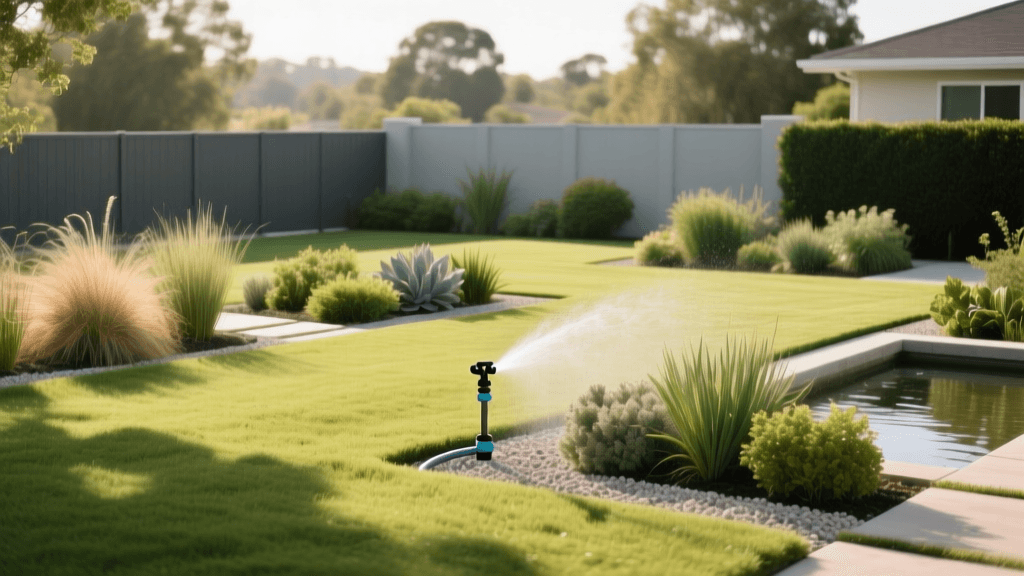
Planning Your Lawn Layout: Hydrozoning for Efficient Irrigation
Designing Your Lawn for Efficiency and Aesthetics
When most homeowners think about lawn care, they picture the weekend chore of mowing, the seasonal task of aerating, or the ongoing battle against weeds. However, the foundation of a healthy, low-maintenance lawn is actually laid long before the first seed is sown or the first sod is rolled out. Strategic lawn planning and design dictate how much time, water, and money you will spend on lawn care routines for years to come. By approaching your yard with a design-first mindset, you can create a landscape that is not only visually stunning but also inherently easier to maintain.
One of the most effective design strategies for sustainable lawn care is hydrozoning. Hydrozoning is the practice of clustering plants and turfgrass areas with similar water, sunlight, and maintenance requirements together. This prevents the common mistake of overwatering drought-tolerant garden beds just to keep a small patch of thirsty grass alive in the corner of the yard. According to the EPA WaterSense program, proper landscape planning and hydrozoning can reduce outdoor water use by 20 to 50 percent, saving homeowners hundreds of dollars annually while preserving local water resources.
Mapping Your Yard: The Four Hydrozones
To effectively plan your lawn layout, you must divide your property into distinct hydrozones. The Colorado State University Extension recommends breaking your landscape into four primary zones based on water needs and foot traffic. This structured approach ensures that your irrigation system and fertilization schedules are perfectly calibrated to the specific needs of each area.
| Hydrozone | Traffic Level | Water Needs | Recommended Turf / Groundcover | Maintenance Routine |
|---|---|---|---|---|
| Zone 1: Primary | High (Play areas, pathways) | High (1 to 1.5 inches/week) | Kentucky Bluegrass, Bermudagrass, Zoysia | Weekly mowing, bi-annual aeration, regular 3-1-2 NPK fertilization |
| Zone 2: Secondary | Moderate (Visual areas, light walking) | Moderate (0.75 to 1 inch/week) | Tall Fescue, Fine Fescue blends, Perennial Ryegrass | Weekly mowing, annual overseeding, moderate fertilization |
| Zone 3: Minimal | Low (Borders, slopes, shaded edges) | Low (0.5 inches/week or rainfall only) | Microclover, Creeping Thyme, Native Grass mixes | Infrequent mowing (monthly), minimal to no fertilization |
| Zone 4: Natural | None (Mulch beds, hardscapes, rain gardens) | None (Relies on natural rainfall) | Xeriscaping, decorative gravel, native shrubs | Annual mulch refresh, seasonal pruning, weed barrier maintenance |
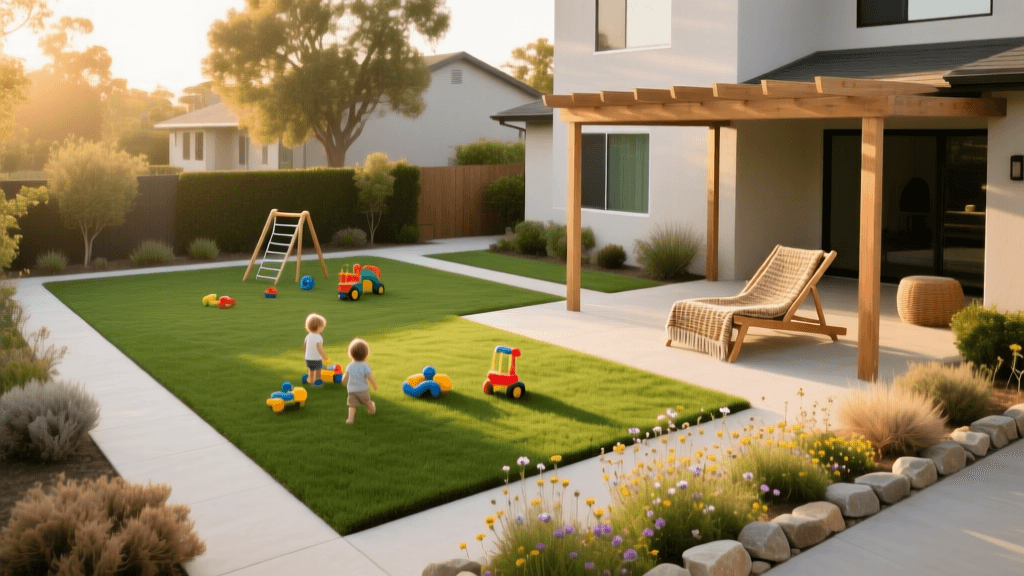
By mapping your yard this way, you can restrict high-maintenance turf (Zone 1) to areas where children or pets actually play, while transitioning the outer edges of your property into low-maintenance Zone 3 or Zone 4 areas. This drastically reduces the square footage of lawn that requires intensive mowing, edging, and chemical treatments.
Strategic Turf Selection for Each Zone
Choosing the right grass seed or sod is arguably the most critical decision in your lawn design. The University of California Integrated Pest Management (UC IPM) program emphasizes that selecting turfgrass adapted to your local microclimate reduces the need for pesticides, excessive irrigation, and heavy fertilization.
Cool-Season vs. Warm-Season Grasses
If you live in the northern two-thirds of the United States, cool-season grasses like Kentucky Bluegrass and Tall Fescue are your primary options for Zones 1 and 2. These grasses thrive in temperatures between 60°F and 75°F but require significant irrigation during the heat of summer to prevent dormancy. Conversely, homeowners in the southern U.S. should design their primary zones using warm-season grasses like Bermudagrass or Zoysia, which are highly drought-tolerant and heat-resistant, though they will turn brown during winter dormancy.
Embracing Eco-Lawns for Zone 3
For the periphery of your yard, consider designing an 'eco-lawn.' Eco-lawns utilize fine fescues mixed with microclover. This design choice naturally fixes nitrogen in the soil (eliminating the need for synthetic fertilizers), stays green during minor droughts, and only requires mowing once every three to four weeks. Planning for an eco-lawn in low-traffic zones creates a beautiful, meadow-like transition between your manicured primary lawn and your natural garden beds.
Designing for Mowing and Edging Efficiency
A beautifully planned lawn should be easy to maintain. One of the biggest time-wasters in lawn care is string trimming around obstacles, trees, and garden beds. You can design these maintenance headaches out of your landscape before you even plant.
- Install Mowing Strips: Create a flush, 18-to-24-inch wide border of pavers, flagstone, or stamped concrete around all garden beds and tree rings. This allows you to ride or walk your mower directly over the edge, eliminating the need for a string trimmer entirely. The cost of installing a basic concrete paver mowing strip averages $4 to $8 per linear foot, a worthwhile investment that saves hours of labor each season.
- Simplify Bed Curves: Avoid sharp, acute angles or overly complex, wavy garden bed borders. Design your beds using long, sweeping, gentle curves. This allows a mower to turn smoothly without tearing up the turf or requiring manual edging.
- Consolidate Trees and Shrubs: Instead of planting isolated trees in the middle of the lawn (which creates 'islands' you must navigate around), group trees and shrubs together into unified, mulched Zone 4 beds. This creates a cleaner look and a continuous mowing path.
Planning Your Irrigation System Layout
Your hydrozone map must directly dictate your irrigation design. A common and costly mistake is placing high-water sprinkler heads and low-water drip irrigation on the same valve. When designing your system, ensure that each hydrozone has its own dedicated irrigation valve.
Pro Tip: Never mix sprinkler head types on the same zone. Rotary nozzles apply water much slower than traditional spray heads. If mixed on one valve, the spray heads will create runoff and puddling before the rotary nozzles have delivered their required moisture.
For Zones 1 and 2, design your sprinkler layout using head-to-head coverage. This means the spray from one sprinkler head should reach the base of the adjacent head, ensuring a 10% to 15% overlap that compensates for wind drift and evaporation. For Zones 3 and 4, utilize subsurface drip irrigation or soaker hoses, which deliver water directly to the root zone at a slow rate, virtually eliminating evaporation and preventing weed seeds on the soil surface from germinating.
Furthermore, plan to install a smart irrigation controller (such as the Rachio 3 or Rain Bird ST8I-2.0S, typically costing between $150 and $250). These Wi-Fi-enabled devices connect to local weather stations and automatically adjust your watering schedules based on real-time rainfall, humidity, and temperature data, ensuring your lawn receives exactly what it needs without manual intervention.
Soil Testing: The Foundation of Your Design
Before finalizing your turf selection or installing your irrigation system, you must understand the soil beneath your feet. Soil composition dictates drainage rates, nutrient retention, and root depth. A clay-heavy soil will require a different irrigation schedule (shorter, more frequent cycles to prevent runoff) compared to sandy soil (longer, less frequent cycles to allow deep penetration).
During the planning phase, conduct a comprehensive soil test through a university extension office or a private lab. Based on the results, plan your soil amendment strategy:
- Core Aeration and Topdressing: If your soil is compacted clay, plan to aerate the Zone 1 and 2 areas and topdress with a 1/4-inch layer of organic compost. This improves water infiltration and reduces the need for synthetic wetting agents.
- pH Adjustment: Most turfgrasses prefer a soil pH between 6.0 and 7.0. If your soil test indicates high acidity, plan to apply pelletized lime at the manufacturer's recommended rate (often 20 to 50 lbs per 1,000 sq ft) during the fall planning stage.
- Grading and Drainage: Ensure your design includes a gentle slope of 1 to 2 percent away from your home's foundation. Plan for French drains or dry creek beds in areas where water naturally pools, as standing water will suffocate turf roots and invite fungal diseases like Pythium blight.
Conclusion
Designing your lawn layout is not just about picking the prettiest grass or drawing attractive garden beds; it is a strategic exercise in resource management. By implementing hydrozoning, selecting climate-appropriate turf, designing intelligent mowing borders, and pairing your zones with smart irrigation, you transform lawn care from a burdensome chore into a manageable, efficient routine. Taking the time to plan your landscape on paper will ultimately save you thousands of gallons of water, hundreds of dollars in maintenance costs, and countless hours of weekend labor, leaving you with a vibrant, healthy lawn that works for you, not against you.