Lawn Care
Planning Lawn Zones: Grass Types, Sunlight, and Traffic Flow
The Philosophy of Lawn Zoning and Landscape Planning
When homeowners think about lawn care, they often jump straight to fertilization schedules, weed control, and mowing techniques. However, the foundation of a thriving, low-maintenance yard begins long before the first seed is sown or the first sprinkler head is installed. It starts with strategic landscape planning and the concept of "lawn zoning." Lawn zoning is the practice of dividing your yard into distinct functional and environmental areas, allowing you to tailor your grass selection, irrigation, and maintenance routines to the specific needs of each space.
By mapping out sunlight patterns, soil conditions, and foot traffic flow, you can design a landscape that not only looks pristine but also reduces water consumption and minimizes the time spent on seasonal lawn maintenance routines. According to the University of Minnesota Extension, selecting the right turfgrass for your specific site conditions is the single most important decision in lawn establishment, as it dictates long-term resilience against drought, disease, and wear.
Conducting a Sunlight and Microclimate Audit
Before purchasing grass seed or laying sod, you must understand the light dynamics of your yard. Grass species have vastly different photosynthetic requirements. A common mistake is planting a sun-loving Kentucky Bluegrass in a heavily shaded area beneath mature oak trees, leading to thin, disease-prone turf that requires constant overseeding.
To conduct a proper sunlight audit, observe your yard over a full weekend during the peak growing season. Track the hours of direct, unfiltered sunlight each zone receives. You can use a simple notebook or invest in a tool like the Luster Leaf Rapitest Sunlight Calculator (typically around $15) to measure light intensity accurately.
- Full Sun Zones: Receive 6 to 8+ hours of direct sunlight daily. Ideal for high-traffic, traditional lawn grasses.
- Partial Shade Zones: Receive 4 to 6 hours of direct sunlight, often dappled through tree canopies. Requires shade-tolerant blends.
- Heavy Shade Zones: Receive less than 4 hours of direct sunlight. Most turfgrasses will fail here; consider groundcovers, mulch, or shade-tolerant hardscapes.
Microclimates also play a role. South-facing slopes dry out faster and may require drought-tolerant warm-season grasses or supplemental irrigation, while low-lying areas near downspouts may stay soggy, necessitating improved drainage or moisture-tolerant plantings.
Mapping Foot Traffic and Functional Use
A beautifully designed lawn must accommodate the way your family and pets actually use the space. "Desire lines" are the unofficial, worn-down dirt paths that form when people take the shortest route between two points, such as from the back door to the garden shed or the gate to the driveway. Fighting these natural traffic flows by constantly reseeding worn patches is a losing battle.
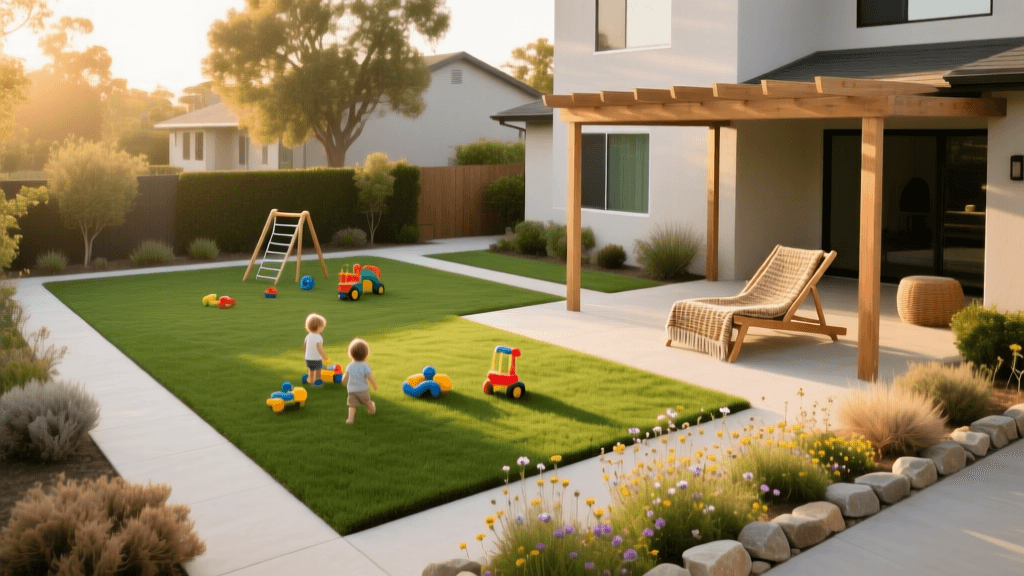
Instead, plan your lawn zones around these functional pathways. Identify high-traffic zones where children play or dogs run, and designate them as "Active Zones." These areas require highly resilient, traffic-tolerant grasses like Perennial Ryegrass or Bermuda grass. Conversely, "Passive Zones" or ornamental front yards that are rarely walked on can be planted with finer, more delicate fescues or bluegrasses that prioritize visual density and color over durability.
For areas where grass simply cannot survive the constant foot traffic, integrate hardscaping. Installing flagstone stepping stones or a gravel pathway not only solves the mud and bare dirt problem but also adds structural beauty to the landscape design.
Grass Selection Matrix: Matching Turf to the Zone
Choosing the correct grass species for your designated zones is critical. The University of California Agriculture and Natural Resources (UC ANR) emphasizes that matching turfgrass to the local climate and specific site conditions reduces the need for chemical pesticides and excessive watering. Below is a comparison chart to help you plan your grass zones based on environmental factors.
| Grass Type | Season | Sunlight Requirement | Shade Tolerance | Traffic Tolerance | Best Use Case |
|---|---|---|---|---|---|
| Kentucky Bluegrass | Cool | Full Sun (6+ hrs) | Poor to Fair | High | Front lawns, high-visibility passive zones |
| Perennial Ryegrass | Cool | Full to Partial Sun | Fair | Very High | Active play areas, pet zones, overseeding |
| Fine Fescue | Cool | Partial to Full Shade | Excellent | Low | Shaded ornamental zones, low-traffic borders |
| Tall Fescue | Cool/Transition | Full to Partial Sun | Good | High | General purpose lawns, drought-prone zones |
| Bermuda Grass | Warm | Full Sun (8+ hrs) | Poor | Very High | Sports fields, high-traffic sunny backyards |
| St. Augustine | Warm | Partial to Full Sun | Good | Moderate | Coastal southern lawns, shaded warm zones |
| Zoysia Grass | Warm | Full to Partial Sun | Good | High | Low-maintenance premium lawns, transition zones |
When purchasing seed, look for high-quality, weed-free blends rather than generic "contractor mixes." For example, a shade zone in a cool-season climate might benefit from a blend containing 60% Creeping Red Fescue, 20% Chewings Fescue, and 20% Hard Fescue, ensuring genetic diversity that protects against localized disease outbreaks.
Hydrozoning and Irrigation Planning
Lawn zoning must extend below the surface to your irrigation system. "Hydrozoning" is the practice of grouping plants and turf areas with similar water needs onto the same irrigation valve. If your sunny front yard (high water need) and your shaded side yard (low water need) are on the same sprinkler zone, you will inevitably overwater the shade and underwater the sun.
According to the EPA WaterSense program, outdoor water use can account for up to 30% of total household water consumption, with a significant portion wasted due to inefficient landscaping practices and outdated irrigation timing. To optimize your design:
- Separate Valves: Ensure your landscape contractor or DIY plan places turf, shrub beds, and drip-irrigated garden zones on completely separate valves.
- Smart Controllers: Upgrade to an EPA WaterSense-labeled smart controller, such as the Rachio 3 or Orbit B-hyve. These devices use local weather data and evapotranspiration rates to automatically adjust watering schedules, saving up to 20% on outdoor water use.
- Head-to-Head Coverage: When planning sprinkler head placement, ensure the spray from one head reaches the adjacent head. This overlapping coverage prevents dry spots and ensures uniform soil moisture across the entire turf zone.
Integrating Hardscapes and Soil Grading
A well-planned lawn design acknowledges where grass should not grow. Narrow strips of grass between the sidewalk and the street (often called "hell strips") or tight corridors between houses are notoriously difficult to mow, edge, and irrigate. Plan to replace these zones with low-maintenance alternatives like creeping thyme, clover, or ornamental gravel.
Proper soil grading is also a vital component of the planning phase. Before laying sod or seeding, ensure the ground slopes away from your home's foundation at a minimum rate of 1/4 inch per foot for the first 10 feet. In low-lying zones where water naturally pools, consider installing a French drain or a dry creek bed lined with river rock. This not only protects your home's structural integrity but also prevents the anaerobic soil conditions that lead to root rot and fungal lawn diseases.
For pathways, decomposed granite (DG) is an excellent, permeable alternative to concrete that allows rainwater to percolate into the soil, reducing runoff. DG typically costs between $40 and $60 per ton and provides a natural, rustic aesthetic that complements both formal and informal garden designs.
Conclusion
Designing a functional and beautiful yard requires more than just picking a favorite shade of green. By carefully planning your lawn zones based on sunlight exposure, foot traffic patterns, and hydrozoning principles, you set the stage for a landscape that is both resilient and easy to maintain. Taking the time to map out these details during the planning phase will save you countless hours of frustrating lawn repairs, reduce your water bills, and result in a lush, thriving outdoor space tailored perfectly to your lifestyle.