Lawn Care
Strategic Lawn Zoning: Planning Grass for Microclimates
The Art and Science of Strategic Lawn Zoning
When homeowners envision a new lawn, they often picture a uniform carpet of vibrant green stretching seamlessly from the front porch to the property line. However, treating your entire yard as a single, homogenous environment is one of the most common and costly pitfalls in landscape design. True lawn care success begins long before the first seed is sown or the first roll of sod is laid. It starts with strategic lawn zoning—a deliberate planning process that divides your yard into distinct functional and ecological zones based on microclimates, soil conditions, and intended use.
By mapping your landscape and matching specific grass species to their ideal environments, you can drastically reduce water consumption, minimize fertilizer requirements, and eliminate the frustration of perpetual bare patches. According to the EPA WaterSense program, thoughtful landscape planning that groups plants by water and sunlight needs (a practice known as hydrozoning) can reduce outdoor water use by up to 50 percent. This comprehensive guide will walk you through the essential design and planning steps to create a resilient, functional, and beautiful lawn tailored to your specific property.
Step 1: Mapping Your Yard's Microclimates
A microclimate is a localized area where the climate differs from the surrounding yard. Factors such as the angle of the sun, prevailing wind patterns, proximity to heat-retaining buildings, and the canopy cover of mature trees all create unique environmental pockets. Before selecting grass varieties, you must create a detailed sun and shade map of your property.
Conducting a Sunlight Audit
Track the sunlight exposure in different areas of your yard over a full day during the peak growing season. Categorize your zones into the following tiers:
- Full Sun: 8 or more hours of direct, unfiltered sunlight daily. Ideal for most warm-season grasses and many cool-season varieties like Kentucky Bluegrass.
- Partial Sun / Partial Shade: 4 to 6 hours of direct sunlight, often with dappled shade in the afternoon. Suitable for Tall Fescue or Zoysia.
- Full Shade: Less than 4 hours of direct sunlight. Grass struggles immensely here, and alternative groundcovers, mulch, or hardscaping may be required.
Remember that the sun's angle changes with the seasons. A zone that is fully exposed in early spring might be heavily shaded by mid-summer once deciduous trees leaf out. Plan your grass selection based on the peak summer conditions, as this is when turfgrass experiences the most environmental stress.
Step 2: Assessing Soil and Drainage Patterns
Water movement across your landscape dictates where certain grasses will thrive and where they will succumb to fungal diseases or root rot. Low-lying areas may pool water after heavy rains, while sloped zones or areas near paved driveways may experience rapid runoff and drought-like conditions.
Perform a simple percolation test in each planned zone. Dig a hole 12 inches deep and 12 inches wide, fill it with water, and let it drain completely. Refill it and measure how long it takes for the water level to drop. According to Penn State Extension, ideal turfgrass soil should drain at a rate of 1 to 4 inches per hour. If your soil drains slower than 1 inch per hour, you are dealing with heavy clay that requires core aeration, organic amendment, or the selection of moisture-tolerant grasses. If it drains faster than 6 inches per hour, you have sandy soil that will require frequent, light irrigation and heavy compost top-dressing to retain nutrients.
Step 3: Functional Zoning for Traffic and Usage
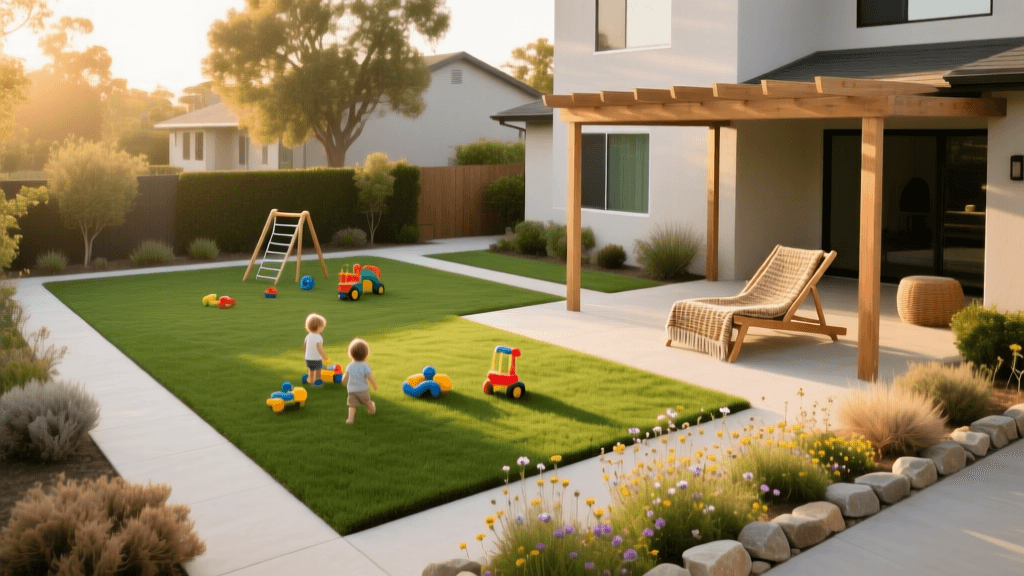
Not all lawn areas serve the same purpose. Designing your lawn involves anticipating how the space will be used and selecting turf that can withstand those specific demands. High-traffic zones, such as play areas for children or pathways for pets, require aggressive, self-repairing grass species with deep root systems and high shear strength. Conversely, ornamental zones that are strictly for visual appeal can feature fine-textured, delicate grasses that require meticulous care but cannot withstand foot traffic.
Lawn Zoning Comparison Chart
| Zone Type | Cool-Season Grass Recommendation | Warm-Season Grass Recommendation | Maintenance & Traits |
|---|---|---|---|
| High Traffic / Play | Tall Fescue, Kentucky Bluegrass | Bermudagrass, Zoysia | High wear tolerance, rapid recovery, deep roots. |
| Ornamental / Showcase | Fine Fescue, Creeping Bentgrass | Centipedegrass, St. Augustine | Low wear tolerance, high aesthetic value, requires precise mowing. |
| Shaded Areas | Chewings Fescue, Rough Bluegrass | St. Augustine, Zoysia | Shade tolerance is prioritized over traffic tolerance; prone to disease. |
| Drought-Prone Slopes | Tall Fescue, Buffalograss (Transition) | Bermudagrass, Bahiagrass | Deep root systems, excellent erosion control, low water requirements. |
Step 4: Integrating Irrigation Zones into the Design
A strategic lawn design must also account for water delivery. Hydrozoning—the practice of grouping plants and turf with similar water requirements together on the same irrigation valve—is a cornerstone of sustainable landscape planning. If you place a water-loving Kentucky Bluegrass zone on the same sprinkler circuit as a drought-tolerant Tall Fescue slope, one zone will inevitably suffer from either underwatering or overwatering.
When planning your irrigation layout, map out your hydrozones before trenches are dug. Assign dedicated valves to high-traffic sunny areas, separate valves for shaded zones (which require 30-50% less water), and drip irrigation lines for perimeter shrub beds. This level of granular planning ensures that your landscape design is not only visually cohesive but ecologically and economically sustainable over the long term.
Step 5: Designing Transition Zones and Alternatives
A well-planned landscape acknowledges its limitations. If a microclimate is fundamentally hostile to turfgrass—such as the dry, dense shade beneath a mature Norway Maple or a heavily compacted pathway where pets constantly run—forcing grass to grow there is a waste of time and resources. Instead, plan for transition zones.
'The most sustainable lawn design incorporates edges and transitions. Replacing struggling turf in deep shade or high-wear corridors with mulch beds, creeping thyme, or decorative gravel not only solves a maintenance headache but adds structural depth and visual interest to the landscape.' — Landscape Design Principles, University of Minnesota Extension.
When planning these transitions, use physical edging materials like steel benders or natural stone to create a crisp, deliberate line between the turf zone and the alternative groundcover. This prevents aggressive grasses like Bermudagrass from invading garden beds and gives the yard a highly manicured, professional appearance.
Step 6: Budgeting and Sourcing for Your Zones
Strategic zoning also impacts your budget. You do not need to sod the entire property. A cost-effective planning strategy involves using premium sod for high-visibility, high-traffic zones near the home, while utilizing hydroseeding or broadcast seeding for peripheral zones, slopes, or meadow-transition areas.
- Premium Sod: Costs between $0.45 to $0.80 per square foot (installed). Best for immediate impact in front-yard showcase zones.
- Hydroseeding: Costs $0.10 to $0.20 per square foot. Excellent for large, sloped zones where erosion control is needed immediately.
- Traditional Seed: Costs $0.03 to $0.08 per square foot. Ideal for shaded or low-traffic backyard zones where patience is acceptable.
Furthermore, investing in a comprehensive soil test from a university extension laboratory (typically $15 to $25) before purchasing amendments will save hundreds of dollars in wasted lime, sulfur, or phosphorus. As noted by the University of Minnesota Extension, proper soil preparation based on empirical data is the single most critical factor in long-term landscape success.
Conclusion: Planning for Long-Term Resilience
Designing a lawn is an exercise in environmental problem-solving. By stepping back and analyzing your yard's microclimates, drainage patterns, and functional requirements, you transition from a reactive gardener to a proactive landscape planner. Strategic lawn zoning ensures that every square foot of your yard is planted with a purpose, resulting in a dynamic, resilient landscape that thrives in harmony with its natural surroundings.