Lawn Care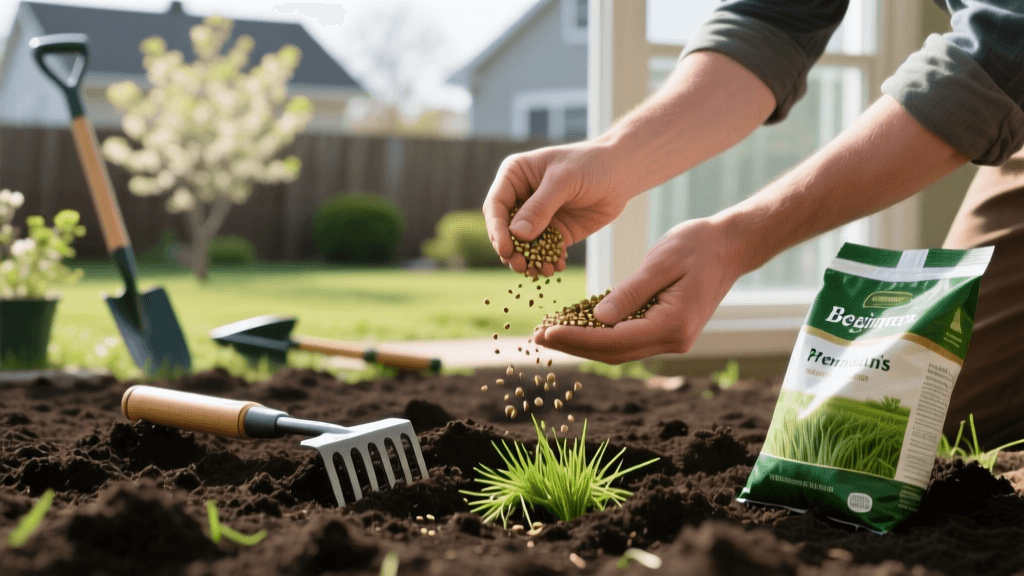
How to Plant Grass Seed: A Beginner's Step-by-Step Guide
Introduction: Why Start Your Lawn From Seed?
Starting a new lawn from seed is one of the most rewarding projects a homeowner can undertake. Not only does it offer a deep sense of accomplishment, but it is also significantly more budget-friendly than laying sod. While sod can cost anywhere from $0.50 to $1.50 per square foot, high-quality grass seed typically costs between $0.10 and $0.25 per square foot. For a standard 5,000-square-foot yard, that translates to savings of hundreds or even thousands of dollars.
However, growing grass from seed requires patience, proper timing, and a strategic approach. According to Penn State Extension, the success of your new lawn hinges almost entirely on soil preparation and consistent moisture management during the germination phase. This beginner-friendly guide will walk you through every step of the process, from choosing the right seed to your very first mow.
Step 1: Choose the Right Grass Seed for Your Climate
The most common mistake beginners make is purchasing a generic 'contractor's mix' without considering their local climate. Grasses are broadly divided into two categories: cool-season and warm-season. Planting the wrong type will result in a lawn that struggles with disease, drought, and temperature extremes.
Cool-Season vs. Warm-Season Grass Comparison
| Grass Type | Season | Sun/Shade Tolerance | Foot Traffic | Best Planting Time |
|---|---|---|---|---|
| Kentucky Bluegrass | Cool | Full Sun / Poor Shade | High | Early Fall |
| Tall Fescue | Cool | Sun & Moderate Shade | Moderate-High | Early Fall |
| Perennial Ryegrass | Cool | Full Sun / Poor Shade | High | Early Fall |
| Bermudagrass | Warm | Full Sun / Zero Shade | Very High | Late Spring |
| Zoysiagrass | Warm | Sun & Light Shade | High | Late Spring |
Tip: If you live in the 'Transition Zone' (the middle of the US), Tall Fescue is generally your safest and most drought-tolerant bet.
Step 2: Test and Prepare Your Soil
Grass seed needs direct seed-to-soil contact and a hospitable environment to germinate. Do not skip soil preparation.
- Clear the Area: Remove all rocks, debris, and existing weeds. If weeds are a major issue, apply a non-selective herbicide like glyphosate two weeks prior, or use a natural method like solarization.
- Test Your Soil: A soil test will reveal your pH and nutrient deficiencies. Grass thrives in a pH range of 6.0 to 7.0. If your soil is too acidic, apply pelletized lime; if it is too alkaline, apply elemental sulfur.
- Till and Amend: Use a rototiller to loosen the top 4 to 6 inches of soil. This breaks up compaction and allows new roots to penetrate easily. Mix in a 1-inch layer of organic compost to improve water retention and soil structure.
- Grade the Lawn: Rake the area smooth, ensuring a slight slope (about 1 inch per foot) away from your home's foundation to prevent water pooling.
Step 3: Apply Starter Fertilizer and Sow the Seed
New grass requires a specific nutrient profile to establish strong roots. Standard lawn fertilizers are high in nitrogen (for leaf growth), but new seed needs phosphorus for root development. Look for a starter fertilizer with an N-P-K ratio like 10-18-10 or 24-25-4 (such as Scotts Turf Builder Starter Food for New Grass).
Sowing the Seed
According to the Texas A&M AgriLife Extension, applying seed at the correct rate is vital. Over-seeding leads to competition for nutrients, while under-seeding leaves room for weeds.
- Kentucky Bluegrass: 2 to 3 lbs per 1,000 sq. ft.
- Tall Fescue: 8 to 10 lbs per 1,000 sq. ft.
- Bermudagrass: 1 to 2 lbs per 1,000 sq. ft.
Use a broadcast spreader for even distribution. Walk in a grid pattern: first horizontally, then vertically, to ensure complete coverage. After spreading, lightly rake the soil so the seeds are covered by no more than 1/8 to 1/4 inch of soil. Finally, use a lawn roller filled halfway with water to press the seeds firmly into the soil bed.
Step 4: The Crucial Watering Phase
Watering is where most beginners fail. Grass seed must never dry out during the germination phase, which can take anywhere from 5 to 30 days depending on the variety and temperature.
- Weeks 1-2 (Germination): Water lightly 2 to 3 times a day for 5 to 10 minutes per session. The goal is to keep the top 1 inch of soil consistently moist, not muddy.
- Weeks 3-4 (Seedling Stage): Once the grass reaches about 1 inch tall, reduce watering to once a day, but water for a longer duration (15-20 minutes) to encourage deeper root growth.
- Week 5+ (Establishment): Transition to the standard lawn watering schedule of 1 to 1.5 inches of water per week, applied in 1 or 2 deep sessions.
Step 5: The First Mow and Ongoing Maintenance
Resist the urge to mow your new lawn too early. Wait until the grass blades reach at least 3 to 4 inches in height. When you do mow, ensure your mower blade is razor-sharp to prevent tearing the delicate new shoots. Follow the One-Third Rule: never remove more than one-third of the grass blade in a single mowing. If the grass is 3 inches tall, set your mower deck to cut it down to 2 inches.
Avoid using broadleaf weed killers on a newly seeded lawn until you have mowed the grass at least three to four times. Applying herbicides too early can stunt or kill young grass seedlings.
Common Beginner Mistakes to Avoid
Even with the best intentions, novice lawn growers can stumble. The University of California Integrated Pest Management program highlights several frequent errors:
- Burying the Seed Too Deep: Grass seed needs sunlight to trigger germination. If you bury it deeper than 1/4 inch, it will rot or fail to emerge.
- Overwatering: While the soil must stay moist, creating puddles will wash the seeds away or cause them to suffocate from lack of oxygen.
- Walking on the New Lawn: Keep foot traffic to an absolute minimum for the first 4 to 6 weeks. Young roots are fragile and easily uprooted.
- Planting Out of Season: Planting cool-season grass in the heat of summer will result in rapid moisture loss and fungal diseases. Always plant cool-season grasses in early fall, and warm-season grasses in late spring.
Conclusion
Growing a lawn from seed is a test of patience, but the financial savings and the pride of cultivating your own landscape make it entirely worthwhile. By selecting the right seed for your hardiness zone, investing time in proper soil preparation, and maintaining a strict watering schedule, you will be rewarded with a thick, vibrant, and resilient lawn that will serve your home for decades to come.