Lawn Care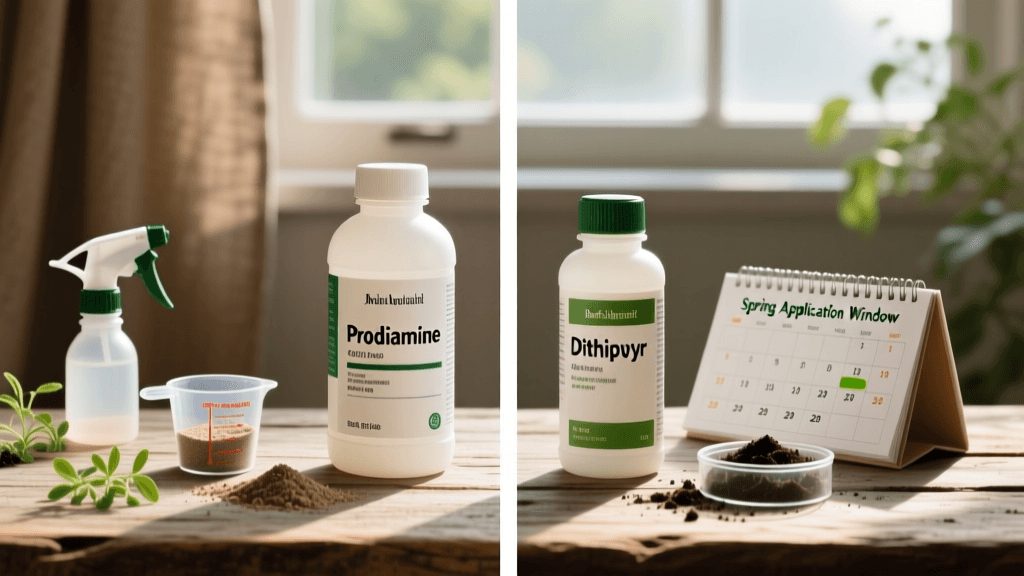
Prodiamine vs Dithiopyr: Best Pre-Emergent Herbicides Compared
Introduction to Spring Weed Control
When it comes to maintaining a pristine, golf-course-quality lawn, the battle against annual grassy weeds like crabgrass, goosegrass, and Poa annua is won or lost in the early spring. Relying solely on post-emergent herbicides to kill weeds after they have already established is a reactive strategy that often leaves your turf damaged and stressed. The most effective, proactive approach is the application of a high-quality pre-emergent herbicide. But with dozens of chemical formulations on the market, how do you choose the right one for your specific lawn care regimen?
In this comprehensive product review and comparison, we are putting the two undisputed heavyweights of the turf care industry head-to-head: Prodiamine (commonly known by the brand name Barricade) and Dithiopyr (widely recognized by the brand name Dimension). Both are exceptional tools for lawn care professionals and dedicated homeowners alike, but they operate with slightly different chemical mechanisms, application windows, and cost structures. By the end of this guide, you will know exactly which pre-emergent herbicide deserves a spot in your spring fertilizer and weed control schedule.
The Science of Pre-Emergent Herbicides
Before diving into specific product reviews, it is crucial to understand how pre-emergent herbicides actually work. A common misconception is that these chemicals prevent weed seeds from germinating. According to turfgrass researchers at the NC State TurfFiles program, pre-emergents do not stop germination; rather, they inhibit cell division in the developing root system (the radicle) immediately after the seed sprouts. The weed seed germinates, but the young seedling is unable to develop a functional root system and quickly dies before it ever breaks the soil surface.
For this chemical barrier to be effective, the herbicide must be watered into the top inch or two of the soil profile before soil temperatures consistently reach the germination threshold for target weeds. This creates an invisible 'shield' across your lawn. Both Prodiamine and Dithiopyr excel at creating this shield, but their residual longevity and secondary benefits differ significantly.
Prodiamine 65 WDG (Barricade) Review: The Long-Lasting Barrier
Prodiamine is a dinitroaniline herbicide that has been a staple in the turf industry for decades. It is most commonly sold to homeowners and professionals in a Water Dispersible Granule (WDG) formulation, with the 65% active ingredient concentration (Prodiamine 65 WDG) being the industry standard. Prodiamine is highly regarded for its exceptional soil binding properties and extended residual control.
Key Features and Performance
The primary advantage of Prodiamine is its longevity. When applied at the maximum labeled rate, a single application of Prodiamine can provide up to 6 months of residual crabgrass control. It binds tightly to soil organic matter, meaning it is highly resistant to leaching and microbial breakdown. This makes it the ultimate 'apply and forget' product for homeowners who want to treat their lawn once in early spring and remain protected through the heat of late summer.
Pros and Cons of Prodiamine
- Pros: Exceptional longevity (up to 6 months); highly cost-effective per 1,000 square feet; excellent safety profile for established warm-season and cool-season turf; WDG formulation mixes easily without the strong chemical odors associated with liquid emulsifiable concentrates.
- Pros: Highly effective against a broad spectrum of grassy and broadleaf weeds from seed.
- Cons: Zero post-emergent activity; if you miss your application window and crabgrass has already sprouted, Prodiamine will not kill it; strict overseeding restrictions (typically 4 months post-application).
Dithiopyr 2EW (Dimension) Review: The Versatile Post-Emergent Bonus
Dithiopyr, widely sold under the brand name Dimension (specifically the 2EW liquid formulation), is a pyridine herbicide that offers a unique dual-action capability. While it is primarily used as a pre-emergent, Dithiopyr possesses a highly valuable 'early post-emergent' trait that Prodiamine completely lacks.
Key Features and Performance
According to turfgrass extension specialists at the University of Minnesota Extension, Dithiopyr is unique because it can control crabgrass not only before it emerges but also shortly after. Specifically, Dimension can kill crabgrass seedlings up to the one-tiller stage (when the weed has just begun to develop its first lateral shoot). This extended application window is a massive relief for lawn care enthusiasts who may have missed their early spring pre-emergent window due to unseasonably cold weather or heavy rains.
Pros and Cons of Dithiopyr
- Pros: Offers early post-emergent control of crabgrass; slightly shorter soil residual allows for earlier fall overseeding compared to Prodiamine; excellent control of tough weeds like goosegrass and Poa annua.
- Pros: Liquid 2EW formulation is easy to measure and mix in small pump sprayers for spot treatments or residential lawns.
- Cons: Shorter overall residual lifespan (typically 3 to 4 months), often requiring a split-application program for full-season control; higher cost per 1,000 square feet for homeowners buying in small quantities; liquid formulation can stain concrete driveways if spilled.
Head-to-Head Product Comparison Table
To help you visualize the differences between these two powerhouse herbicides, we have compiled a detailed comparison chart based on standard homeowner application rates and formulations.
| Feature | Prodiamine 65 WDG | Dithiopyr 2EW (Dimension) |
|---|---|---|
| Active Ingredient | Prodiamine (Dinitroaniline) | Dithiopyr (Pyridine) |
| Primary Strength | Long-lasting residual barrier | Early post-emergent crabgrass control |
| Application Rate (per 1k sq ft) | 0.185 oz to 0.46 oz | 0.5 fl oz to 0.75 fl oz |
| Residual Longevity | 4 to 6 months | 3 to 4 months |
| Early Post-Emergent Control | No | Yes (up to 1-tiller stage) |
| Overseeding Restriction | 4 months post-application | 3 to 4 months post-application |
| Estimated Cost (per 1k sq ft) | ~$1.80 (based on 5oz retail bottle) | ~$2.50 (based on 32oz retail quart) |
Application Timing: Soil Temperature is Key
The success of either product relies entirely on proper application timing. As noted by the UMass Extension Turf Program, crabgrass germination is triggered by soil temperatures, not air temperatures. The critical threshold is when soil temperatures at a 2-inch depth reach 55°F for three to five consecutive days.
For Prodiamine, you want to apply the product slightly before this threshold—ideally when soil temperatures are hovering in the low 50s. Because Prodiamine does not break down quickly and has no post-emergent activity, applying it early ensures the barrier is fully established and watered in before the first flush of weed seeds sprouts.
For Dithiopyr, you have a bit more flexibility. Because of its early post-emergent capabilities, you can apply Dimension right at the 55°F mark or even slightly after, up until the soil reaches about 60°F. If you notice a few isolated crabgrass seedlings just beginning to push through the soil, Dimension will still eradicate them while laying down its pre-emergent barrier for the rest of the season.
Cost Breakdown and Coverage Analysis
When evaluating lawn care products, the upfront price tag can be deceiving. You must calculate the cost per 1,000 square feet based on the active ingredient concentration and the required application rate.
A standard 5-ounce bottle of generic Prodiamine 65 WDG retails for approximately $40 to $45. At a moderate application rate of 0.23 ounces per 1,000 square feet (which provides roughly 4 to 5 months of control), that single bottle treats over 21,000 square feet. This breaks down to an incredibly economical $1.90 per 1,000 square feet. For large properties, Prodiamine is the undisputed budget champion.
Conversely, a 32-ounce (quart) bottle of Dimension 2EW typically retails between $80 and $95. At the standard rate of 0.5 fluid ounces per 1,000 square feet, the quart treats 64,000 square feet. This results in a cost of roughly $1.32 per 1,000 square feet if you buy in bulk commercial sizes, but for homeowners buying smaller quart-sized bottles, the cost averages closer to $2.50 per 1,000 square feet. While slightly more expensive, the insurance policy of early post-emergent control justifies the premium for many turf managers.
Overseeding Restrictions and Lawn Safety
One of the most critical factors in choosing a pre-emergent is your fall lawn care schedule. Pre-emergent herbicides cannot distinguish between a germinating crabgrass seed and a germinating Kentucky Bluegrass or Tall Fescue seed. If you plan to overseed your lawn in the early fall, you must respect the product's reseeding interval.
Prodiamine's strong soil binding means it persists longer, requiring a strict 4-month waiting period between application and overseeding. If you apply Prodiamine in mid-April, you cannot safely seed until mid-August at the earliest, which is often too early for cool-season grasses to survive the late-summer heat.
Dithiopyr degrades slightly faster in the soil profile. While the label still recommends a 3 to 4-month window depending on the application rate, turf managers frequently report successful overseeding results slightly earlier with Dimension than with Prodiamine, provided the pre-emergent barrier has been physically disrupted by aeration.
Final Verdict: Which Pre-Emergent Should You Buy?
Both Prodiamine and Dithiopyr are elite, professional-grade herbicides that will dramatically reduce weed pressure in your lawn. Your final decision should be based on your specific lawn care habits, property size, and seasonal goals.
Choose Prodiamine 65 WDG if: You have a large property, you want the most cost-effective solution, you are highly disciplined about applying your pre-emergent early in the spring before soil temperatures rise, and you do not plan on overseeding your lawn in the early fall.
Choose Dithiopyr 2EW (Dimension) if: You frequently miss the early spring application window, you want the safety net of early post-emergent crabgrass control, you are dealing with a history of severe goosegrass or Poa annua infestations, or you prefer working with liquid formulations in a standard pump sprayer.
Regardless of which product you select, remember that a pre-emergent is only as good as its activation. Always water your lawn with at least 0.25 to 0.5 inches of irrigation immediately following your application to move the chemical into the soil profile where it belongs. Pair your herbicide application with a robust fertilization schedule, proper mowing heights, and deep, infrequent watering, and you will be well on your way to a thick, weed-free lawn.