Home & Garden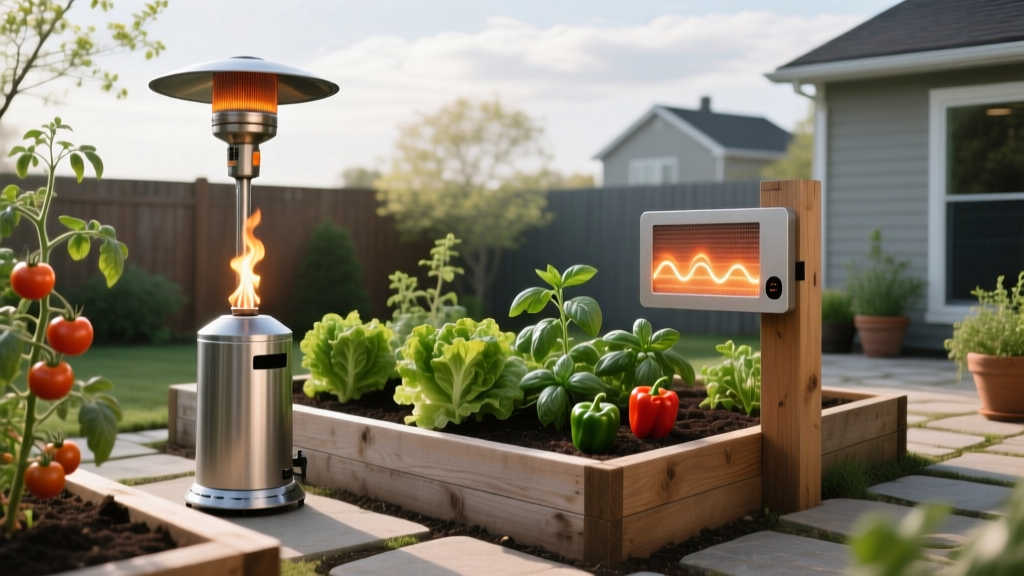
Propane vs Infrared Electric Heaters for Raised Beds 2026
David ParkPublished
Extending the Harvest: The Raised Bed Frost Challenge
As the 2026 growing season pushes into late autumn and early winter, raised bed vegetable gardeners face a familiar and frustrating foe: frost. While traditional in-ground gardens benefit from the earth's natural geothermal insulation, raised beds are uniquely vulnerable. Because they are elevated and exposed to ambient air on all four sides, the soil in a raised bed freezes much faster than ground soil. For gardeners attempting to overwinter cold-hardy crops like kale, spinach, carrots, and mache, or simply trying to squeeze a few more weeks out of late-season tomatoes and peppers, passive season extension methods like row covers often fall short during hard freezes.
This has led many horticulture enthusiasts to explore active heating solutions, specifically repurposing outdoor patio heaters to create microclimates over their garden beds. But when it comes to patio heater propane vs infrared electric heat coverage, which technology actually makes sense for a vegetable garden? In this comprehensive 2026 guide, we break down the physics, coverage patterns, operational costs, and safety considerations of both heating methods to help you protect your raised bed harvest.
The Physics of Heating Raised Beds: Convection vs. Radiant
To understand why certain patio heaters work better for gardening, we must look at how heat transfers to your plants and soil. According to the University of Minnesota Extension, successful season extension relies on maintaining consistent soil temperatures and protecting plant tissue from cellular ice crystallization. The two primary patio heating technologies achieve this in vastly different ways.
Propane Patio Heaters: The Convection Approach
Traditional mushroom-style or tower propane patio heaters operate primarily through convection. They burn propane gas to heat a metal emitter, which in turn heats the surrounding air. Hot air naturally rises, creating a dome of warm air that eventually cools and sinks. In an open backyard setting, this creates a broad, ambient warmth that covers a 15 to 20-foot radius. However, for a raised bed vegetable garden, convection is highly inefficient. The heated air quickly dissipates into the open sky or is stripped away by autumn winds. Furthermore, propane combustion releases water vapor as a byproduct. While plants do utilize CO2 (also released during combustion), the excess moisture can become trapped under low tunnels or cold frames, creating a breeding ground for fungal pathogens like powdery mildew and botrytis.
Infrared Electric Patio Heaters: The Radiant Solution
Infrared electric patio heaters, which have seen massive efficiency upgrades in 2026, operate on a completely different principle. Instead of heating the air, they emit electromagnetic infrared waves that travel through the air and directly heat solid objects—namely, your raised bed soil, the wooden or metal bed walls, and the plant leaves themselves. This is the same way the sun heats the earth. Because infrared heat does not rely on warming the air, it is entirely unaffected by wind. When mounted on a pergola, hoop house, or patio umbrella directed downward at a raised bed, infrared heaters provide a targeted, highly efficient blanket of warmth that keeps the soil mass above freezing without wasting energy on the empty air above.
Head-to-Head Comparison: Propane vs. Infrared Electric
When evaluating these systems for a standard 4x8-foot raised bed, the differences in coverage, cost, and safety become stark. Below is our 2026 comparison chart based on current energy averages and modern equipment specifications.
| Feature | Propane Patio Heater (40,000 BTU) | Infrared Electric Heater (1500W - 3000W) |
|---|---|---|
| Heat Transfer Type | Convection (Heats the air) | Radiant (Heats objects and soil directly) |
| Coverage Pattern | 360-degree radial dome (15-20 ft radius) | Directional cone (6-10 ft targeted footprint) |
| Wind Resistance | Poor (Heat blows away easily) | Excellent (Unaffected by wind) |
| 2026 Avg. Hourly Cost | ~$1.45 (Based on $2.80/gal propane) | ~$0.25 (Based on $0.17/kWh national avg) |
| Moisture Output | High (Releases water vapor) | None (Dry heat) |
| Safety Clearance | 36 inches from combustibles (wood beds, mulch) | 12-18 inches (Mounts safely above beds) |
| Smart Integration | Limited (Manual ignition, basic timers) | High (Wi-Fi smart plugs, soil sensor triggers) |
Calculating Coverage for Standard Raised Beds
The assigned subtopic of heat coverage is where infrared electric heaters truly shine for the raised bed gardener. A standard raised bed measures 4 feet wide by 8 feet long. A typical 1500-watt infrared electric patio heater mounted 6 feet above the bed and angled downward will project an elliptical heat footprint of roughly 4x6 feet. By installing two matching infrared panels on a simple PVC or metal hoop house frame over your bed, you can create a perfect, overlapping blanket of radiant heat that covers the entire 32-square-foot growing area.
Conversely, a 40,000 BTU propane heater is designed to warm a circular area with a 20-foot diameter. Placing this near a raised bed means you are spending money to heat your lawn, your fence, and the empty night sky. The U.S. Department of Energy consistently notes that radiant directional heating is vastly superior for targeted, semi-outdoor applications where heating the ambient air is impossible or impractical. For gardeners, this means your energy dollar is spent exclusively on keeping your root vegetables and leafy greens warm, not the neighborhood.
Smart Home Integration and Automation in 2026
One of the most exciting developments for the 2026 garden-to-table enthusiast is the integration of smart home technology with outdoor heating. Modern infrared electric patio heaters can easily be plugged into outdoor-rated, weatherproof smart plugs. By pairing a smart plug with a Wi-Fi-enabled soil temperature probe placed directly in the center of your raised bed, you can create automated triggers.
For example, you can set your smart home hub to activate the infrared heaters only when the soil temperature in the raised bed drops below 34°F, and shut them off once the soil reaches 40°F. This pulse-heating method prevents the soil from freezing solid while conserving electricity. Propane heaters, which require manual valve operation and carry the risk of gas leaks if left unattended with automated aftermarket valves, simply cannot compete with the safety and precision of electric smart-integration.
Safety Considerations: Wood, Mulch, and Moisture
Raised beds are frequently constructed from cedar, redwood, or composite lumber, and are often mulched with dry straw or wood chips to retain moisture. Propane patio heaters require a minimum of 36 inches of clearance from any combustible materials. Positioning a towering propane heater close enough to a raised bed to provide adequate frost protection poses a severe fire hazard, especially if a gust of wind tips the unit or pushes a flame toward dry autumn mulch.
Infrared electric heaters, particularly those with IP65 weatherproof ratings designed for 2026 outdoor environments, can be safely mounted to overhead structures or heavy-duty hoop house frames well above the plant canopy. They pose zero fire risk to wooden bed walls or dry mulch, and because they do not produce water vapor, they won't contribute to the damp, stagnant conditions that cause winter rot in cold frames.
Final Verdict for the Raised Bed Gardener
When debating patio heater propane vs infrared electric heat coverage for raised bed vegetable gardening, the verdict for 2026 is clear. While propane heaters are excellent for warming a group of people sitting around a patio table, their convection-based, omnidirectional heat is wildly inefficient and potentially hazardous for targeted agricultural use. Infrared electric patio heaters offer precise, wind-proof, radiant coverage that directly warms the soil mass and plant tissue. When combined with smart soil sensors and low-tunnel hoop houses, infrared electric heating represents the safest, most cost-effective, and most technologically advanced method for extending your raised bed harvest deep into the winter months.
