Home & Garden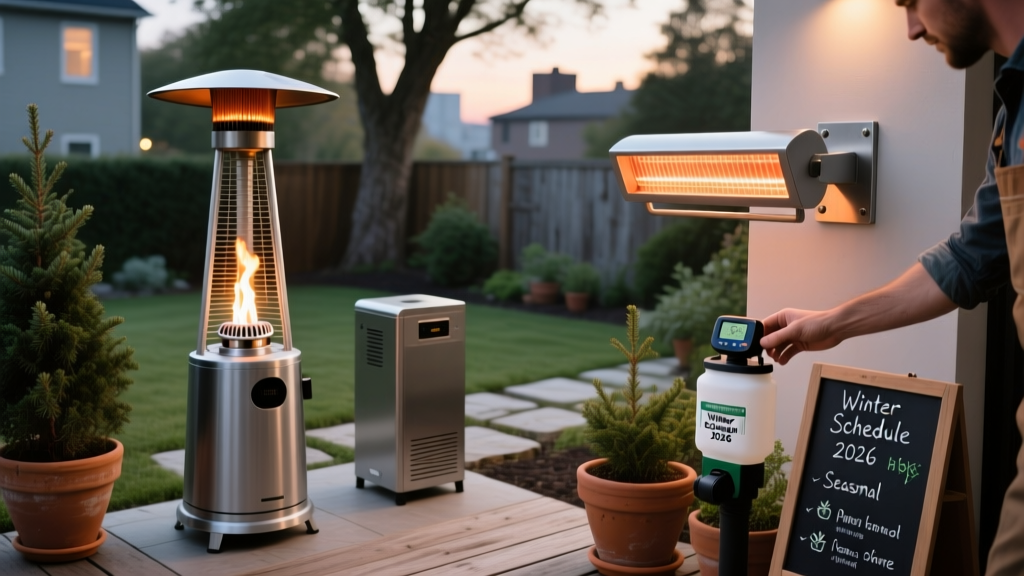
Patio Heater Propane vs Infrared Coverage & Winter Fertilizer 2026
Emily WatsonPublished
The Intersection of Outdoor Living and Winter Garden Care
As we move through the 2026 outdoor living season, the boundary between indoor comfort and outdoor landscaping has never been more blurred. Homeowners are increasingly investing in high-end patio heating solutions to extend their outdoor entertainment months well into the winter. However, a critical and often overlooked consequence of introducing intense heat sources to your hardscape is the profound effect it has on the surrounding garden ecosystem. Specifically, the debate of patio heater propane vs infrared electric heat coverage is not just a matter of human comfort or energy efficiency; it directly dictates how you must manage your winter fertilizer types and schedules for nearby container plants, raised beds, and lawn edges.
When you alter the ambient temperature and humidity of your patio, you create a localized microclimate. This artificial warmth can trick perennials into breaking dormancy early, accelerate soil moisture evaporation, and cause severe winter desiccation. To maintain a thriving landscape while enjoying a heated patio, you must align your heating technology with a scientifically sound winter fertilization and soil-care schedule.
The Physics of Outdoor Heat: Propane vs. Infrared in 2026
To understand how your garden is affected, we must first break down the heat coverage dynamics of the two dominant patio heating technologies available in 2026.
Propane Patio Heaters (Convection and Radiant)
Traditional propane mushroom and pyramid heaters generate between 40,000 and 50,000 BTUs. They operate by heating the ambient air (convection) while also casting radiant heat from the emitter dome. Because heat rises and disperses omnidirectionally, a standard propane heater creates a 360-degree coverage radius of roughly 15 to 20 feet. While excellent for warming a large group of people, this omnidirectional convection acts like a giant dehumidifier, aggressively stripping moisture from the surrounding air, soil, and plant foliage.
Infrared Electric Heaters (Pure Radiant)
Modern 2026 electric infrared heaters, such as directional quartz-tube or ceramic panel models, operate on a completely different principle. According to the U.S. Department of Energy, electric infrared heaters convert nearly 100% of their energy into radiant heat, which travels in targeted light waves to warm solid objects rather than the air. Their coverage is typically a directional cone of 90 to 120 degrees, reaching about 8 to 12 feet. Because they do not rely on heating the air, they do not cause the same ambient moisture-stripping effect as propane, making them far gentler on the surrounding garden microclimate.
The Hidden Horticultural Impact: Microclimates & Soil Desiccation
Why does this matter for your lawn and garden? Plants, particularly evergreens and winter-hardy container specimens, rely on stable soil moisture and cold-induced dormancy to survive freezing temperatures. When a 48,000 BTU propane heater is positioned near a raised planter or the edge of your lawn, the soil temperature fluctuates wildly. The dry, hot air accelerates transpiration (water loss through leaves), but because the surrounding ground outside the heater's radius remains frozen, the plant's roots cannot draw up replacement water. This leads to 'winter burn' and severe cellular damage.
Furthermore, the ambient warmth from a propane heater can signal nearby shrubs that spring has arrived. If your winter fertilizer schedule included high-nitrogen synthetic blends, the plant may push out tender new growth in the middle of January. The moment the patio heater is turned off, a sudden freeze will instantly kill this vulnerable new tissue.
Adjusting Your Winter Fertilizer Schedule for Heated Zones
To bridge the gap between your outdoor living setup and your garden's biological needs, you must segment your landscape into 'Heated Zones' and 'Dormant Zones' and adjust your fertilizer types accordingly.
Zone 1: The Propane Radius (High Desiccation Risk)
If you use omnidirectional propane heaters, the plants within a 15-foot radius require a specialized late-autumn fertilizer schedule designed to build cellular resilience without promoting growth.
- Fertilizer Type: Avoid nitrogen entirely. Focus on Potassium (K) and Phosphorus (P), supplemented with Humic Acid. Potassium thickens plant cell walls and acts as a natural antifreeze, while humic acid improves the soil's moisture-retention capacity to combat the drying effects of the propane convection.
- Schedule: Apply a slow-release organic 0-10-10 or 0-0-50 (Sulfate of Potash) fertilizer exactly four weeks before your region's first anticipated hard freeze. This allows the roots to absorb the nutrients and fortify the plant before the heating season begins.
- Moisture Management: Heavily mulch these zones with 3 inches of cedar or pine bark to lock in soil moisture against the dry propane air.
Zone 2: The Infrared Target Line (Thermal Radiation Risk)
Infrared heaters leave the soil moisture largely intact, but the direct radiant beam can scorch foliage if a plant is caught in the line of sight.
- Fertilizer Type: Standard dormant-season bone meal or kelp emulsion is safe here, as the soil ecology remains relatively undisturbed. However, avoid any foliar sprays or liquid fertilizers that leave salt residues on the leaves, as the infrared radiation can magnify these salts and cause leaf burn.
- Schedule: Follow a standard late-fall root-feeding schedule. The primary intervention here is not fertilizer, but physical placement. Ensure directional infrared panels are angled slightly downward toward seating areas and away from the canopies of prized Japanese maples or winter camellias.
Zone 3: The Unheated Perimeter (Standard Dormancy)
Plants outside the direct influence of your patio heaters should follow a traditional 2026 winterization schedule. Cease all nitrogen applications by early September, allow the plants to harden off naturally, and rely on natural winter precipitation.
Comparison Chart: Heater Coverage & Plant Care Matrix
| Heater Technology | Coverage Pattern | Primary Garden Impact | Recommended Winter Fertilizer Type | Application Timing |
|---|---|---|---|---|
| Propane (Mushroom/Pyramid) | 360° Omnidirectional (15-20 ft) | Severe soil moisture loss; ambient air drying; premature dormancy break. | High-Potassium (0-0-50) + Humic Acid to retain moisture and harden cells. | 4 weeks prior to first hard freeze. |
| Electric Infrared (Panel/Quartz) | Directional Cone (90-120°, 8-12 ft) | Localized thermal radiation; stable soil moisture; minimal ambient air drying. | Standard dormant organics (Bone Meal, Kelp); avoid foliar salt residues. | Standard late-fall root feeding schedule. |
| Unheated Garden Perimeter | N/A | Natural winter dormancy; reliance on ambient weather patterns. | None (allow natural hardening off) or slow-release Phosphorus for root health. | Cease feeding by early Autumn. |
Smart Integration & Safety Clearances for 2026
When integrating patio heaters into your landscaped environment, safety and horticultural health must go hand-in-hand. The National Fire Protection Association (NFPA) strictly advises maintaining a minimum 3-foot clearance from combustible materials for all outdoor patio heaters. In a garden setting, this means keeping propane emitters far away from dry ornamental grasses, deadheaded perennials, and wooden raised bed borders.
For 2026 smart-home enthusiasts, integrating your electric infrared heaters with smart ambient thermostats and soil moisture sensors is a game-changer. By linking a wireless soil moisture probe in your heated patio planters to your smart irrigation system, you can automatically trigger deep-watering cycles when the propane heater's convection dries out the soil beyond a 30% moisture threshold. This prevents the 'winter drought' effect entirely.
Final Thoughts on Hardscape and Garden Harmony
The choice between patio heater propane vs infrared electric heat coverage extends far beyond your personal comfort. Propane offers expansive, enveloping warmth but demands a rigorous, potassium-heavy winter fertilizer schedule and aggressive mulching to protect nearby flora from desiccation. Infrared electric provides efficient, targeted warmth that preserves soil ecology but requires careful angling to prevent radiant foliage scorch. By understanding the microclimates you create on your patio, you can tailor your fertilizer types and schedules to ensure your garden emerges vibrant, healthy, and undamaged when the true spring of 2026 finally arrives.
