Home & Garden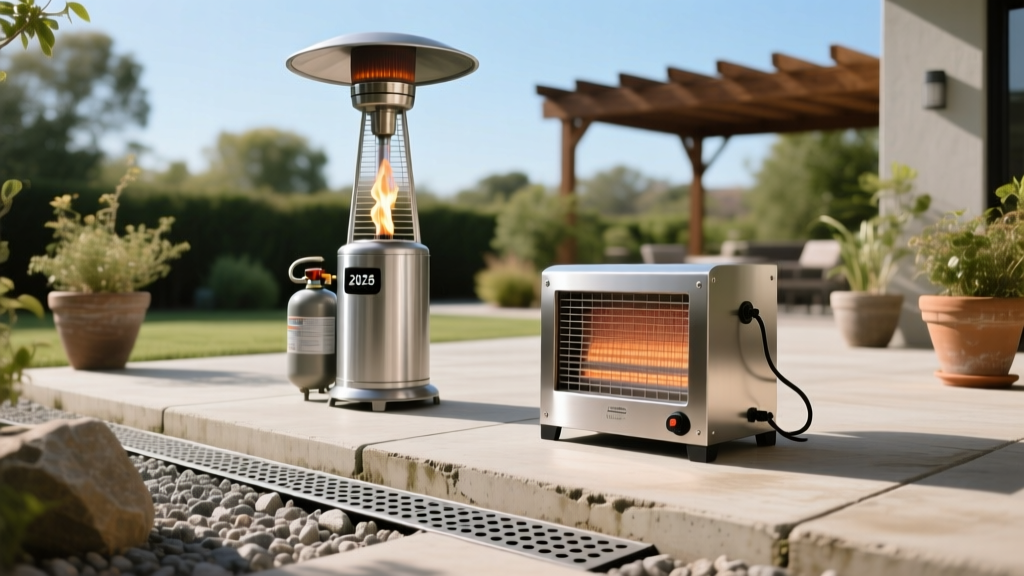
Propane vs Electric Patio Heaters 2026: Coverage & Drain Tips
Mike RodriguezPublished
The 2026 Patio Dilemma: Extending Your Season Without Ruining Your Foundation
As a French drain installation and patio foundation specialist, I spend most of my year fixing waterlogged outdoor living spaces. Homeowners invest tens of thousands of dollars in beautiful paver patios and outdoor kitchens, only to watch them sink, shift, and flood when subsurface water is not properly managed. Lately, my clients are focused on extending their outdoor seasons well into the winter months, which brings up a massive design question: How do we integrate high-end patio heaters without compromising the patio's structural integrity and drainage?
When designing an outdoor living space in 2026, the debate almost always comes down to patio heater propane vs infrared electric heat coverage. While most contractors only look at the BTU output or wattage, I look at what happens beneath the surface. Installing heavy gas lines or trenching for 240V electrical circuits requires tearing up your hardscaping. If you are already digging trenches for your heating system, it is the perfect time to install a comprehensive French drain system to protect your investment. Let us break down the heat coverage of modern propane and electric infrared heaters, and more importantly, how to integrate them with proper subsurface drainage.
Understanding Heat Coverage: Propane vs. Infrared Electric
Before we grab the shovels and trenching equipment, we need to understand how these two dominant heating technologies perform in an open-air environment. The physics of heat transfer outdoors is entirely different from heating an insulated living room. Wind, ambient humidity, and overhead clearance all play critical roles in how effectively your patio stays warm.
Propane Patio Heaters: The 360-Degree Convection Challenge
Traditional propane patio heaters, like the popular 2026 Fire Sense Pyramid models or the Bromic Tungsten Smart-Heat Gas series, rely on a combination of radiant and convective heat. They typically output between 38,000 and 50,000 BTUs. The heat rises from the burner, hits a reflector dome, and is pushed downward and outward in a roughly 15 to 20-foot diameter circle.
The primary advantage of propane is its omnidirectional coverage, making it ideal for central seating arrangements where people gather around the unit. However, propane heaters are highly susceptible to wind. A stiff 10 MPH breeze can strip the convective heat envelope away, drastically reducing the effective coverage area. From a drainage perspective, propane heaters are freestanding and top-heavy. If your patio pavers shift due to frost heave or poor base drainage, a tilted propane heater becomes a severe tipping hazard.
Infrared Electric Heaters: Targeted Radiant Efficiency
Infrared electric heaters, such as the Infratech W-Series or the Bromic Electric Smart-Heat lines, have dominated the luxury patio market in 2026. Instead of heating the air, infrared quartz elements emit electromagnetic radiation that heats solid objects directly—namely, your furniture, your floor, and your body. These units typically run on 240V circuits and draw between 3,000 and 6,000 watts.
Because they do not rely on heating the air, infrared electric heaters are entirely immune to wind. Their coverage is highly directional, usually projecting a focused rectangular beam of heat up to 14 feet outward. This makes them perfect for wall-mounted or pergola-ceiling installations over specific dining or lounge areas. The major installation caveat? They require dedicated, heavy-gauge electrical wiring run through underground conduits, which means extensive trenching across your patio.
Comparison Chart: 2026 Patio Heater Coverage & Drainage Impact
| Feature | Propane Patio Heaters | Infrared Electric Heaters |
|---|---|---|
| Heat Type | Radiant & Convective | Pure Radiant (Infrared) |
| Coverage Area | 15-20 ft radius (360 degrees) | 10-14 ft directional beam |
| Wind Resistance | Low (Heat blows away) | High (Heats objects, not air) |
| Installation Trenching | None (Freestanding tanks) | Extensive (240V conduit required) |
| Drainage Vulnerability | Base instability / Tipping | Underground wire corrosion |
| 2026 Smart Integration | Electronic ignition / Tilt shutoff | Bluetooth / Weather API dimming |
The French Drain Perspective: Why Drainage Dictates Heater Choice
Most landscape architects treat the patio surface and the heating elements as separate entities. As a drainage expert, I can tell you they are deeply interconnected. According to Penn State Extension's guidelines on managing water runoff, improper hardscape grading and lack of subsurface drainage are the leading causes of paver failure and frost heave in freezing climates. When water pools beneath your patio, it destroys the base, and it creates massive safety hazards for your heating systems.
Trenching for Electric: The Dual-Purpose Conduit and Drain Strategy
If you choose infrared electric heaters, your electrician will need to dig trenches from your main panel to the pergola or exterior walls to lay PVC conduit. This is where my team steps in. Whenever we trench for electrical lines, we simultaneously install a parallel 4-inch perforated French drain pipe wrapped in non-woven geotextile fabric. By utilizing the same excavation footprint, we save the homeowner thousands of dollars in labor and landscape restoration.
Water and electricity are a deadly combination. Even with watertight outdoor conduit fittings, a patio that suffers from chronic subsurface flooding will eventually experience moisture intrusion, leading to short circuits or degraded connections. By installing a gravel-packed French drain directly beneath and adjacent to your electrical trenches, you ensure that hydrostatic pressure is relieved and water is channeled away from your expensive smart-home outdoor electronics.
Propane Base Stability: Preventing Frost Heave and Washouts
If you opt for propane heaters to avoid electrical trenching, you are not off the hook for drainage. Propane heaters are incredibly heavy, often weighing over 70 pounds with a full tank, and they have a high center of gravity. If your patio base lacks proper drainage, water will saturate the sub-base. When winter temperatures drop, that trapped water freezes and expands, causing frost heave. This uneven lifting of pavers means your propane heater will no longer sit level. Modern 2026 safety codes mandate that gas heaters have anti-tilt switches, but a shifting, uneven patio base can cause the unit to drop or malfunction, posing a fire risk.
Step-by-Step: Integrating French Drains with Heater Installations
Whether you are mounting infrared electric units on a pergola or placing propane towers around a fire pit, here is how we integrate French drains to protect the patio foundation:
- Step 1: Grade and Plan the Slope. Before any trenching begins, ensure the patio surface slopes away from the home at a minimum of 1/8 inch per foot. The French drain will catch the water that inevitably seeps through the paver joints.
- Step 2: Dig the Dual-Purpose Trench. For electric infrared heaters, dig a trench 18 to 24 inches deep. This gets you below the frost line in most northern climates, protecting both your electrical conduit and your drain pipe from freezing damage.
- Step 3: Lay the Gravel Base. Add 2 to 3 inches of washed #57 gravel to the bottom of the trench. This provides a stable, permeable bed for the drain pipe and prevents sediment from clogging the perforations.
- Step 4: Install Pipe and Conduit. Lay the 4-inch perforated PVC or corrugated French drain pipe with the holes facing down. Place your electrical PVC conduit on a separate, elevated bed of gravel next to the drain pipe. According to This Old House's expert drainage guides, keeping the electrical lines elevated above the primary water flow path is crucial for long-term safety.
- Step 5: Wrap and Backfill. Wrap the drain pipe in non-woven geotextile fabric to keep soil and roots out. Backfill the trench with more gravel, leaving the top 4 inches for soil and sod, or matching the trench cap to your patio pavers using permeable polymeric sand.
Smart Home Integration and 2026 Safety Standards
The year 2026 has brought incredible advancements in outdoor smart-home integration. High-end electric infrared heaters now feature built-in Wi-Fi controllers that link directly to local weather APIs. If high winds or severe rainstorms are detected, the system automatically cuts power to the heating elements. Similarly, advanced propane models feature wireless electronic ignition and automated tilt-shutoff valves.
However, smart sensors cannot detect if the physical foundation of your patio is washing away. The U.S. Department of Energy's landscape planning resources emphasize that combining energy-efficient outdoor appliances with proper water management and wind-breaking landscaping is the key to reducing overall energy consumption. A French drain ensures that the physical environment remains stable, allowing your smart sensors and heating elements to operate safely on a level, dry surface for decades.
Final Thoughts from the Trenches
Choosing between patio heater propane vs infrared electric heat coverage ultimately depends on your patio's layout, your tolerance for wind, and your budget. Propane offers wide, 360-degree coverage but requires vigilant monitoring of base stability and wind conditions. Infrared electric provides superior, wind-proof directional heat but demands extensive electrical trenching. From a French drain installation perspective, both require a dry, stable foundation. By combining your electrical or gas trenching with a robust, geotextile-wrapped French drain system, you protect your hardscaping from frost heave, prevent water from pooling around dangerous energy sources, and ensure your outdoor living space remains a warm, safe haven for years to come.
