Home & Garden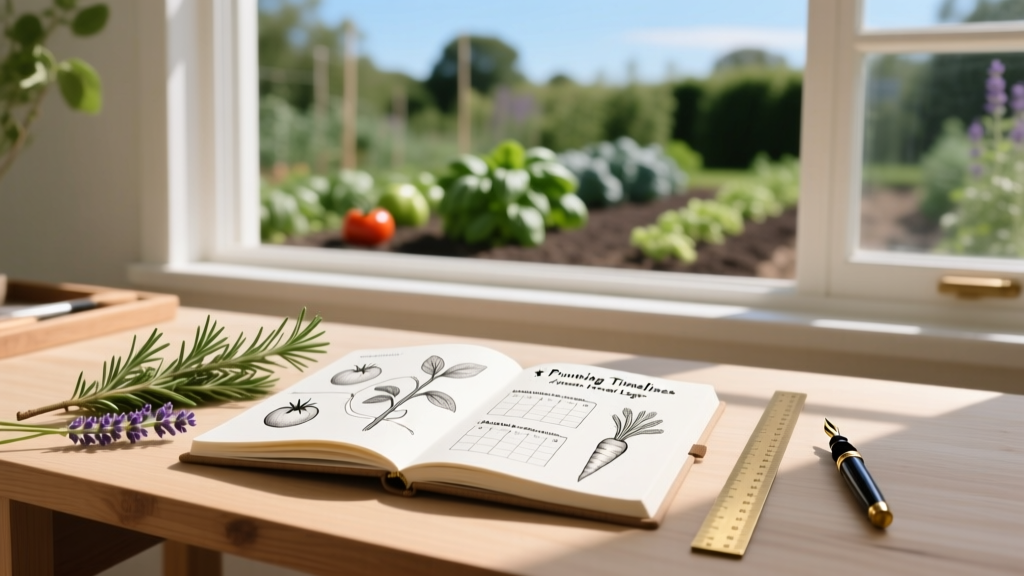
2026 Garden Journal: Pruning Calendars & Harvest Logs
Mike RodriguezPublished
The Evolution of the 2026 Garden Journal
As we navigate the 2026 growing season, the traditional garden journal has undergone a massive transformation. For decades, gardeners have relied on journals primarily for garden journal planning with planting calendar and harvest log entries. You write down when you sow your seeds, when you transplant, and eventually, how many pounds of tomatoes or apples you brought into the kitchen. However, modern horticultural science and advanced home-growing techniques have revealed a critical missing link in this timeline: pruning methods and timing. While a planting calendar tells you when to establish a crop, a pruning calendar dictates the architectural success, disease resistance, and ultimate yield of your plants. The harvest log then serves as the ultimate proof of whether your pruning timing was correct.
In 2026, the most successful home growers are no longer treating pruning as an afterthought or a vague seasonal chore. Instead, they are integrating specific pruning methodologies directly into their daily journaling routines. By correlating the exact date and method of a pruning cut with the subsequent harvest data, gardeners can fine-tune their approaches year over year, creating a highly personalized, data-driven roadmap for their specific microclimate.
Bridging the Gap: Planting Calendars and Pruning Timelines
Most commercial planting calendars focus heavily on frost dates, soil temperatures, and days to maturity. But if you are growing perennial crops, brambles, vines, or orchard trees, the planting date is merely the beginning of the lifecycle. According to the Royal Horticultural Society (RHS), understanding the seasonal flow of sap and the dormancy cycles of your specific cultivars is paramount for making the right cuts at the right time.
Your 2026 garden journal should feature a dual-calendar system. On the left page, maintain your traditional planting and sowing schedule. On the right page, map out your pruning windows based on plant physiology rather than just the calendar month. For instance, pruning spring-flowering shrubs immediately after they bloom in late spring, versus pruning summer-flowering shrubs during late winter dormancy. By placing these timelines side-by-side, you prevent the disastrous scheduling conflicts that often lead to missed pruning windows and diminished harvests.
Structuring Your Journal for Pruning and Harvest Data
To effectively track pruning methods and timing alongside your harvest log, your journal needs a specialized layout. Standard grid paper will not suffice. We recommend dedicating a two-page spread for each major crop or garden zone. Here is the essential data structure you should include in your 2026 journal:
- Plant Profile: Cultivar name, rootstock (if grafted), and original planting date.
- Pruning Objective: Are you pruning for structural integrity, airflow, renewal, or fruit thinning?
- Methodology Used: E.g., The Three-Cut Method, Renewal Pruning, Espalier Summer Pinching.
- Timing and Weather: Exact date, time of day, and current weather conditions (pruning during wet conditions in 2026 is heavily discouraged due to rising fungal pathogen resistance).
- Harvest Correlation: Total yield weight, fruit size distribution, and Brix (sweetness) levels recorded at harvest.
Essential Pruning Methods to Document in Your Journal
When logging your activities, precision is key. Simply writing 'pruned the apple tree' provides zero value for future seasons. You must document the specific technique applied. Below are the core methods you should be tracking in your 2026 garden journal.
1. Renewal Pruning for Cane Fruits
For brambles like raspberries and blackberries, distinguishing between primocanes (first-year green canes) and floricanes (second-year fruiting canes) is vital. Your journal should log the exact date you perform renewal pruning—the process of cutting down all spent floricanes to the soil line immediately after the summer harvest. Tracking this timing helps you monitor for cane borer infestations and ensures the plant directs its energy into the new primocanes before winter dormancy. Note in your harvest log if delaying this process by even two weeks resulted in weaker primocane development the following spring.
2. The Three-Cut Method for Orchard Trees
When performing dormant structural pruning on apples, pears, and stone fruits, the three-cut method is the gold standard for preventing bark tearing and subsequent disease entry. According to experts at Penn State Extension, this involves an undercut, a top-cut to remove the bulk of the branch weight, and a final precise cut just outside the branch collar. In your journal, log the number of major scaffolding branches removed and the angle of the cuts. Over a three-year period, your harvest log will reveal how opening the tree canopy to a 45-degree V-shape directly correlates with increased solar exposure and higher Brix levels in your autumn harvest.
3. Summer Airflow Thinning for Vines and Nightshades
Pruning is not just a winter activity. Summer pruning methods, such as removing the lower 12 inches of foliage on indeterminate tomatoes or thinning the canopy of grapevines, are critical for disease management. The University of Minnesota Extension emphasizes the importance of airflow in reducing fungal pressure. Log the exact date you perform these summer thins, and cross-reference this with your local humidity data. Your harvest log should then note the percentage of fruit lost to blight or mildew, allowing you to adjust your summer pruning timeline in 2027 to stay ahead of the spore cycles.
The Harvest Log: Proving the Pruning Hypothesis
The harvest log is where the scientific method of gardening comes full circle. In 2026, smart gardeners are using portable digital refractometers to measure the Brix (sugar content) of their harvest, adding a layer of qualitative data to their quantitative weight measurements. When you fill out your harvest log, you must explicitly link the yield back to the pruning methods recorded months earlier.
For example, if you utilized aggressive fruit-thinning pruning on your peach trees in early spring (removing 40% of the nascent fruit to encourage larger sizing), your harvest log must record the average diameter and weight of the remaining peaches. If the peaches were large but lacked sweetness, your journal notes might conclude that the aggressive thinning was done too early, before the tree had fully established its leaf-to-fruit ratio for optimal photosynthesis. This level of detailed reflection is what separates a casual gardener from a master horticulturist.
2026 Pruning and Harvest Tracking Matrix
Use the following matrix as a template for your journal spreads. This structured approach ensures you never lose sight of the relationship between the cut and the crop.
| Plant Type | Pruning Method | Optimal Timing Window | Harvest Log Metric to Track |
|---|---|---|---|
| Summer Raspberries | Renewal / Floricane Removal | Immediately post-harvest (Late Summer) | Primocane thickness and winter survival rate |
| Apple & Pear Trees | Dormant Structural / Three-Cut | Late Winter (Pre-bud swell) | Fruit size, canopy sunburn incidence, Brix |
| Indeterminate Tomatoes | Basal Leaf Removal / Suckering | Early to Mid-Summer (Weekly) | Total yield weight vs. blight infection rate |
| Hydrangeas (Macrophylla) | Deadheading / Minimal Structural | Late Summer (Post-bloom) | Number of flower heads and stem rigidity |
| Wine & Table Grapes | Cane Pruning / Summer Leaf Pull | Dormant (Cane) / Veraison (Leaf Pull) | Cluster tightness and sugar accumulation rate |
Analog vs. Digital Journaling Tools for 2026
While the methodology remains rooted in science, the tools we use to capture this data have evolved. For those who prefer the tactile experience of writing in the garden, weatherproof notebooks like the 2026 editions of Rite in the Rain remain invaluable. Their synthetic paper withstands mud, rain, and sap, allowing you to sketch pruning angles and jot down harvest weights right next to the tree.
On the digital front, modern garden planning apps have finally caught up to the needs of advanced growers. Many 2026 smart-garden applications now feature dedicated pruning modules that send push notifications based on your local phenological data rather than arbitrary calendar dates. These apps allow you to snap a photo of a pruning cut, tag it with the specific method used, and automatically link it to the digital harvest log when you input your yield data months later. Whether you choose a rugged field notebook or an AI-assisted digital dashboard, the key to success lies in your commitment to tracking the profound impact that precise pruning methods and timing have on your garden's ultimate bounty.
Conclusion: Closing the Loop
Garden journal planning with planting calendar and harvest log entries is a time-honored tradition, but it is incomplete without the vital bridge of pruning data. By treating your pruning methods and timing as rigorous scientific variables, you empower yourself to make informed decisions that compound in value year after year. As you prepare your journal for the upcoming seasons, remember that every cut you make is a promise to the plant, and every harvest is the plant's answer. Document both with precision, and your 2026 garden will thrive like never before.
